Powdery Mildew vs Downy Mildew: How to Tell Them Apart
They share a name but not a cause. Here's how to identify each in under a minute, and why a spray that works for one may do nothing for the other.
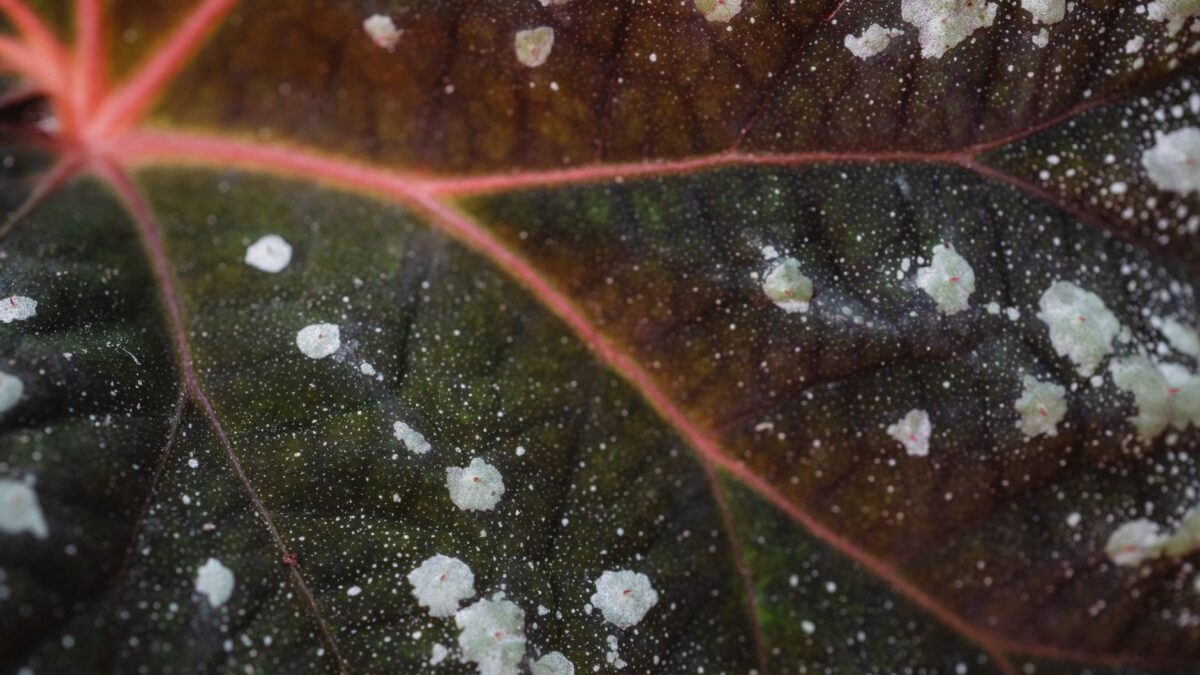
Powdery mildew looks like white flour dusted on the leaf surface, mostly on top, and usually slows a plant without killing it. Downy mildew shows as angular yellow patches on top of the leaf with gray fuzz underneath, and it can move fast. Turn the leaf over to tell them apart, because they’re different organisms that respond to different products.
Side-by-side comparison
| Feature | Powdery mildew | Downy mildew |
|---|---|---|
| Organism | True fungus | Oomycete, or water mold; not a true fungus |
| Where to look | Mostly the top of the leaf, but can be anywhere on the surface | Fuzz on the underside; yellow patches on top |
| Appearance | Round white patches that join into a dusty white or gray coat | Angular patches held in by leaf veins, giving a quilted look |
| Yellowing | Comes after the mildew has been present a while | May appear before any fuzz is visible |
| Favorite weather | Moderate temperatures of 60 to 80°F, shade and dry leaves; high humidity helps it spread | Cool temperatures of about 58 to 78°F with relative humidity above 85% |
| Water on leaves | Doesn’t need it; long wetness can even harm the spores | Favors it |
| Common hosts | Zinnia, rose, squash, cucumber, lilac, dahlia, crape myrtle, strawberry | Basil, impatiens, melons, cucumber, squash, broccoli, kale, roses, brambles, viburnum |
| Typical damage | Slower growth, fewer flowers, lower fruit quality | Leaf and flower drop; can kill susceptible plants quickly |
| Main tools | Resistant varieties, airflow, sun; sulfur before symptoms, oils for light infections | Resistant varieties, airflow, dry leaves; preventive copper or phosphite products |
A one-minute field check
- Look at the top of the leaf. Dusty white patches that sit on the surface suggest powdery mildew. Yellow blocks with straight edges along the veins suggest downy.
- Turn the leaf over. Gray or whitish fuzz directly below a yellow patch points to downy mildew.
- Try a gentle rub. Powdery mildew often smears away, leaving a paler leaf beneath.
- Think about the weather. A dry stretch with warm days and cool nights suits powdery mildew. A cool, damp spell suits downy mildew.
- Check the plant. Look at early signs on young plants and new growth. University of Florida’s comparison warns that downy mildew can first look like a nutrient shortage or virus.
Some plants, including cucumbers, squash and roses, can get either disease, and both can appear in one season.
Why the fix differs
Powdery mildew grows mostly on the outside of the leaf and is a true fungus. Downy mildew grows inside the leaf and belongs to a different group of organisms, so products that control one often won’t work on the other. Extension guidance notes that downy mildew must be managed preventively, using different classes of fungicides than those used for powdery mildews.
Water works in opposite ways too. UC IPM says powdery mildew doesn’t need wet leaves, that extended water on leaves can kill most of its spores, and that overhead sprinkling can reduce its spread by washing spores off. That same habit would feed downy mildew, along with leaf spots and many other diseases.
What to do about powdery mildew
- Remove the worst leaves and thin the plant so air can move through.
- Plant in sun and choose resistant varieties of roses, zinnias, crape myrtles and squash.
- Time overhead watering for midmorning if you use it, so leaves dry quickly.
- Accept late-season mildew on squash and zinnias. If most of the leaves are affected near season’s end, it’s often too late for sprays and not worth them.
If you do spray, know what each product can do:
- Sulfur works only before symptoms appear. Don’t use it near or above 90°F.
- Horticultural and plant oils, including neem oil, can treat mild infections. Don’t use them above 90°F or on water-stressed plants, and never within 2 weeks of a sulfur spray.
- Potassium bicarbonate has some effect on existing infection, but it can injure plants, so test first and avoid it on advanced cases.
What to do about downy mildew
- Act fast. Pull badly infected plants, especially basil and impatiens, because downy mildew can spread rapidly.
- Keep leaves dry. Water the soil, not the foliage. Drip irrigation is ideal.
- Give plants room and avoid watering late in the day.
- Use resistant varieties. Look for them in basil, cucumber and melon seed lists.
- Protect, don’t cure. Penn State Extension names copper, phosphorus-type fungicides and neem oil as organic options that work best as preventives with repeat applications.
- Clear debris in fall. Our guide to composting diseased plants explains what can go in the pile. Penn State’s advice is not to compost infected plant material.
Check that the label names your plant and the specific disease before buying anything. Copper can harm some plants. Spray at dusk, not on open flowers where bees are feeding, and see our guide to neem oil and insecticidal soap for more on timing. Never mix products unless both labels allow it, and keep them away from children and pets.
Is it something else?
Dusty white patches can also be dust, hard-water residue or insect debris, which wash off and don’t return. Yellow patches without fuzz may be a nutrient or virus problem, which is another reason to check the underside before spraying. On roses, black spots with yellow halos are a different disease covered in our guide to rose black spot.
Bottom line
White dust on top means powdery mildew: improve airflow and sun, and treat early if needed. Angular yellow patches with fuzz beneath mean downy mildew: keep leaves dry, remove badly hit plants, and rely on prevention. Identify first, because the wrong product wastes money and can damage the plant.
FAQ
Can a plant recover from powdery mildew?
Usually, yes. It often weakens a plant rather than killing it. Infected leaves stay marked, but new growth can be clean if conditions improve.
Is downy mildew worse than powdery mildew?
In most gardens, yes. Penn State calls it the more damaging of the two, and it can destroy susceptible plants quickly in cool, wet weather.
Does neem oil work on both?
Some neem products list both, but neem acts mainly as a protectant, and it’s better for light powdery mildew than for established downy mildew. Check the label.
Can I eat vegetables with mildew on the leaves?
Leaf mildew mainly affects how well the plant grows and how good the fruit tastes. Wash produce as usual, and observe the pre-harvest interval on any product you’ve sprayed.