How to Tell If You Have Grubs in Your Lawn, and When Treating Is Worth It
Spongy turf and digging animals are clues, not proof. A square-foot count tells you whether to treat, and the calendar tells you whether it is too late.
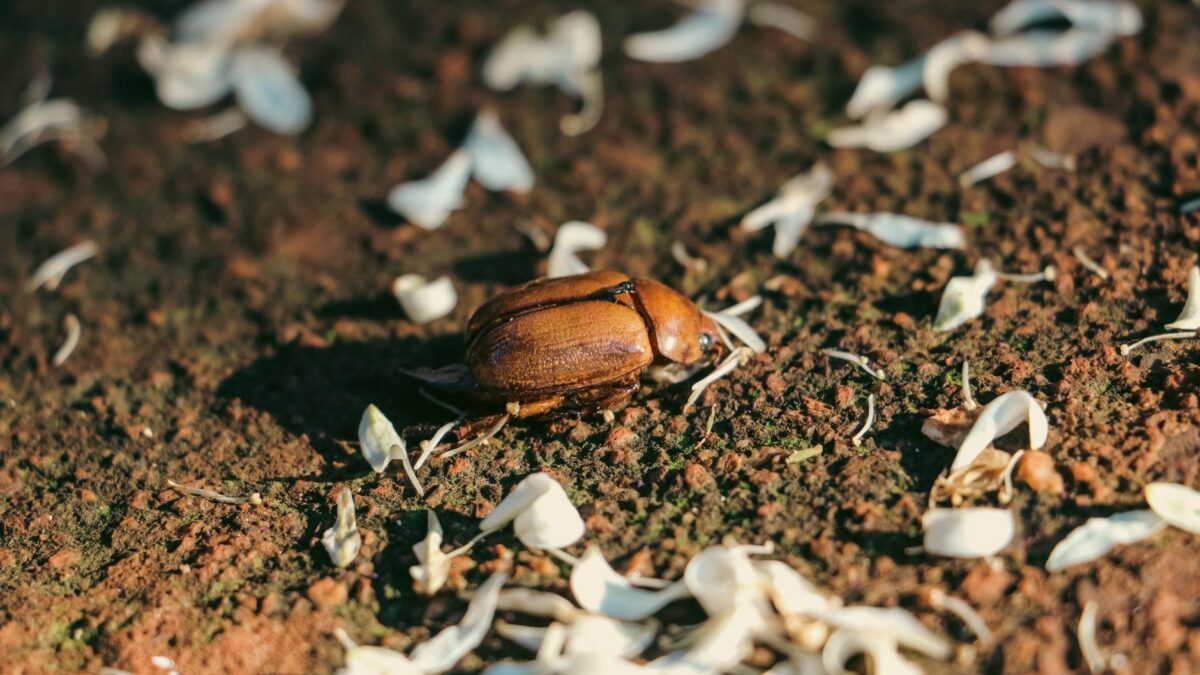
To find out whether you have grubs, cut a square foot of turf on three sides, fold it back and count the white, C-shaped larvae in the top few inches of soil. Fewer than about 5 to 10 per square foot is usually nothing to treat in a healthy lawn. The best time to look is August to early September, and the useful treatment window closes in fall. If you are reading this in November in the North, the window has passed for this year, so plan for next summer.
Signs of grubs
Grubs are the larvae of beetles such as Japanese beetles, masked chafers and May or June beetles. They feed on roots, which leaves the grass with nothing to hold it down or take up water.
- Spongy turf. The lawn feels soft underfoot.
- Turf that rolls back. Penn State says heavy infestations leave turf that lifts like a carpet.
- Dead or dying patches. They are most visible in April to May and September to October.
- Wilting in dry weather. Damaged roots cannot keep up, so patches brown first in a dry spell.
- Digging by animals. Skunks, raccoons and crows tear up turf looking for grubs.
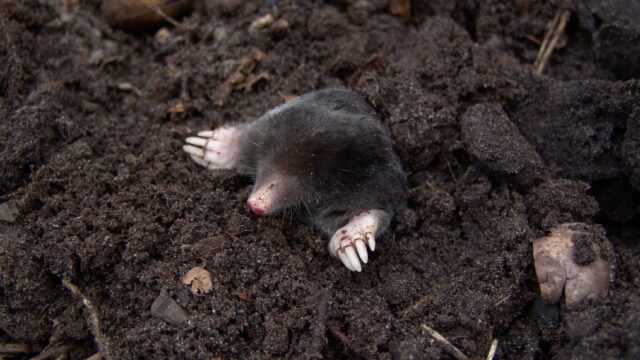
Treat the animal clues with some caution. Skunks and birds also feed on other things, and moles eat earthworms as well as grubs, so holes alone are not proof. If you see tunnels or ridges, read moles vs voles first. If you are not sure the patch is insect damage at all, our guide to brown patches helps you rule out other causes.
How to do a peel-back check
- Pick your moment. Penn State Extension suggests August through early September, when grubs are near the surface.
- Choose spots. Sample several places, including the edge of any damaged area and a sunny, well-watered part of the lawn.
- Cut a square foot. Use a spade or knife to cut three sides, 2 to 4 inches deep, and fold the sod back like a flap.
- Count. Look in the soil, the thatch and the roots. Grubs are creamy white with a brown head and curl into a C.
- Put it back. Press the flap down firmly and water it. It will root again.
How many grubs is too many?
| Source | Suggested trigger |
|---|---|
| Penn State | 5 to 10 per square foot, depending on species |
| University of Illinois | About 10 or more per square foot |
| University of Nebraska | 8 to 10 per square foot for masked chafers |
| Mississippi State | 5 to 10 per square foot; 3 to 5 for larger June and May beetle grubs |
Those are guides, not hard limits. A well-watered, thick lawn can tolerate more than a thin, droughty one. A lawn that also attracts digging animals may need action at lower numbers. Below the trigger, the best move is usually to water and leave the grubs to be.
Treatment-timing calendar
This calendar fits annual grubs in cool-season regions, such as Japanese beetle and masked chafer. Timing shifts by region and weather, so check your state extension service and your product label.
| Time of year | What the grubs are doing | Is treatment worthwhile? |
|---|---|---|
| April to May | Large grubs feed near the surface, then pupate | Generally poor results. Penn State says spring treatments are less effective, and the University of Minnesota says they do not work well on full-grown grubs. |
| May to July | Beetles emerge and lay eggs | Preventive window, for lawns with a history of damage |
| August to mid-September | Small grubs feed near the surface | Best time to scout. Curative treatment works best now, while they are small. |
| Late September to early October | Grubs growing larger | Results falling off. The University of Minnesota says treatments after early October do not work. |
| November to March | Grubs are 2 to 8 inches deeper in the soil | No. Plan ahead for next year. |
In warm regions the picture differs. Some May and June beetles take up to three years to mature, and Mississippi State suggests trichlorfon for heavy infestations of older grubs in spring. Ask your local extension office what applies to you.
Your treatment options, least toxic first
Cultural steps
Water a damaged lawn deeply. Grass with weakened roots can often outgrow moderate feeding if it has moisture. Keep mowing tall. Penn State notes that keeping the lawn dry during July and early August may kill beetle eggs, but it browns the grass until watering resumes, so it is a trade-off.
Biological controls
- Insect-parasitic nematodes. Cornell treats these as curative, for use from mid-to-late August through October, at dawn or dusk, watered in. Penn State says results are inconsistent, with Heterorhabditis species generally doing better. Check the expiration date, since they have a short shelf life.
- Milky spore. It acts mainly on Japanese beetle grubs and can take 3 to 5 years to establish, so it is no quick fix.
Insecticides
- Preventive products. Chlorantraniliprole and imidacloprid are the main active ingredients. Extension guidance varies from May through early August by product and region, so follow your label. UMass reports that imidacloprid’s residual activity has weakened, so very early applications may not last through peak egg hatch.
- Curative product. Trichlorfon is the usual choice for small grubs in late summer, and it is fast-acting and short-lived.
Use them only when a count justifies it, and spot treat where you can. Water products in as the label directs, often around 1/2 inch. Keep children and pets off the area until the label allows it. Imidacloprid is a neonicotinoid that can harm bees, so mow off flowering clover and weeds before applying it. Some states restrict neonicotinoids on lawns, so check your local rules. Do not mix products.
After the grubs are gone
Rake out dead turf and reseed. The repair window is usually fall for cool-season lawns and late spring for warm-season lawns. Follow our guide to repairing bare spots. Since adult beetles lay the eggs, it is also worth reading about controlling Japanese beetles, although beetles fly in from elsewhere and adult control alone will not end grub trouble.
Bottom line
Do not treat on suspicion. Count grubs in August or early September, treat only if numbers pass 5 to 10 per square foot and the lawn is suffering, and do it while grubs are small. Spring and late-fall treatments are generally a waste of product and money. If you missed the window, water, reseed and plan a check for next August.
FAQ
Can I treat grubs in November?
Generally no. In most cool-season regions, grubs have moved deep, and the University of Minnesota says treatments after early October do not work. Use the time to plan.
Does treating grubs get rid of moles?
Usually not. Moles also eat earthworms and other soil animals, so they often stay after a grub treatment.
Should I treat for grubs every year?
Only if your lawn has a repeat history of damage. Most lawns never reach the trigger, and routine applications expose bees and other beneficial insects for no reason.
Are grubs in the soil always a problem?
No. A few in a square foot is normal and a healthy lawn can handle them.