How to Get Rid of Black Spot on Roses
Spotted leaves won't heal, so the aim is to protect new growth and cut next year's infection. Cleanup and watering habits do most of the work.
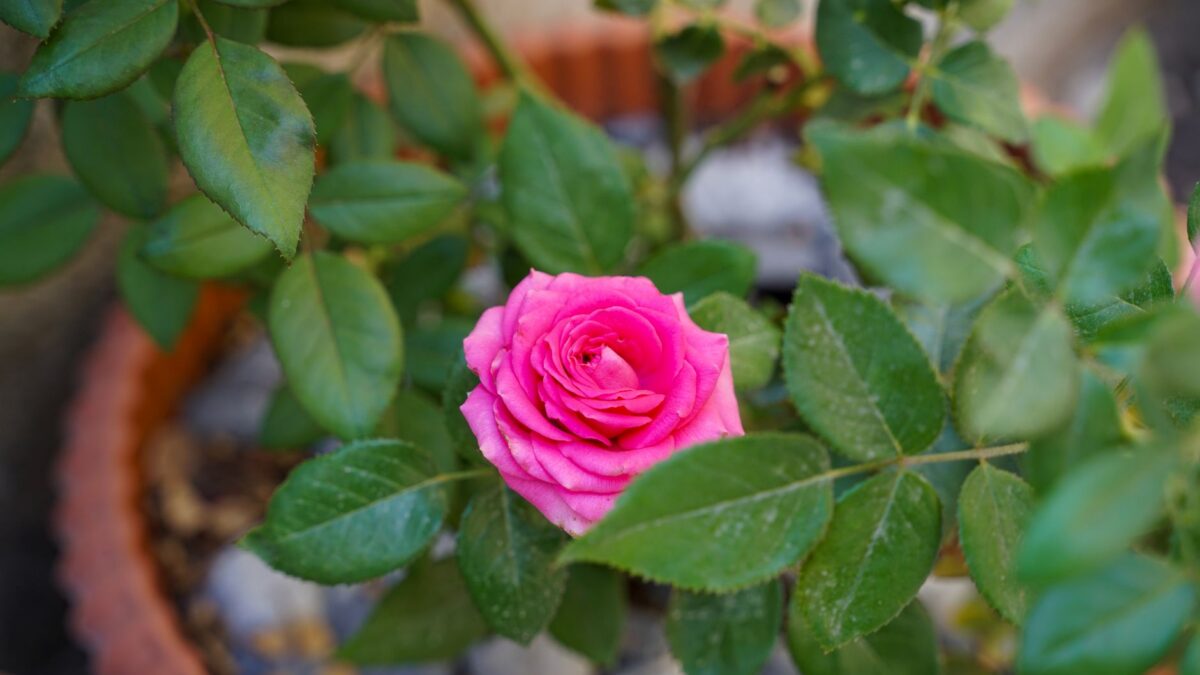
You can’t cure a leaf that already has black spot, but you can stop it spreading if you remove infected leaves, keep foliage dry and clear away fallen leaves. Protect new growth with a low-toxicity spray if the disease keeps returning. For a lasting fix, replace highly susceptible roses with resistant ones.
How to recognize black spot
- Round black or purple spots on the upper leaf surface, up to about 1/2 inch across
- Feathery or fibrous spot edges, and often a yellow ring around the spot
- Leaves that turn yellow and drop, starting low on the plant
- Raised purple-red blotches on first-year canes
- No fuzzy growth on the leaf underside, which helps separate it from mildews
In a bad year, a susceptible rose can lose nearly all its leaves by midsummer.
Why it keeps coming back
The fungus, Diplocarpon rosae, spends the winter in fallen leaves and on cane lesions. In spring, spores splash onto new leaves. Iowa State University Extension says infection takes about seven hours of moisture at roughly 75 to 85°F, and that a new round of spores appears within two weeks. That’s why one wet week can spread it quickly and why water on leaves is the main thing to manage.
What to do, step by step
- Pick off the worst leaves. Remove spotted leaves when they’re dry and gather any that have fallen. Bag them or put them in the trash. Don’t add them to compost that will be used around roses.
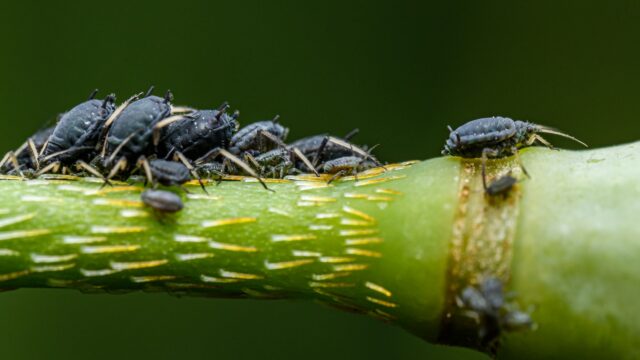
- Change how you water. Water the soil, not the leaves, and do it in the morning. If you hose off a plant, for example to knock down aphids, UC IPM advises doing it in the morning or at midday so the leaves dry before evening.
- Let air through. Thin crowded canes, remove inward-growing stems and give roses room. Plant them in full sun.
- Replace old mulch. A fresh layer can help stop spores splashing up. Clemson’s guidance includes removing fallen leaves and old mulch in fall or winter.
- Clean up at the end of the season. Rake every leaf, then prune out canes with lesions during dormancy. Disinfect pruners between plants. Our guide to winterizing roses covers what else to do by zone.
- Add a spray only if needed. Start with the low-toxicity options below, and start early, before the disease builds.
Spray options, least toxic first
Sprays protect healthy leaves. They won’t remove existing spots. UC IPM lists oils, including neem oil, potassium bicarbonate and sulfur as effective at reducing black spot.
| Option | Use it for | Cautions |
|---|---|---|
| Neem oil or horticultural oil | Protecting leaves, some activity on early infection | Not in temperatures above 90°F or on water-stressed plants; never within 2 weeks of sulfur |
| Potassium bicarbonate | Mainly protective | Can injure plants; test a few leaves first |
| Sulfur | Protecting leaves before infection | Can injure plants above 90°F; keep 2 weeks away from any oil |
| Copper | A further option on many rose labels | Follow the label strictly; copper builds up in soil and can harm some plants |
Spraying only works with coverage and timing. Iowa State’s general guide is every 7 to 14 days during wet weather, reapplying after 1/4 inch of rain or overhead watering, but your product’s label sets the actual interval. Spray in the cool of the morning or evening, keep off open blooms where bees are working, and rotate products with different active ingredients to slow resistance.
Never mix products together in one sprayer unless both labels allow it. See our comparison of neem oil and insecticidal soap for how oils behave on leaves. Keep all garden chemicals locked away from children and pets, and keep pets off treated plants until sprays have dried.
When to consider stronger fungicides
Clemson lists chlorothalonil, mancozeb, myclobutanil, propiconazole and copper for black spot, and says susceptible hybrid teas need a spray program in place before the season begins. Availability changes, and some products are for licensed applicators only, so check current labels and your state’s rules. Weigh this against replacing the rose. A weekly spray schedule is a lot of work for one susceptible plant.
Resistant roses are the real fix
Resistance varies by region and by the local strains of the fungus, so ask your extension office what does well near you. These lists are starting points.
- Iowa State lists as highly resistant: ‘Coronado’, ‘Simplicity’, ‘Grand Opera’, ‘Carefree Beauty’, ‘Bonica’ and ‘Fortyniner’.
- Clemson lists as resistant: ‘Pride N Joy’, ‘Sexy Rexy’, ‘Prima Donna’, and rugosa roses such as ‘Blanc Double de Coubert’.
- Avoid where the disease is bad: Iowa State says most yellow and copper hybrid teas are highly susceptible. UC IPM notes that miniature roses are more susceptible too, apart from a few varieties.
Timing by season
Dates shift with your USDA zone, but the rhythm is the same.
- Late fall to winter: rake up leaves, remove infected canes.
- Early spring: prune, refresh mulch, consider the first protective spray if the rose suffered last year.
- Late spring to summer: water at the base, pick off spotted leaves, repeat sprays through wet spells only as needed.
Bottom line
Treat black spot as a moisture and cleanup problem. Remove infected leaves, water the soil in the morning, clear fallen leaves and open up the plant. Use oil, bicarbonate or sulfur as protection where needed, never together. If a rose defoliates every year despite this, replace it with a resistant variety.
FAQ
Should I remove all leaves with black spot?
Remove the worst ones and all fallen leaves, but don’t strip a plant bare. Severely defoliated roses need remaining leaves to recover, so a very sick plant may need a gentler approach.
Will black spot kill my rose?
Rarely on its own, but repeated defoliation weakens a plant, so it grows and flowers less and can be more vulnerable to winter damage.
Can I compost leaves with black spot?
It’s safest not to, unless your pile runs hot. Iowa State advises against adding infected leaves to compost that will be used where roses grow. Our guide to composting diseased plants has more detail.
Does baking soda work on black spot?
Homemade mixes can burn leaves and their strength varies. If you want a bicarbonate, choose a labeled potassium bicarbonate product and follow its directions.