Moles vs Voles: How to Tell Them Apart and What Works on Each
They rhyme, but they are very different pests. Check for ridges or open runways first, because the fix for one does nothing for the other.
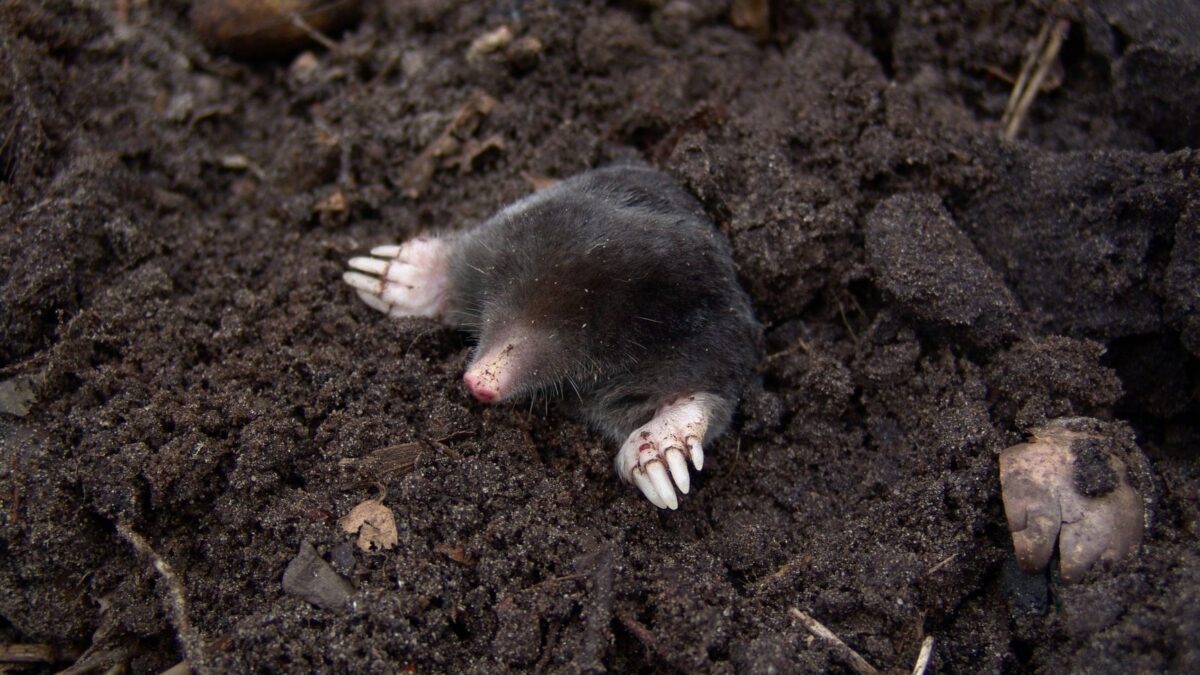
Moles tunnel underground, push up raised ridges and cone-shaped mounds of soil, and eat earthworms and grubs. Voles are small rodents that make open runways on the surface, with small round holes, and eat grass, bulbs, roots and bark. For moles, trapping in active tunnels is the most reliable fix. For voles, remove their cover, guard your tree trunks and use mouse-style snap traps. The right response depends on telling them apart first.
Side-by-side comparison
| Moles | Voles | |
|---|---|---|
| What it is | Insect-eating mammal, not a rodent | Rodent, also called a meadow mouse |
| Look | Pointed snout, tiny eyes, large paddle-like front feet, velvety fur | Stocky, blunt face, small eyes, partly hidden ears, short tail about an inch long |
| Size | Usually larger than a vole | About 5 to 8 inches long including tail |
| Food | Earthworms, grubs, ants and other soil animals | Grasses, flower bulbs, roots, and bark of trees and shrubs |
| Lawn signs | Raised, winding ridges; cone-shaped mounds | Narrow surface runways through the grass |
| Holes | Usually none visible; entrances are hidden under mounds | Open round holes, about 1.5 to 2 inches across |
| Plant damage | Indirect: roots lifted and dried by tunnels | Direct: chewed grass, eaten bulbs, gnawed bark |
| Best control | Trapping | Removing cover, guards, snap traps |
A quick way to remember it: if plants are being eaten, it is not the mole. Moles get blamed for a lot of plant loss that actually belongs to voles, which may even use mole tunnels. Both can be in the same yard.
What the damage looks like
Moles
Nebraska Extension describes two kinds of tunnel. Feeder burrows wander near the surface and show up as soft ridges. Travel burrows are longer and straighter. Mounds are small cones, usually less than a foot across, made when a mole pushes soil up from a vertical tunnel. Nebraska notes that pocket gopher mounds are larger and fan-shaped, which helps you spot a third suspect in the Plains and the West.
Moles need a lot of food, eating an estimated 70 to 100 percent of their weight per day, so one animal can make plenty of ridges. Activity tends to climb after rain, when earthworms move up.
Voles
After snowmelt, voles leave winding, grass-free trails on the lawn where they fed under the snow. Other clues listed by the University of California include clipped green grass in the runways, small greenish droppings that fade to brown, and gnaw marks about 1/8 inch wide in irregular patches on bark. Feeding can occur below ground, so you may need to dig gently at the base of a declining young tree. Complete girdling of a trunk or roots can kill it.
What works on moles
- Find an active tunnel. Michigan State suggests stamping down short sections of ridges and checking which ones are pushed back up by the next day. Missouri suggests poking a hole and seeing if it is plugged within a few hours.
- Set traps there. Purdue Extension calls trapping the most reliable control. Common types are harpoon, scissor-jaw and choker-loop. Nebraska recommends at least three traps and says results are best in spring and fall, especially after rain.
- Check rules and keep clear. Trap regulations differ by state, so check with your state wildlife agency before setting one. Keep children and pets away from the area, and follow the maker’s instructions.
- Tamp ridges down. Step on ridges and rake mounds out once activity stops. Water any lifted turf so roots do not dry out.
What does not work well on moles
- Grub insecticide. Nebraska says removing grubs usually will not stop mole damage, since grubs are only part of the diet. Missouri notes that these products can also sharply reduce earthworms, which are a useful part of your soil. Moles may even dig more for a few weeks while hunting for food. Treat only if a count shows you have a grub problem, as explained in our guide to lawn grubs.
- Castor oil repellents. Evidence is mixed at best. Nebraska reports minor effectiveness, Purdue says no research has shown consistent results, and Iowa State lists repellents among methods that do not work.
- Baits. Worm-shaped and gel baits exist, but Nebraska says they need more testing, and they are risky to pets and wildlife. Grain baits rarely work, since moles do not eat grain.
- Home remedies. Mothballs, hair and flooding tunnels are not recommended controls.
What works on voles
- Remove their cover. The University of California calls this the core strategy. Mow grassy edges, clear weeds and heavy mulch, and keep a 4-foot vegetation-free circle around young trees. In fall, avoid leaving thick leaf layers on the lawn.
- Guard trunks. Wrap young trees in hardware cloth, bury the bottom 4 to 6 inches, leave room for growth, and extend it above the snow line. Our guide to protecting trees from rabbits and voles has the steps.
- Keep mulch off the trunk. Mulch piled against bark is a sheltered dining room. See our guide to mulching around trees.
- Fence small beds. Use mesh of 1/4 inch or smaller, at least 12 inches tall, with the bottom buried 6 to 10 inches.
- Trap. Use ordinary mouse snap traps set at right angles to a runway, with the trigger in the runway. Missouri suggests baiting with peanut butter and covering the trap and hole with a large clay pot, which also keeps birds and pets out. Check traps daily. Wear gloves or use a plastic bag when handling voles.
Poison baits are a last resort. Rules vary by state, some products are restricted to non-residential sites, and bait can harm pets, owls and hawks. If you use one, follow the label exactly. The University of California considers repellents questionable, and says ultrasonic devices and flooding do not work.
Repairing the lawn
Mole ridges usually settle back after you press them down and water. Vole runways look bad in spring but often fill in as the grass grows. Rake out dead grass and reseed anything still bare using our guide to repairing bare spots.
Bottom line
Look at the lawn before you buy anything. Ridges and cones mean moles, so trap in active tunnels and skip the grub killer unless a count calls for it. Open runways, round holes and chewed plants mean voles, so clear their cover, protect your trunks and set snap traps. Expect to repeat the work, because new animals can move in.
FAQ
Do moles eat plant roots?
No. Moles eat earthworms, grubs and other soil animals. They can disturb roots by tunneling, and voles may use the tunnels to reach roots.
Will getting rid of grubs get rid of moles?
Usually not. Grubs are only part of the diet, and moles continue to feed on earthworms.
How can I tell vole holes from mole holes?
Vole holes are open and round, about the size of a golf ball, with runways between them. Mole entrances are hidden, usually under a cone-shaped mound.
Are moles or voles dangerous to pets?
The bigger danger is the control. Keep pets away from traps, and avoid poison baits wherever pets or wildlife may reach them.