How to Get Rid of Aphids on Plants, Least Toxic First
Most aphid outbreaks can be handled with a hose and a little patience. Here's the order that works, and why the ants matter as much as the aphids.
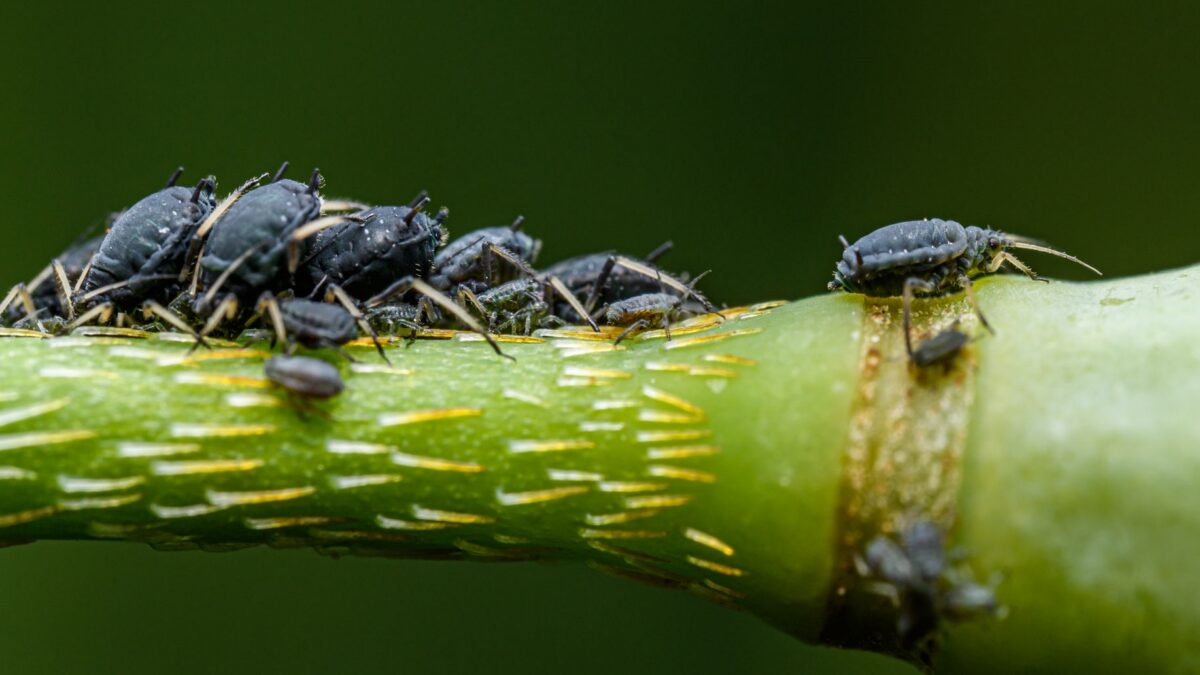
The best first step for aphids is a strong spray of water, aimed under the leaves and repeated every few days, because most aphids knocked off can’t get back. Then protect the predators that eat them, block any ants tending them, and use insecticidal soap only if numbers stay high. Low to moderate numbers usually don’t do much damage in gardens, so you may not need to spray at all.
How to recognize aphids
Aphids are tiny, soft, pear-shaped insects, usually green, yellow, brown, red or black. They cluster on new shoots, flower buds and the undersides of leaves. UC IPM notes that two tubelike structures at the rear of the body, called cornicles, set them apart from other insects.
Other signs of aphids:
- Sticky, shiny honeydew on leaves or surfaces below
- Black sooty mold growing on the honeydew
- Curled, yellowing or stunted new growth
- Ants running up and down stems
- Crusty, golden-brown “mummies,” which are aphids killed by parasitic wasps
Step-by-step, least toxic first
- Check how bad it is. A few aphids on a healthy shrub need no action, and predators often arrive on their own. Look again in a few days. Act sooner on young plants and vegetables prone to viruses, since aphids can spread viruses even at low numbers.
- Blast with water. Use a firm stream from a hose, directed at colonies and under leaves. Spray early in the day so plants dry quickly. Repeat every few days until numbers fall. On small or tender plants, use a gentler spray or wipe colonies off with your fingers.
- Pinch out the worst spots. If aphids are limited to a few curled leaves or shoot tips, prune them off. Curled leaves shelter aphids from sprays anyway.
- Stop the ants. Ants collect honeydew and in return defend aphids against predators and parasites. If you see them on the plant, deal with them next (see below). This one step can let natural control work again.
- Protect the predators. Lady beetles, lacewing larvae, syrphid fly larvae, soldier beetles and parasitic wasps all attack aphids. Avoid broad-spectrum insecticides, which kill these allies, and grow flowering plants nearby for nectar and pollen. Leave any mummified aphids in place, because new wasps will emerge from them.
- Cut back on nitrogen. UC IPM says high nitrogen levels favor aphid reproduction, so never use more than necessary. Lots of soft new growth is what they want. A soil test tells you what’s needed.
- Spray insecticidal soap or oil if numbers stay high. These kill mainly by smothering, so wet the insects directly, including leaf undersides. They kill only the aphids present and leave no toxic residue, so repeat as the label says. Our comparison of neem oil and insecticidal soap explains the differences.
Why ants keep aphids coming back
Aphids excrete sugary honeydew, and ants treat them almost like livestock. The ants drive off lady beetles and other predators to protect their food supply. That’s why a colony may keep rebounding even though you’ve seen predators nearby. Remove the ants and aphid numbers often fall on their own.
- Band the trunk. On trees and woody shrubs, apply a sticky barrier around the trunk. Don’t put sticky material directly on young or thin bark. Wrap the trunk with fabric or tape first.
- Remove the bridges. Prune branches that touch buildings, the ground or other plants, since ants use these as routes.
- Use ground-level bait stations. UC IPM says ant stakes or containerized baits on the ground can control ants without harming aphids’ natural enemies. Keep baits away from children and pets, and follow the label.
For more detail, see UC IPM’s guide to managing ants on trees and shrubs.
Which approach to use where
| Where | Start with | If that fails | Watch out for |
|---|---|---|---|
| Roses and shrubs | Hose spray, repeat | Soap or oil | Wash in the morning so leaves dry, to avoid promoting leaf diseases |
| Vegetables | Hose spray, pick off shoots | Soap labeled for the crop | Check waiting periods; silver reflective mulch can repel aphids on squash and melon |
| Fruit and shade trees | Ant control, pruning | Soap or oil on reachable branches | Honeydew can drip onto cars and patios; rinse it off with water |
| Houseplants | Rinse in a sink or shower; wipe leaves | Soap labeled for houseplants | Isolate the plant; see our guide to houseplant spider mites if the damage looks different |
How to use soap safely
- Keep it cool. Clemson and UC IPM both say not to spray above 90°F or on water-stressed plants.
- Use a labeled product. Clemson warns that homemade mixes carry a substantially higher risk of plant injury, and that dish and laundry detergents can be too harsh.
- Test first. Spray a small area and wait 24 hours. Plants such as gardenias, Japanese maple, cherries and plums are sensitive.
- Time it for bees. Spray early in the morning or late in the day, and avoid open flowers where bees are working.
- Don’t mix products. Use one at a time, and store them away from children and pets.
What to skip
Don’t reach for broad-spectrum sprays. They kill the predators and often leave you with more aphids. Systemic insecticides can harm pollinators and predators, and UC IPM says not to apply them to plants in bloom or before bloom. Buying lady beetles usually isn’t worth it either: UC IPM says most fly away within a few days, giving only temporary control. Contact sprays also tend to fail on aphids tucked inside galls or tightly curled leaves, so prune those off instead.
Bottom line
Hose them off, prune the worst shoots, deal with the ants, go easy on nitrogen and let predators do their work. Use insecticidal soap only when numbers stay high, and repeat it, because it kills only what it touches. Most gardens need nothing stronger.
FAQ
Do aphids kill plants?
Rarely on established plants. Large numbers can yellow leaves and stunt shoots, and some aphids spread viruses, so young plants and susceptible vegetables are at greater risk.
How often should I spray aphids with water?
Every few days until numbers drop. Early in the day is best, so foliage dries quickly.
Why do aphids keep coming back?
Ants, lots of soft new growth from heavy nitrogen, and broad-spectrum sprays that killed predators are common reasons. Some return is normal, since winged aphids move in from nearby plants.
Are ladybugs enough to control aphids?
Wild ones can help a lot, especially once ants are gone, but they often arrive after aphid numbers have peaked. Give them a little time before you spray.