Squash Vine Borer: How to Spot It, Save the Vine and Prevent It
A healthy squash plant that collapses in a day often has a caterpillar inside the stem. Here is how to confirm it, save the vine and stop it next year.
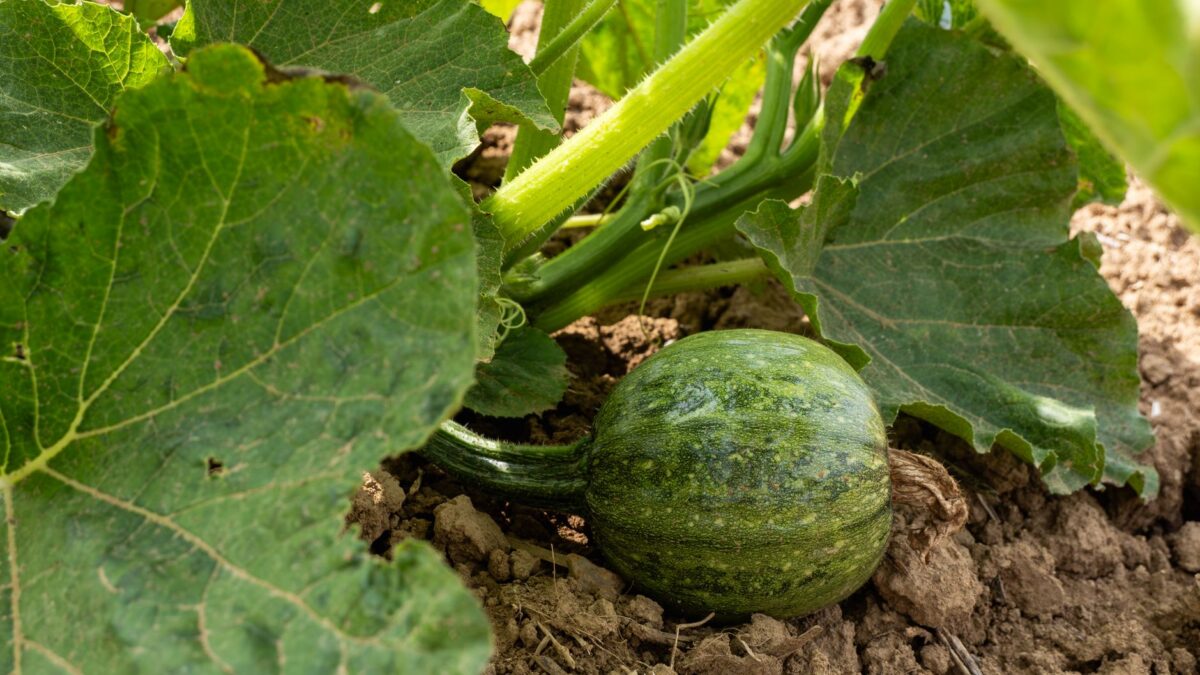
If a squash plant wilts suddenly and you find sawdust-like frass at the base of the stem, you have squash vine borer. Slit the stem lengthwise above the entry hole, remove the larva and mound moist soil over the wound so the vine can root again. Prevention works better than rescue: keep moths off with row covers until bloom, and time planting around their flight. Sprays can’t reach a larva once it is inside the stem.
How to recognize squash vine borer
The damage comes from the larva of a day-flying moth. The adult looks more like a wasp, with a fat orange and black body, clear hind wings and orange legs. It lays tiny, flat brown eggs one at a time, mostly on stems near the base of the plant. The larva hatches, bores in and feeds inside for several weeks. It is a wrinkled, cream-colored caterpillar with a dark head, up to about 1 inch long.
Look for these signs:
- A vine or whole plant wilts quickly, often first during the heat of the day.
- Holes near the base of the stem, usually in the lowest 8 inches.
- Greenish to light brown frass that looks like wet sawdust pushed out of the hole.
- A stem that feels mushy around the entry point.
Rule out the look-alikes
| Problem | Stem base | Other clues |
|---|---|---|
| Squash vine borer | Holes and frass; mushy stem | Rapid wilt of a runner or the whole plant |
| Bacterial wilt | No frass | Leaves recover at night, then wilt again and die; spread by cucumber beetles |
| Dry soil | Sound stem | Soil is dry and plant recovers after watering |
Which plants are at risk
Zucchini, pumpkins, and acorn, Hubbard and patty pan squash are among the most commonly infested. The University of Maryland Extension lists butternut, Tromboncino and cushaw as resistant. Cucumbers, melons and gourds are attacked only very rarely. Maryland also rates yellow crookneck as less susceptible than zucchini, though Wisconsin lists it among commonly infested types, so don’t count on it.
How to save an infested plant
- Confirm the spot. Find the hole and fresh frass. Follow the frass up the stem to work out where the larva is.
- Slit the stem. With a clean razor or sharp knife, make a lengthwise cut upward from the frass, going about halfway through the stem.
- Remove the larva. Pull it out and kill it. Check further along, since a stem often holds more than one.
- Cover the wound. Mound moist soil over the cut section to encourage new roots.
- Water well. Keep the mound moist, and give the plant steady water while it recovers.
- Keep scouting. Look over the base of each plant weekly, since new larvae can still get in while moths are laying eggs.
Wisconsin Extension calls many cucurbits surprisingly resilient if the problem is caught early. A larva in a side runner will only kill that runner, while one in the main stem can kill the plant. Vines that root along their length also survive better. University of Illinois Extension suggests burying a few nodes on each vining plant for this reason.
If you would rather not cut, Maryland Extension notes that Bt (Bacillus thuringiensis) or the beneficial nematode Steinernema carpocapsae can be injected into the wound. Spraying Bt on the outside of the plant does not help, since the larva has to eat it.
When a plant dies, seal the vines in a plastic bag before the larvae can leave to pupate. Don’t toss them on the compost pile. See what can go in the compost for other garden waste.
Prevention calendar
Timing depends on where you live, and on your USDA zone and the season, so use this as a starting point and watch for moths.
| Region | Moths usually fly | Generations |
|---|---|---|
| Upper Midwest and North | Late June and July | One |
| Mid-Atlantic | Mid-May to mid-June | One to two |
| Southeast and South | From about May; a second flight in late summer | One to two; often two |
In the North, University of Wisconsin Extension ties moth emergence to about 900 growing degree days (base 50°F), which coincides with full bloom of roadside chicory.
| When | What to do |
|---|---|
| Winter planning | Move squash to a new spot, because borers overwinter in the soil. Our crop rotation guide helps in small spaces. |
| Planting | Plant early or use transplants so vines are strong before moths arrive. Consider a resistant type. |
| Before moths fly | Cover plants with floating row cover. Don’t use it where cucurbits grew last year, since borers can emerge under the cover. |
| Moth flight | Wrap a foil collar around lower stems, leaving room to grow. Check stem bases weekly. |
| First flowers | Remove covers so bees can reach flowers, or keep them on and hand-pollinate. |
| After peak flight | Sow a second planting. Maryland suggests mid-June, Minnesota early July, which misses peak egg laying in those areas. |
| Fall | Remove spent plants and shred or destroy them to get rid of any caterpillars still in the vines. |
If you decide to spray
Sprays are a last step and work only on eggs and newly hatched larvae, before they enter the stem. Start with the least toxic choices. Maryland Extension lists diatomaceous earth on lower stems, or pyrethrins sprayed on lower stems and plant bases when adults are flying and repeated 14 days later.
Wisconsin notes that home gardeners can also use contact pyrethroids such as bifenthrin, cypermethrin or permethrin, or carbaryl, typically two to three treatments spaced 5 to 7 days apart around egg laying. These are harder on beneficial insects. Check that any product is labeled for squash, follow the harvest interval, never mix products, and aim only at the lower stems. Avoid open flowers, and spray late in the evening when bees are less active. Keep children and pets away until the spray has dried.
Bottom line
Sudden wilt plus frass means a borer is inside the stem. Slit, remove and bury quickly and many plants pull through. For next year, rotate the bed, use row covers until bloom, wrap or watch the lower stems, and consider butternut or Tromboncino if the pest is severe where you live.
FAQ
Can a squash plant recover from vine borers?
Often, yes, if you catch it early and the stem isn’t destroyed. Removing the larva and burying the wound lets the plant grow new roots past the damage.
Does Bt spray kill squash vine borers?
Not as a spray on the leaves or stems, because larvae don’t feed on the surface. Bt works only when injected into the stem where the larva is feeding.
Do squash vine borers attack cucumbers?
Very rarely. They strongly prefer squash and pumpkins, though melons, gourds and cucumbers are occasional hosts.
Where do squash vine borers go in winter?
They overwinter in the soil as pupae, a couple of inches down. That is why rotating crops and cleaning up in fall both help.