How to Rotate Crops in a Small Garden: A Simple Four-Year Plan
You don't need a farm to rotate crops. Three or four raised beds and a list of plant families are enough to slow soil-borne problems.
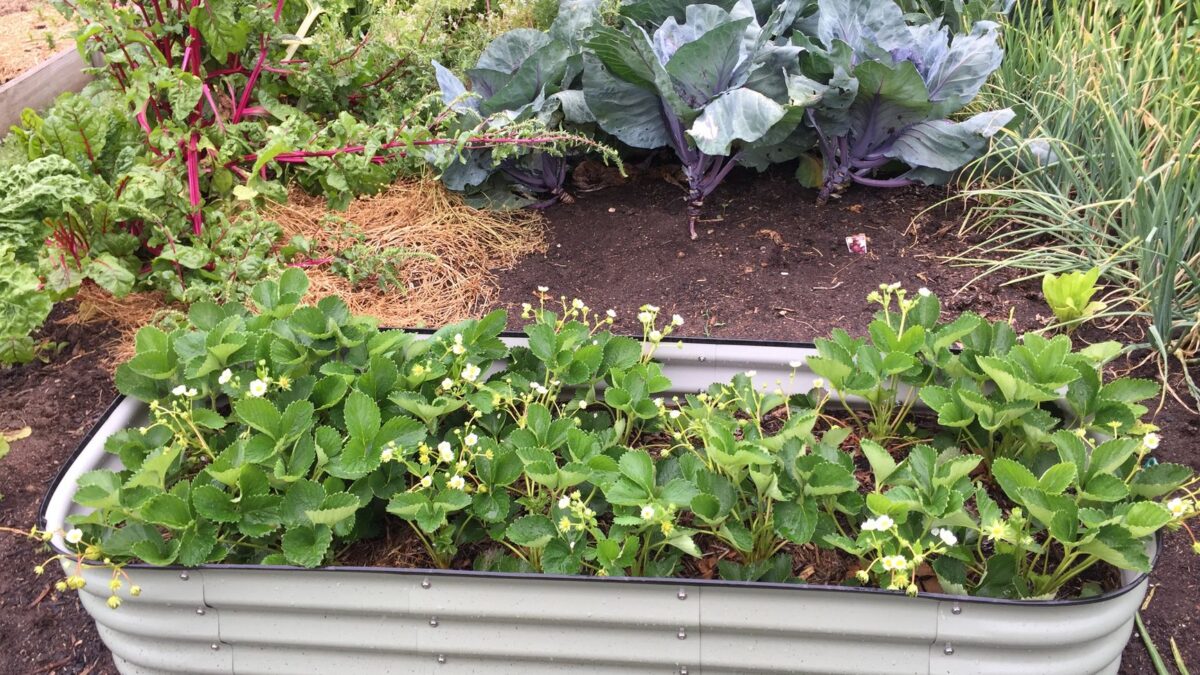
To rotate crops in a small garden, group your vegetables by plant family and move each group to a different bed every year, so the same family stays out of a spot for 3 to 4 years. Three or four raised beds are enough. With less space, a shorter or partial rotation still helps and is better than planting the same crop in the same place every year.
Why rotation works
Crops in the same family tend to share pests, diseases and nutrient needs. Grow them in one spot year after year and soil-borne problems can build up while the same nutrients get drawn down. Moving the family interrupts those life cycles, according to Illinois Extension, and it spreads nutrient demand around the garden.
The key is to rotate by family, not by crop. Swapping tomatoes for peppers doesn’t count, because they’re close relatives.
Know your plant families
| Family | Common crops |
|---|---|
| Nightshade (tomato family) | Tomato, pepper, eggplant, potato, tomatillo |
| Gourd (squash family) | Cucumber, melons, pumpkin, summer and winter squash, watermelon |
| Pea | Beans, peas, edamame |
| Mustard (cabbage family) | Broccoli, Brussels sprouts, cabbage, cauliflower, collards, kale, kohlrabi, bok choy, radish, rutabaga, turnip |
| Amaryllis (onion family) | Onion, garlic, leek, shallot, chives |
| Carrot | Carrot, celery, parsley, parsnip |
| Amaranth (beet family) | Beet, spinach, Swiss chard |
| Sunflower | Lettuce, endive, sunflower |
| Grass | Sweet corn, popcorn |
Radishes and turnips catch many people out, because they’re in the cabbage family even though they look like root crops.
A four-year plan for four beds
Most gardens have more families than beds, so this plan pairs them up. Each row is one bed, and each group moves one step every year.
| Bed | Year 1 | Year 2 | Year 3 | Year 4 |
|---|---|---|---|---|
| Bed 1 | Peas and beans | Squash family, corn | Cabbage family, onions | Tomato family, carrots |
| Bed 2 | Squash family, corn | Cabbage family, onions | Tomato family, carrots | Peas and beans |
| Bed 3 | Cabbage family, onions | Tomato family, carrots | Peas and beans | Squash family, corn |
| Bed 4 | Tomato family, carrots | Peas and beans | Squash family, corn | Cabbage family, onions |
In year 5, go back to the year 1 layout. Lettuce, beets, spinach and chard are easy to tuck in around the other crops. Keep them moving too, and don’t plant them in the same place twice in a row.
What to follow with what
Family separation matters most, but order can help with fertility.
- Follow peas and beans with hungry crops. Iowa State Extension notes that gourds use a lot of nitrogen and beans add it, so squash after beans is a natural fit. They’ll still need feeding according to your soil test.
- Don’t follow tomatoes with potatoes or peppers. It’s the same family, so you get no break.
- Don’t follow cabbage with radishes or turnips. Again, it’s the same family.
- Count cover crops. Clover, vetch and field peas belong to the pea family. Oilseed radish and mustard are in the cabbage family. Rye and oats are grasses, and buckwheat sits outside all the main vegetable families.
If you have only one, two or three beds
- Three beds: Iowa State says a three-year rotation is acceptable when space is limited. Combine two groups, or rotate only your most problem-prone crops.
- Two beds: A two-year swap isn’t ideal, but it’s better than no rotation.
- One bed: Split it into sections and move families around them, or grow a different family across the whole bed each year.
- Containers: Move disease-prone crops such as heirloom tomatoes into pots with fresh potting mix. This gives the main beds a break.
- Neighbors: Illinois Extension suggests coordinating with friends or family, with each of you growing a different group and sharing the harvest.
Raised beds have one real advantage. Their edges act as a physical barrier between plots, while tilling a single large plot can mix soil and spread soil-borne problems from one zone to the next.
What rotation won’t fix
Rotation helps most with problems that live in the soil. It’s less useful against insects that fly in or spores that blow in on the wind, so don’t expect it to solve everything. For foliage diseases, see how to tell early blight from late blight.
Weeds can undermine a good rotation too. Iowa State points out that weeds related to your crops can host the same pests and diseases, so keep them out of resting beds. Clean up infected plants at the end of the season. Our guide on composting diseased plants shows what can stay and what should go.
Finally, keep a record. By year three, nobody remembers where the peppers were. A dated sketch or a few phone photos of each bed will do the job.
Bottom line
Sort your crops into families, give each one a bed and move them all one step each year. Aim for 3 to 4 years between repeats, and accept a shorter cycle if that’s all your space allows. A partial rotation you actually follow beats a perfect plan you don’t.
FAQ
How long before I can plant tomatoes in the same spot?
Aim for 3 to 4 years, or 5 or more if you’ve had soil-borne disease there. If that’s impossible, grow a tomato or two in containers of fresh mix.
Do I need to rotate crops in raised beds?
Yes. Raised beds still build up soil-borne pests and diseases. Their edges just make rotation easier by keeping each bed separate.
Do perennial crops need rotating?
No. Asparagus, rhubarb and perennial herbs stay put for years. Plan your rotation around them, and leave them out of the cycle.
Do containers need rotation?
The pots don’t need to move, but the mix matters. Replace it each year for crops prone to disease, and clean the container before refilling it.