How to Get Rid of Mealybugs on Houseplants: Steps and Repeat Schedule
Mealybugs hide well and hatch in waves, so one round of treatment is never enough. A weekly routine with swabs and soap works if you stick with it.
To get rid of mealybugs on houseplants, isolate the plant, dab each insect with a cotton swab dipped in rubbing alcohol, then spray with insecticidal soap and repeat every week until they’re gone. Expect at least three rounds, because new crawlers keep hatching from protected egg sacs. If the plant is heavily infested and not especially valuable, discarding it is often the better call.
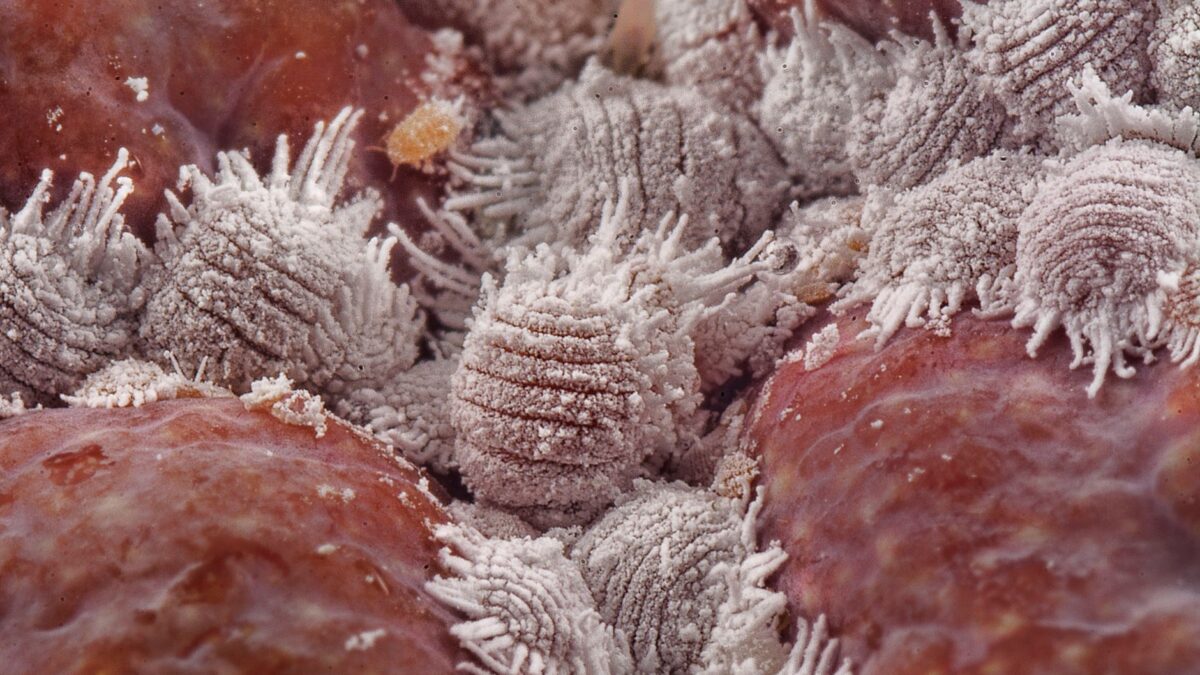
Mealybugs are small, soft-bodied insects, about 1/8 to 1/4 inch long, covered in white waxy fluff. They suck sap and leave behind a sticky honeydew, which can grow black sooty mold. Their wax repels water and sprays, which is what makes them hard to kill.
How to spot them
- White cottony clusters in leaf joints, along veins and stems, and in the plant’s crown
- Sticky residue on leaves or the table below
- Black sooty mold on that residue
- Yellowing, dropped leaves and stunted growth
- Ants, which feed on the honeydew and protect mealybugs
They hide well, so look under leaves, at stem bases near the soil, and under the pot rim. Common hosts include jade, succulents, cactus, hoya, ficus, dracaena, philodendron, pothos, palms, ferns and orchids. Spider mites make fine webbing instead of cottony clumps, and call for a different approach. If your only sign is yellow leaves, start with our guide to yellow houseplant leaves.
Why one treatment never works
Females lay 100 to 200 or more eggs in cottony sacs over 10 to 20 days, according to UC IPM. Tiny crawlers then emerge, with no wax to protect them at first, and settle to feed. Sprays work best on these young stages, while adults and eggs are shielded by wax. Indoors, warm and stable conditions let every life stage be present year-round, so you’re always treating a mixed population. UC IPM also cautions that no single product will likely give complete control.
Steps to treat mealybugs
- Isolate the plant. Move it away from all others, and check pots, stakes and neighboring plants for cottony egg sacs.
- Test first. Dab alcohol on a leaf or two and wait one to two days for signs of burn. Do the same with any soap or oil product.
- Prune the worst growth. Cut off heavily infested stems and seal them in a bag for the trash.
- Rinse. A strong spray of lukewarm water in the shower knocks off exposed insects and sticky residue. Treat sturdy plants this way; go gently with delicate ones.
- Swab each insect. Dip a cotton swab in rubbing alcohol, 70% or less, and touch it to each mealybug and egg sac. Use a fresh swab often, and use a toothpick or small brush to reach tight joints. Try to keep alcohol off the leaf surface where you can, as it can damage it.
- Spray for what you can’t see. Coat stems and leaf undersides with insecticidal soap or a labeled neem or horticultural oil product, following the label. See our comparison of neem oil vs insecticidal soap. Do not mix products.
- Repeat weekly on the schedule below.
Repeat schedule
| When | What to do | Why |
|---|---|---|
| Day 1 | Isolate, inspect, test a leaf | Stops the spread and avoids leaf burn |
| Day 2 or 3 | Prune, rinse, swab, spray | Knocks down the main population |
| Week 1 after treatment | Inspect, swab survivors, spray again | Hits crawlers from sheltered eggs |
| Week 2 | Repeat | Catches the next hatch |
| Week 3 | Repeat | Egg laying spans weeks, so hatches overlap |
| Weeks 4 and on | Inspect weekly; swab anything you find | Late survivors are easy to miss |
NC State Extension suggests weekly treatment at least twice and probably three times. Colorado State University and UC IPM both say to repeat weekly until the insects are gone. Keep the plant separate until you’ve had a few weeks with no new signs.
For heavier infestations
UC IPM says a 10 to 25% solution of rubbing alcohol in water can be sprayed for extensive infestations, repeated weekly until they’re gone. Colorado State’s PlantTalk gives 10% alcohol and 90% water. Start at the weak end and test a leaf first, because some plants are sensitive.
Rubbing alcohol is flammable. Spray away from flames, stoves and heaters, and store it out of reach of children and pets. Don’t combine it with soap or other sprays.
Plants that need special care
Some plants resist most sprays or react badly to them. Clemson Extension says not to use insecticidal soap on jade plant, one of the most common mealybug hosts, or on begonia, dieffenbachia, schefflera, maidenhair fern and certain palms. For those, use careful swabbing and pruning, and test before using anything else. On succulents and cacti, check each treated spot a day or two later.
When to discard the plant
This is often the right answer, not a failure. UC IPM advises discarding heavily infested houseplants rather than treating them with insecticides again and again, and returning or discarding any new plant you can’t fully clean. Iowa State also says it’s often best to throw out a plant that isn’t valuable before the insects spread. Consider letting go if:
- Mealybugs are all through the crown or tightly packed leaf bases
- You’ve done three or more rounds and new ones keep appearing
- The plant is small, inexpensive or easy to replace
- An old plant keeps reinfesting newer ones nearby
Seal it in a bag for the trash. Don’t add it to compost. Scrub the pot and stake before reuse.
Check the roots too
If a plant declines with no sign of insects above the soil, slide it out of its pot. Root mealybugs are pale insects that feed on roots and are harder to control. They’re most often reported on African violets and gardenias. UC IPM advises quickly discarding infested plants, before they spread. Do this before you repot anything nearby.
How to prevent them
- Inspect new plants closely and keep them apart for a few weeks.
- Check your collection weekly, especially leaf joints.
- Go easy on nitrogen fertilizer, since tender new growth attracts them.
- Keep ants away.
Bottom line
Isolate first, then swab, rinse and spray once a week for at least three rounds, and keep checking after that. Since the eggs hatch in waves, persistence matters more than the product you choose. If the plant is badly infested and easy to replace, throw it out and protect the rest.
FAQ
Does rubbing alcohol hurt plants?
It can. A quick dab on an insect is usually fine, but alcohol can burn some leaves. Test a leaf and wait a day or two before treating the whole plant.
Where do mealybugs come from?
Usually from a new plant, a cutting or a reused pot. They don’t appear from nowhere, so new arrivals and older plants nearby are the first places to look.
Can mealybugs live in the soil?
Root mealybugs do, and common mealybugs may hide around stem bases and under the pot rim. Check these spots and look at the roots if a plant declines without an obvious reason.
How long does it take to get rid of mealybugs?
Plan on at least three weekly rounds and several more weeks of checking. Many people find a few survivors, so keep inspecting even when the plant looks clean.