How to Get Rid of Spider Mites on Houseplants
Spider mites love warm, dry winter rooms and are too small to see easily. A sheet of white paper confirms them, and repeat rinsing keeps them down.
To get rid of spider mites on houseplants, isolate the plant, rinse it hard under the shower, then treat with insecticidal soap about once a week for several weeks, covering the undersides of the leaves. Confirm them first by tapping a stem over white paper. For a small, badly infested plant, discarding it is often the easier and kinder choice for your other plants.
Spider mites are not insects. They’re tiny relatives of spiders, about 1/50 inch long, that pierce plant cells and suck out the contents. Iowa State University Extension notes that trouble often starts in winter, when dry indoor air and weakened plants work in their favor. Nearly any houseplant can be a host. Ivy, Norfolk Island pine and palms are common targets.
How to recognize them
- Stippling: tiny yellow-green or pale speckles across the upper leaf surface. This is often the first sign.
- Faded, dusty-looking leaves: the plant loses its color, then leaves turn yellow, bronze or tan.
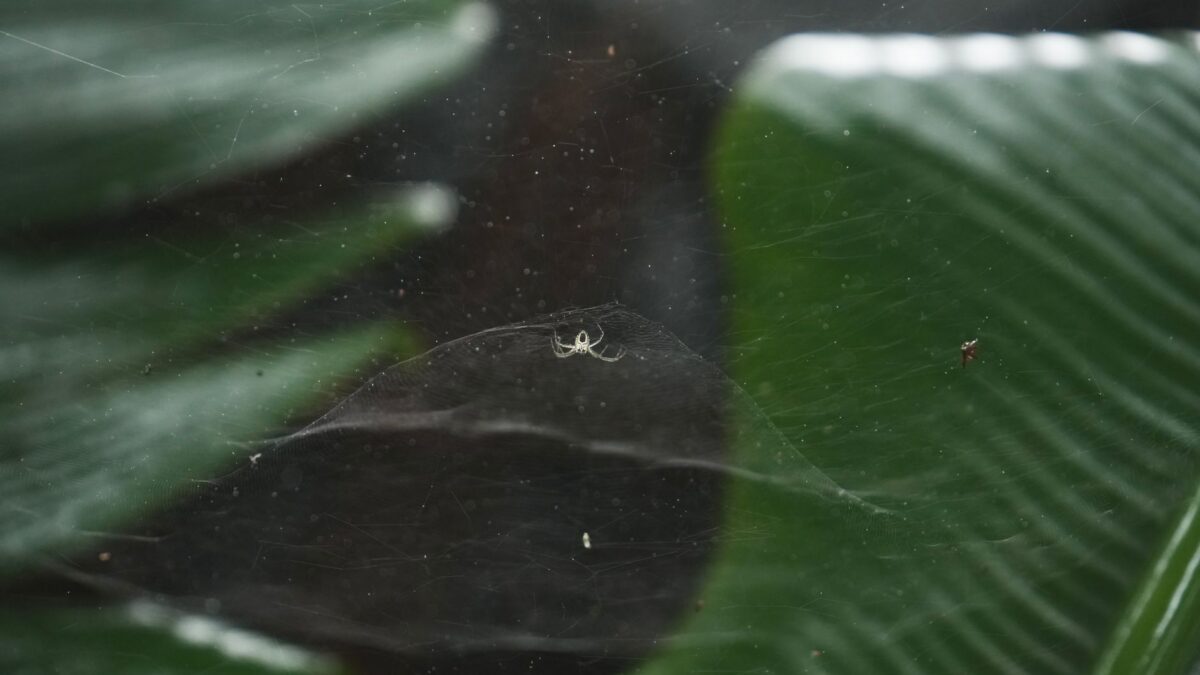
- Fine webbing: silky threads on leaf undersides, leaf joints and stem tips, which usually means a heavier infestation.
- Leaf drop: badly affected leaves dry out and fall.
Yellowing has plenty of other causes, so our guide to yellow houseplant leaves can help if you don’t see speckling.
The white paper tap test
The test is quick and needs nothing special. It’s the method Iowa State recommends.
- Hold a sheet of white paper under a stem or leaf.
- Tap or shake the stem firmly a few times.
- Watch the paper closely for a minute. A magnifying glass helps.
- Dust stays still. Spider mites look like tiny, slow-moving specks.
Ohio State University adds one further check: smear a speck across the paper. Plant-feeding mites usually leave a green streak, while yellow or orange streaks tend to come from predatory mites.
How to get rid of them
- Isolate the plant right away, and inspect anything that was touching it.
- Decide whether it’s worth saving. Iowa State says that for a small, heavily infested plant, discarding it is often easier than trying to restore it. Bag it first so mites don’t drift.
- Prune the worst parts. Cut out heavily webbed and dying stems on larger plants and bag them for the trash.
- Rinse thoroughly. Take the plant to the shower or tub and use a firm spray of lukewarm water, concentrating on leaf undersides and stem joints. This breaks up webs and knocks off many mites. Sturdy plants can take more force than delicate ones.
- Apply insecticidal soap, a ready-to-use product labeled for mites on houseplants. Coat the undersides of the leaves, since soap only works on contact. Test first if you are unsure of the plant (see below).
- Repeat. Clemson Extension suggests spraying about once a week for several weeks. New Mexico State University suggests washing once or twice a week for two to three weeks, and continuing if mites return. Follow your product’s label on spacing.
- Keep the plant isolated until repeat tap tests come up clean for a few weeks in a row.
Repetition is the real treatment. No single rinse or spray reaches every mite, and any eggs that survive will hatch after you’ve finished.
Treatment options, least toxic first
| Option | How it helps | Watch out for |
|---|---|---|
| Strong water rinse | Removes mites and webs | Needs repeating; go gently with tender plants |
| Insecticidal soap | Kills mites it touches | No lasting effect; injures some plants |
| Neem or other oil product labeled for mites | Works on contact | Test first; keep out of direct sun; see label |
| Miticide labeled for houseplants | Stronger option for valuable plants | Follow the label; check it covers indoor use |
Our guide to neem oil vs insecticidal soap compares the first two in more detail. Use one product at a time. Never mix them.
Plants that react badly to soap
Soap can injure some plants. Clemson says not to use it on ornamental ivy, maidenhair fern, dieffenbachia, schefflera, crown of thorns, jade plant, begonia, fuchsia, impatiens, zebra plant, chrysanthemum, certain lilies and certain palms. Since ivy and palms are also favorite mite targets, rely on water rinses for them, or choose a labeled product that names your plant.
On any other plant, test one leaf and wait at least 48 hours for damage to show. Don’t spray in direct sun or on a drought-stressed plant.
Skip the dish soap as well. Iowa State warns that concentrated detergents and those with grease cutters can seriously harm plants. Buy a real insecticidal soap instead.
How to keep them from coming back
- Check the undersides of leaves whenever you water, particularly in winter.
- Raise the humidity a little by grouping plants or using a humidifier. Our guide to winter houseplant care has more on this.
- Keep plants healthy. Good watering and feeding in season help them shrug off light feeding.
- Wipe or rinse dusty leaves every few weeks.
- Quarantine new plants for a few weeks before they join the others, and inspect anything coming back in from outdoors.
White cottony clumps are a different pest. If that’s what you see, go to our guide to mealybugs on houseplants.
Bottom line
Confirm mites with a white paper tap, isolate the plant, rinse it thoroughly and follow up with insecticidal soap or another labeled product about once a week for several weeks. Keep checking after the damage stops. If a small plant is covered in webbing, discard it and protect the rest.
FAQ
Can spider mites spread between houseplants?
Yes. They crawl across touching leaves and can move on hands, tools and air currents. Isolate an infested plant and check its neighbors.
How long does it take to get rid of spider mites?
Expect several weeks of repeat treatment. Damaged leaves won’t heal, so measure success by clean tap tests and healthy new growth.
Do spider mites live in the soil?
They live and feed mainly on the leaves and stems, so focus your treatment on foliage, not on the potting mix.
Does neem oil kill spider mites?
Products labeled for mites can help with contact coverage, but they need repeat applications like soap. Check that the label lists mites and indoor plants, and test on one leaf first.