When to Repot a Houseplant: Signs It’s Root-Bound and How to Size Up
Most houseplants tell you when they've run out of room. Learn the signs, why spring is usually the right time and how big a pot to choose.
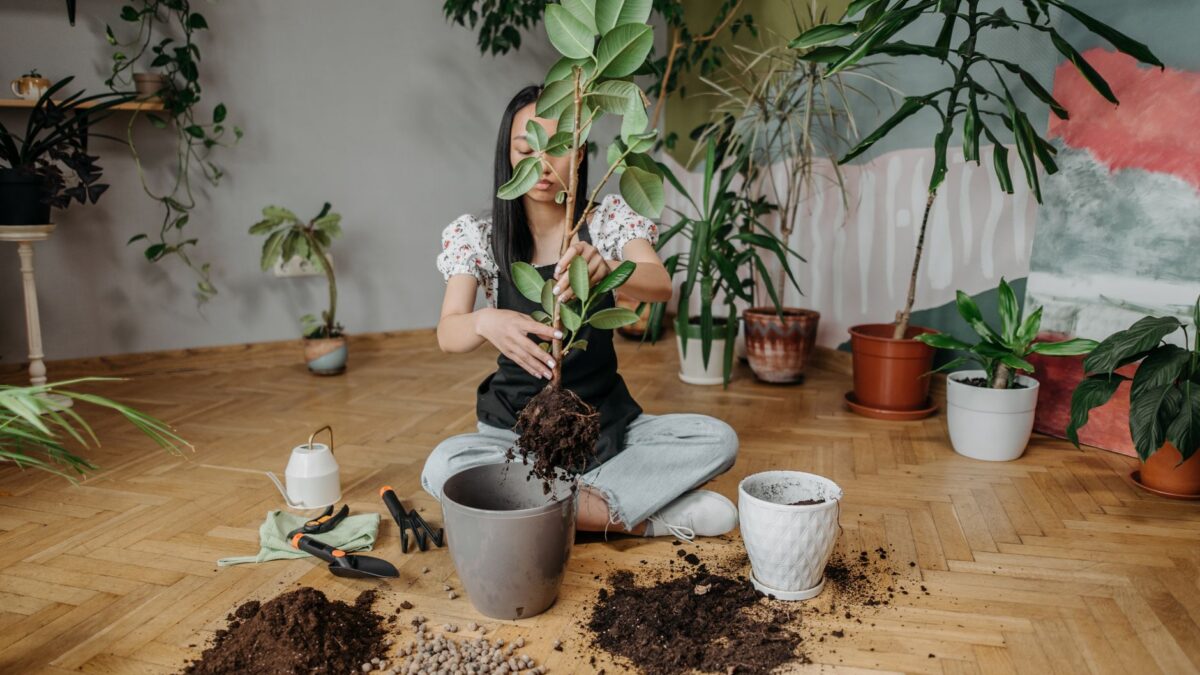
Repot a houseplant when roots circle the root ball or grow out of the drainage holes, or when the mix dries out far faster than it used to. Spring is usually the best time, because the plant is starting active growth. Choose a pot only 1 to 2 inches wider, since a much bigger pot holds extra wet mix that can lead to root problems.
Signs your plant needs repotting
- Roots are coming out of the drainage holes.
- Roots are showing on the soil surface.
- The mix dries out quickly, even in cooler weather.
- You’re watering far more often than you used to, or the plant wilts soon after watering.
- Growth has slowed or stopped, even with regular feeding in spring and summer.
- New leaves are coming in smaller than usual.
- The plant is top-heavy and keeps tipping the pot over.
One sign alone isn’t proof. Slow growth and yellow leaves also have other causes, so rule those out first. If your plant is drooping in soggy mix, it’s more likely a watering problem. Our guide to overwatered vs underwatered plants will help you tell the difference.
How to confirm it
Water the plant a day or so ahead, then gently slide it out of the pot. Penn State Extension says to repot if roots circle the root ball or are so dense that you can barely see any mix in the bottom third. If you can still see plenty of mix and the roots look loose, put the plant back and leave it alone.
Why spring is usually the right time
Plants recover fastest while they’re actively growing, which is why spring is the standard choice, with summer also fine. Clemson’s Home & Garden Information Center advises against repotting plants that are ailing, dormant or beginning to flower. The Royal Horticultural Society also warns that in autumn and winter, growth slows and fresh mix can stay too wet.
Houseplants live indoors, so this timing doesn’t depend on your USDA zone. Go by the season and whether the plant is growing.
There are exceptions. Don’t wait for spring if a plant has root rot or has become so pot-bound that it can’t hold water. For rotting roots, follow our steps to save a plant from root rot. If your plant is just shedding a few leaves in winter, repotting probably won’t help. See why houseplants drop leaves in winter first.
How much to size up
| Current pot width | New pot width |
|---|---|
| 4 inches | 5 to 6 inches |
| 6 inches | 7 to 8 inches |
| 8 inches | 9 to 10 inches |
| 10 inches or more | About 2 inches wider |
Clemson recommends 1 to 2 inches wider, and the RHS suggests no more than about one-third larger. A pot with drainage holes is essential. Clemson also advises against a layer of gravel or shards at the bottom, because it slows water movement. A small piece of screen or broken pot over the hole is enough to hold the mix in.
How often to repot
Fast growers may need a new pot about once a year, while slow growers can often go two to three years. Some plants are happy being a bit snug. Amaryllis does well slightly pot-bound, and snake plants can go years between repots.
For a plant too large to move, Clemson suggests top-dressing: replace the top 2 or 3 inches of mix with fresh mix about every other year.
How to repot a houseplant
- Prepare the plant. Water it in its old pot and let it rest for about an hour, so the root ball slides out more easily.
- Prepare the pot. Clean a used pot, then sanitize it in 1 part bleach to 9 parts water and rinse well. Soak a new unglazed clay pot overnight so it doesn’t pull water from the mix.
- Moisten fresh mix. Use a houseplant potting mix, never garden soil. Our guide to potting mix vs garden soil explains why.
- Cover the drainage hole with a small piece of screen or broken pot.
- Remove the plant. Turn the pot on its side, support the stems and ease out the root ball. Tap the rim on a solid surface if it sticks.
- Loosen the roots. Gently tease them apart. If they’re tightly circled, score the root ball lightly with a knife. Cut away any soft, rotten roots.
- Set the height. Add mix until the top of the root ball sits about an inch below the rim. Don’t bury the plant deeper than it was before.
- Fill around the sides and firm the mix gently with your fingers. Don’t pack it down.
- Water thoroughly until water runs from the holes, then let it drain well before putting the plant back in place.
After repotting
- Expect a little droop for a few days, which is normal after root disturbance.
- Keep the plant in bright, indirect light while it settles.
- Water only when the top of the mix starts to dry. The bigger pot stays wet for longer than the old one.
- Hold off on fertilizer for several weeks, since many fresh mixes already contain some.
A safety note: many popular houseplants, including pothos, philodendron and monstera, are toxic to cats and dogs if chewed. Keep trimmings and any fertilizer-enriched mix away from pets, and wear gloves if the sap irritates your skin.
Bottom line
Repot because of what the roots are doing, not because of the calendar. If roots are circling or the plant dries out too fast, wait for spring if you can, go up just 1 to 2 inches and keep the plant at the same depth. If the roots look fine, leave it alone.
FAQ
Can I repot a houseplant in winter?
It’s best to wait unless the plant has an urgent problem such as root rot. Growth is slow in winter and fresh mix stays wet for longer.
What if my plant is root-bound but I don’t want it to get bigger?
You can keep the same pot. The RHS suggests pruning up to a quarter of the outer roots, then returning the plant to its pot with fresh mix. Trim some top growth to match.
Do I need gravel in the bottom of the pot?
No. Clemson says a gravel layer slows water movement. Cover the hole with a small piece of screen or broken pot and fill with mix.
Should the soil be wet or dry when I repot?
Moist is best. Water the plant about an hour beforehand and moisten the new mix first, but don’t pack wet mix tightly around the roots.