How to Get Rid of Moss in Your Lawn (and When to Leave It)
Moss doesn't kill grass. It fills the space where grass is already failing, so the lasting fix starts with the site, not with a bottle of moss killer.
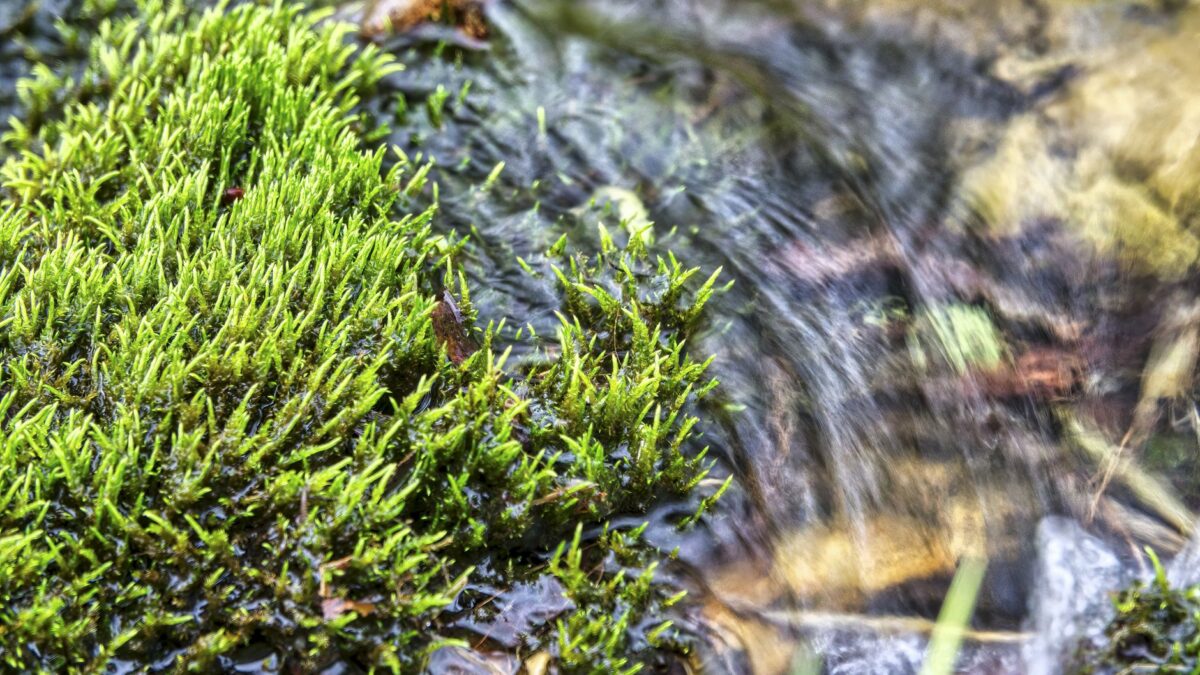
Moss doesn’t kill grass. It moves in where grass is already failing. To get rid of it, fix the cause (shade, compaction, poor drainage, low fertility or short mowing), rake out the moss, then reseed. Moss killers only buy time. If a spot gets less than about 4 hours of direct sun a day, consider leaving the moss alone or planting something else.
That order matters. Penn State Extension says attempts to eradicate moss are rarely effective unless dense, actively growing turf takes its place. Kill it without fixing the site and it usually returns.
What is causing your moss?
| Cause | Clues | Fix |
|---|---|---|
| Too much shade | Moss under trees or on the north side of a building; grass is thin and spindly | Prune or thin trees; seed shade-tolerant fine fescue or rough bluegrass |
| Compacted soil | A screwdriver won’t go in; water sits or runs off | Core aerate |
| Poor drainage or overwatering | Low spots stay soggy; irrigation runs often | Water less; build up low spots or add a slope; improve drainage |
| Low fertility | Pale, thin grass that never fills in | Soil test, then fertilize as the report suggests |
| Wrong pH | Only a soil test can tell | Lime or adjust only if the test calls for it |
| Mowing too short | Scalped patches; thin turf | Raise the mower; aim for 3 to 4 inches in shade |
Most mossy lawns have more than one of these. A shady, damp, rarely fed corner is the classic case.
How to get rid of moss, step by step
- Test the soil. A lab report tells you what the grass lacks, and whether pH is part of the problem.
- Fix the conditions. Prune for more light and airflow, aerate compacted spots and cut back on watering. Wisconsin Extension puts it simply: long-term control means changing the environment.
- Time it right. In a mild, wet climate such as western Oregon, moss grows from the fall rains to early spring. Oregon State University Extension recommends removing it from mid-March through April, not in fall, when moss would outcompete new grass. Elsewhere, match the work to your grass and USDA zone, using our guide on when to overseed a lawn.
- Rake it out. Use a stiff hand rake on small areas, or rent a flail dethatcher for larger ones. This may also pull up a lot of grass, so plan to reseed. Our article on aeration vs dethatching explains both jobs.
- Use a product only if you need to. See the options below. Rake out any dead moss afterward.
- Feed and reseed. Fertilize based on your soil test and local rules, then spread seed suited to the site. Fine fescues do best in shaded, well-drained soil, and rough bluegrass in shaded, moist soil.
- Protect the seed. Mulch lightly with compost or straw and water daily for at least two weeks. Our guide to repairing bare spots covers the details.
- Keep the grass dense. Mow high, feed according to the soil test, and water deeply and less often.
Moss control products
Raking is the least toxic option and the one to try first, especially if you have pets or children. If you do want a product, these are the common choices. Follow the label, apply them separately and never mix them.
| Active ingredient | What it does | Cautions |
|---|---|---|
| Iron sulfate | Blackens moss and gives grass a darker color, but adds little grass growth | Effect is short-lived. Can stain concrete and other hard surfaces, so keep it off paths and rinse spills. |
| Potassium salts of fatty acids | Selective moss control | Can cause significant eye damage. Wear eye protection. |
| Ammonium sulfate | Fertilizer that stunts moss while feeding grass | Apply at the label rate; too much can burn turf and adds nitrogen to a shaded lawn that needs less. |
| Glyphosate | Kills moss and grass | Only for a full lawn renovation. |
Two warnings. Roof and walkway moss products often contain copper or zinc, which will injure or kill lawns, so don’t use them on grass. And keep pets and children off treated areas for as long as the label says, and store products out of their reach.
Will lime get rid of moss?
Not directly. This is one of the most repeated lawn tips, but moss doesn’t simply mean acidic soil. Oregon State says liming has no direct effect on existing moss, though it can help grass over the long run if pH is truly low. Wisconsin Extension says lime is usually not effective.
University of Illinois Extension goes further, noting that lime isn’t suggested unless a soil test shows pH needs raising, and that many northern Illinois soils are already high in pH, so lime can make things worse. Read does my lawn need lime before you buy a bag.
Feeding a shaded lawn
Shade changes the rules. Grass in shade grows less and needs less nitrogen. Illinois Extension suggests about 1 to 2 pounds of actual nitrogen per 1,000 square feet a season in shade, compared with 2 to 4 pounds in full sun. Overfeeding a shady lawn won’t make grass thicken, because light is the limit.
When to accept the moss
Sometimes the moss has it right. Oregon State notes that turfgrass will likely not grow well with less than 4 hours of direct sun a day. If you can’t or don’t want to remove trees, a redesign is often the better answer.
- Leave it. A soft green moss patch needs no mowing and no fertilizer. Illinois Extension even calls it delightful to walk on barefoot. Just rake off fallen leaves.
- Mulch it. A mulched bed under trees removes the fight altogether.
- Plant a shade groundcover. Choose one suited to your USDA hardiness zone, and check its toxicity if you have pets.
Bottom line
Treat moss as a symptom. Work out why the grass is thin, fix the shade, soil or watering, rake out the moss and reseed at the right time for your region. Products give a quick knockdown, but they don’t last by themselves. If the site gets too little sun, let the moss stay or plant something else.
FAQ
Does moss kill grass?
No. Moss grows where grass is already thin or missing. Once it is established, though, grass rarely spreads back in on its own.
What is the best time of year to remove moss?
It depends on your climate. In wet winter areas like western Oregon, go for spring. In general, do the work when your grass can grow strongly and seed can establish.
Will moss come back after I rake it?
Yes, if conditions don’t change. Spores spread easily, and they survive in soil. Dense grass and a drier, brighter site are what keep it away.
Is moss killer safe for pets?
It depends on the product, so read the label and keep pets off for the stated time. Raking is the safest way to remove moss, and some products can injure eyes.