How to Fix Bare Spots in Your Lawn, Step by Step
Seed only sticks if you fix the reason the grass died. Here is the short diagnosis, the repair, and when to do it for your grass type.
To fix a bare spot, find out why the grass died, rake away the dead material, loosen the top inch of soil, sow seed that matches your lawn, press it in and keep the surface moist until it sprouts. Do it when your grass grows best: early fall for cool-season grass and late spring to early summer for warm-season grass. If you skip the diagnosis, the new grass will likely die the same way the old grass did.
Start with why it went bare
University of Maryland Extension puts this first: correct compaction, poor drainage or other underlying conditions before filling in a declining area. A quick look usually tells you which one you are dealing with.
| Where the spot is | Likely cause | Fix before seeding |
|---|---|---|
| Footpaths, gate areas, play spots | Traffic and compaction | Loosen deeply, reroute foot traffic, consider stepping stones |
| Under trees or by the north side of a building | Shade and root competition | Use shade-tolerant seed, thin branches, or switch to mulch or groundcover |
| Beside driveways and walks | Winter salt | Flush the soil first |
| Small circles | Dog urine or a spill | Water, then remove the top inch of soil |
| Irregular dead patches that lift easily | Grubs | Count and treat if needed |
| Low spots that hold water | Poor drainage | Regrade or fill to level |
For compaction, see our guide to fixing compacted soil. For spots along pavement, read about salt damage first, because Cornell’s turf program notes that salt can prevent germination and hurt seedlings.
What you need
- Iron rake or hand cultivator
- Grass seed matching your lawn (or sod or plugs for grasses that are not seeded)
- Compost or quality topsoil
- Weed-free straw, if needed
- Hose with a fine mist nozzle
How to repair the spot
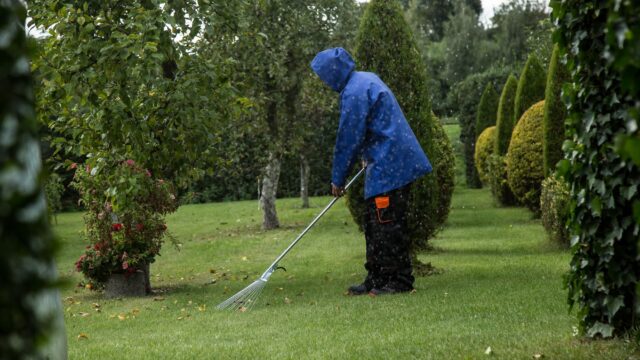
- Rake it clean. Remove dead grass and thatch so seed touches soil. Maryland Extension notes that matted dead grass encourages disease and blocks contact with the soil.
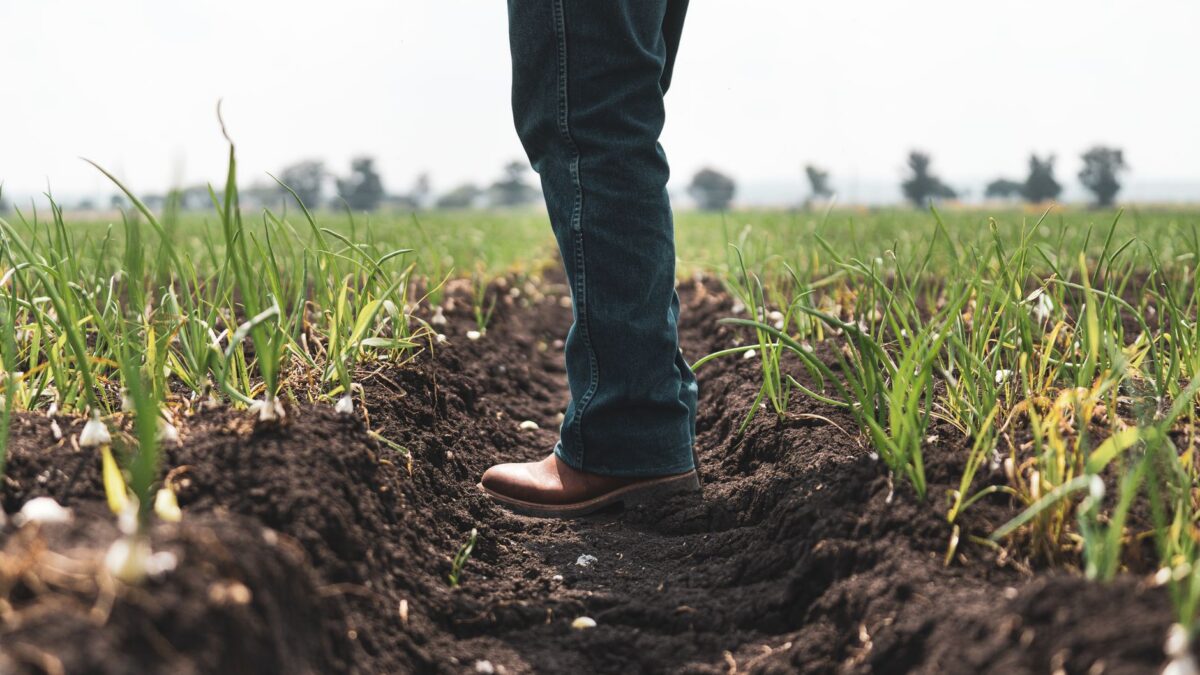
- Loosen the soil. Break up at least the top inch with a rake or cultivator. Go deeper on hard, compacted ground.
- Level it. Add a little compost or topsoil so the spot sits level with the surrounding lawn, not above it and not in a dip where water will collect.
- Sow lightly. Use the rate on the seed label. Too much seed produces crowded seedlings that compete with each other for light and water.
- Firm it in. Good seed-to-soil contact is what drives germination. Tamp the seed with the back of a rake, or roll larger areas with a water-filled roller. Do not bury it deep.
- Cover it. A very thin layer of compost or weed-free straw holds moisture and hides seed from birds. Straw can stay in place and will break down with mowing.
- Water gently. Use a fine mist and keep the surface damp, like a wrung-out sponge, not waterlogged. In warm, dry weather that can mean several light waterings a day.
- Taper off. Once seedlings appear, usually a week or two after sowing for faster grasses, begin watering less often and more deeply.
- Feed and mow. A light fertilizer application around two weeks after seeding can help establishment. Mow when the new grass reaches your normal mowing height and the soil is firm enough to walk on.
When to do it, by grass type
The dates below are general windows, based on NC State’s lawn planting tables and common extension guidance. Shift them for your USDA zone and your local weather, and check with your state extension service.
| Grass | Best time | How to patch | Germination |
|---|---|---|---|
| Tall fescue | Late summer to early fall; spring is second best | Seed | About 1 to 2 weeks |
| Kentucky bluegrass | Late summer to early fall | Seed or sod; it also spreads by rhizomes | Slow, often 2 to 4 weeks |
| Perennial ryegrass | Late summer to early fall | Seed | Fast, often about a week |
| Fine fescue | Late summer to early fall | Seed | About 1 to 2 weeks |
| Bermudagrass | April to July, once soil is warm | Seed, sod or plugs (hybrids are not seeded) | About 1 to 2 weeks in warm soil |
| Zoysiagrass | April to July | Plugs or sod; often slow from seed | Slow |
| Centipedegrass | March to July | Seed, plugs or sod | Slow |
| St. Augustinegrass | April to July | Sod or plugs only; seed is not available | Not applicable |
Germination times vary with seed lot and soil temperature, so use them as rough guides. Check your own seed label. Our guide to when to overseed has more detail by region.
Common mistakes
- Using a crabgrass preventer around seeding. Most pre-emergent herbicides stop grass seed too. See pre-emergent vs post-emergent, and read the label for any wait time.
- Letting the surface dry out. A seed that has started to sprout will not survive a dry spell.
- Sowing a generic mix on a single-grass lawn. A coarse fescue in fine bluegrass will stand out. Buy the same type you already have.
- Seeding under heat stress or into frozen soil. Summer heat is hard on cool-season seedlings, and cold soil leaves seed sitting unsprouted.
- Skipping the soil test. On a large or repeat problem area, test before adding lime or fertilizer. Maryland Extension bases these steps on a lab test from the past three years.
Patch or start over?
Small spots are easy. Maryland Extension suggests full renovation when more than about half of the lawn is weeds, or when soil over large areas needs improving. Anything less, and patching and overseeding usually make more sense.
Bottom line
The seed is the easy part. Find out what killed the grass and fix that first, then give the seed clean, loose soil, firm contact and steady moisture during the right season for your grass type. If it is the wrong season right now, make the soil ready and wait.
FAQ
Can I just throw grass seed on bare spots?
Some seed may sprout, but much of it will dry out, wash away or feed birds. Loosening the soil and pressing the seed in makes a big difference.
Can I fix bare spots in November?
In most of the country, it is too late for good germination this year. Clear and prepare the spot, then seed in spring or next early fall for cool-season grass and late spring for warm-season grass.
Should I use patch-repair products with mulch included?
They can work on small spots if they contain the right grass for your lawn. Check the seed type on the label, since a mix that does not match will show.
How long before I can walk on the patch?
Keep foot traffic and pets off until it has been mowed a few times and feels firmly rooted when tugged.