Why Is My Compost Not Breaking Down? Causes and Fixes
If your pile looks the same as it did two months ago, the microbes are missing something. Here is how to work out what, and how to restart it.
A compost pile usually stalls for one of a few reasons: it is too dry, too wet, short on green material, short on air, full of large pieces, or too small to hold heat. Squeeze a handful from the middle to check the moisture, then turn the pile and add whatever is missing. In cold weather it may simply be dormant and will restart on its own in spring.
Compost is made by microbes, and they need food, water and oxygen in the right balance. A pile that hasn’t changed in two months is almost always missing one of those. The table below will help you find which one.
Find the cause
| Cause | What you see | Fix |
|---|---|---|
| Too dry | Dry, dusty material in the center; things look much as they did when you added them | Add water as you turn until it feels like a wrung-out sponge |
| Too wet | Soggy, matted layers, often with a bad smell | Mix in dry browns, turn, and keep rain off |
| Too many browns | Damp but cold; mostly leaves, straw or wood | Turn in grass clippings, kitchen scraps or other greens |
| Too little air | Packed down, especially in the center | Turn it and add coarse material such as small twigs or wood chips |
| Pieces too big | Whole leaves in mats, thick stalks, branches | Shred or chop first; keep twigs under about 1/4 inch thick |
| Pile too small | Damp and balanced but never warms up | Build it to at least 3 x 3 x 3 feet |
| Cold weather | Everything stopped when temperatures dropped | Wait; activity picks up again once air temperatures climb above about 50°F |
If your problem comes with a strong odor, go to our guide on why compost smells bad, which covers wet, airless piles in more detail.
Get the browns and greens right
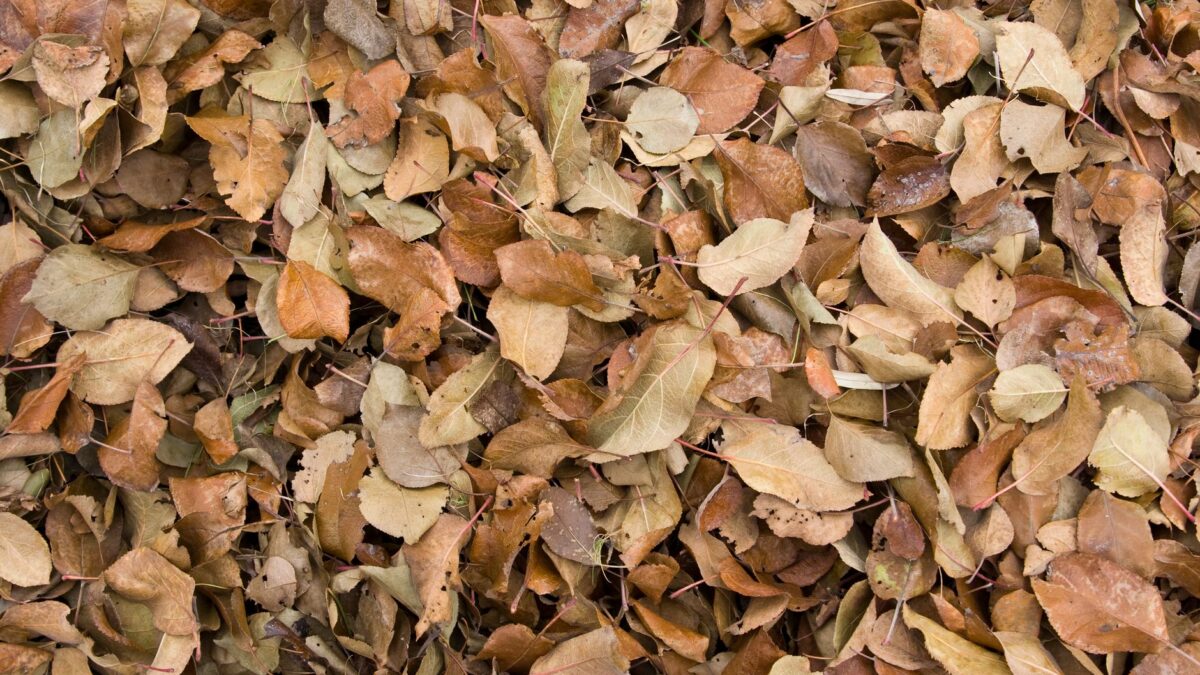
Browns are rich in carbon: dry leaves, straw, shredded newspaper and cardboard, sawdust and small twigs. Greens are rich in nitrogen: grass clippings, vegetable and fruit scraps, coffee grounds and fresh plant trimmings. The names describe the chemistry, not the color, so coffee grounds count as a green.
The EPA suggests at least two to three times as much brown material as green by volume, while University of Wisconsin Extension uses two parts brown to one part green. Behind those rules of thumb is a target of roughly 25 to 30 parts carbon to 1 part nitrogen. You don’t need to calculate it. A cold, damp pile wants more greens. A pile that smells of ammonia wants more browns.
How to restart a stalled pile
- Fork the whole pile apart. Set aside anything finished. Move material from the dry outer edges to where the center will be, since that is where the heat builds.
- Chop or shred large pieces. Smaller pieces give microbes more surface to work on. Running a mower over dry leaves is an easy way to do this.
- Rebalance as you rebuild. Layer in whichever material the table says you are short of.
- Water as you go. Aim for the feel of a wrung-out sponge. Moisten dry layers instead of soaking the finished pile from the top.
- Add a shovelful of garden soil or finished compost. It brings in plenty of the microbes you want.
- Rebuild to full size. Aim for at least 3 feet in each direction, or about a cubic yard. Don’t go much beyond 5 feet per side, because larger piles get too little air in the middle.
- Check for heat. Oregon State University Extension says a pile of about half a yard to a yard of fresh material usually heats within a week. A hot pile reaches 130°F or more in the center.
- Keep turning. Advice varies from weekly during the hot phase to every few weeks. More turning means faster compost; less turning simply takes longer.
How long should compost take?
Less time than you might fear, but more than a few weeks. The EPA says a well-maintained pile is ready in about three to five months, and an untended one may take up to a year. After the pile stops heating, let it cure for at least four weeks. It will shrink to about a third of its original size, so a pile that seems to be sinking is doing its job.
A slow, cool pile isn’t a failed pile. It still makes compost, it just takes longer. The catch is that a cool pile may not reach the temperatures needed to kill weed seeds and disease organisms, so keep seedy weeds out and read which diseased plants can go in the pile.
Some things will always lag behind. Wood chips and woody stems take far longer than kitchen scraps, and the EPA notes that backyard piles generally don’t get hot enough to fully break down compostable bags and foodservice ware. Screen out any lumps and toss them back into the next pile.
Compost in cold weather
Late fall is a great time to stockpile material, even if the pile itself slows down. Bag or heap dry leaves now, since you will want browns in summer when clippings pile up. Our guide on whether to mulch or rake leaves covers the options.
In colder USDA zones, a pile usually goes dormant in winter. University of Minnesota Extension suggests turning less often in winter, since frequent turning releases heat. A bigger or insulated pile will stay active longer, but there is no harm in letting it rest. Penn State Extension’s timing is a good model: start a pile during fall cleanup and it will be working again as spring warms up.
Bottom line
Check moisture first, because it is the most common and easiest fix. Then look at the mix, the particle size and the size of the pile. If you turn it, chop what is large and rebuild it at about a cubic yard with the feel of a wrung-out sponge, most piles start working again within days in warm weather.
FAQ
Does a compost pile have to get hot?
No. A cool pile still decomposes, just more slowly. Heat matters mainly for speed and for killing weed seeds and many disease organisms, which takes about 130°F or higher.
Should I keep adding to a stalled pile?
Fix it first. Adding more of the same material usually makes the imbalance worse. If you have a steady flow of scraps, start a second pile and let the first one finish.
Do I need a compost starter?
Usually not. A shovelful of garden soil or finished compost supplies plenty of microbes. If a pile is stuck, moisture, air and the brown-green balance are the things to change.
How do I know when compost is finished?
It is dark brown, crumbly and smells earthy. The pile no longer heats up, and you can’t recognize what went into it.