How to Protect Plants From Frost: What to Cover and When
Most frost damage is avoidable once you know which plants need help at which temperature. Here is what to cover, when to do it and when to leave plants alone.
To protect plants from frost, water the soil the day before, move pots under shelter, and drape fabric over tender plants by late afternoon so it reaches the ground and holds in the soil’s heat. Take the cover off the next day once the air is above freezing. Established perennials, shrubs and roses usually don’t need covering in fall, because cold is what sends them into dormancy.
Frost or freeze: why the difference matters
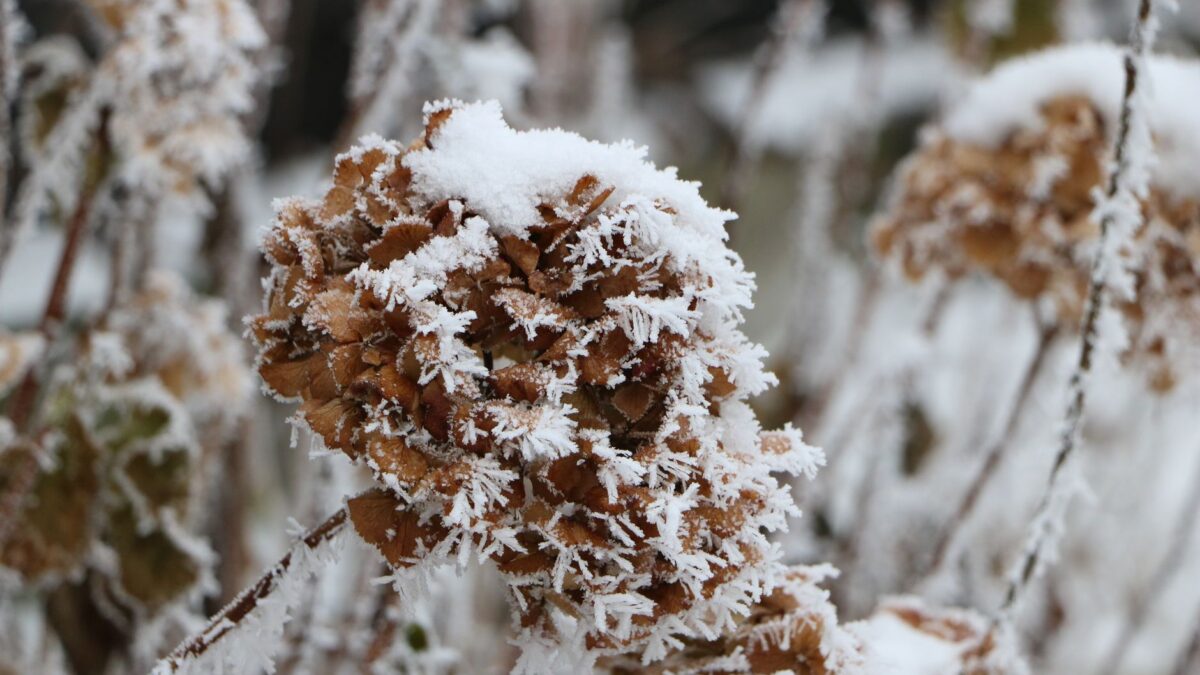
Frost is ice forming on leaves, and it can happen while your porch thermometer still reads above freezing. That’s why the National Weather Service issues frost advisories for forecast lows of 33 to 36°F, as Iowa State University Extension explains. A freeze means the air and the plant’s tissue fall below 32°F and ice damages the cells. Leaves darken, then wilt or collapse.
Frost is most likely on clear, still nights, when heat escapes from the ground fastest. Low spots tend to get hit first because cold air settles there.
Your USDA hardiness zone tells you how cold winter usually gets, not when frost will arrive. Watch the local forecast from early fall and start acting when lows reach the mid-30s°F. In mild zones, the same steps apply to the occasional cold snap in January or February.
Which plants need help at which temperature
The freeze bands below follow the classification used by the Western Regional Climate Center. Treat them as a guide, not a promise. Time below freezing matters as much as the low itself: Iowa State notes that plants can be damaged above 28°F if subfreezing temperatures last five hours or more.
| Forecast low | What is at risk | What to do |
|---|---|---|
| 33–36°F (frost possible) | Tender plants on clear, calm nights: tomatoes, peppers, beans, squash, cucumbers, coleus | Cover tender plants and bring in pots of tropicals |
| 29–32°F (light freeze) | Tender plants are killed; hardier plants see little harm | Cover or harvest warm-season crops and move tender pots indoors |
| 25–28°F (moderate freeze) | Widely damaging to tender and semi-hardy plants and to fruit blossoms. Spinach, kale, carrots, beets, lettuce and pansies often survive 28°F, sometimes 26°F | Harvest what you can. Fabric covers lose much of their value below about 28°F, so move anything portable inside |
| 24°F and colder (severe freeze) | Heavy damage to most plants that aren’t hardy in your zone | Move pots into a garage or the house and don’t rely on covers alone |
Plants vary more than these bands suggest. Iowa State gives the example of a 31°F night that left petunias green and killed coleus.
What you can leave uncovered
Iowa State advises against protecting perennials, woody shrubs, roses and small trees in fall. They need cold to go dormant, and they tolerate temperatures at or just below freezing.
The exceptions are young citrus, tropicals and anything you planted outside its usual zone. The University of Florida suggests protecting young, cold-sensitive citrus when lows reach the mid to upper 20s°F, while baby live oaks and camellias generally don’t need covering.
Spring is a different story. After a warm spell, flowers, buds and new leaves on fruit trees and shrubs can be damaged. The plant usually survives, but you may lose bloom or fruit, and covering a full-size tree isn’t practical.
How to protect plants before a frost
- Check the forecast by midday. Note the overnight low and whether the night will be clear and calm.
- Water the day before. Moist soil holds more heat than dry soil and releases it overnight. Water at ground level and don’t leave the soil waterlogged, because long-term saturation damages roots.
- Move containers. Pots have far less soil around their roots than plants in the ground. Carry them to a garage, shed or heated room for the night.
- Harvest what’s ready. Pick ripe tomatoes, peppers and beans before a freeze. Mature green tomatoes can finish indoors, as our guide to tomatoes that won’t ripen explains.
- Set up supports. Stakes, wire hoops, sawhorses or patio furniture keep fabric off the foliage.
- Cover by late afternoon. Use frost cloth, bedsheets or blankets, and see our comparison of frost cloth, plastic and sheets for which to pick. Covers work by trapping heat rising from the soil, so get them on before that heat is gone.
- Take the fabric to the ground. Hold the edges down with bricks or similar weights. Don’t tie a cover around a young tree’s trunk, a mistake Florida’s extension calls lollipopping, because the heat from the soil never reaches the canopy.
- Uncover the next day. Remove covers once the air is above 32°F. Left on in bright sun, they can overheat plants. Replace them before dusk if another cold night is coming.
Extra help for small plants
- Straw: a light layer over low plants can add a few degrees, according to the University of Florida. Clear it away after the cold passes. Longer-term protection is a separate job, covered in our guide to when to apply winter mulch.
- Cold frames and hoop tunnels: close them before temperatures fall below freezing, and open them during the day.
- Incandescent string lights: old-style bulbs give off a little heat under a cover, but LEDs don’t. Use outdoor-rated lights only, and keep bulbs from touching fabric or leaves.
Methods to skip
- Plastic touching the plant. Leaves in contact with plastic can freeze, and on a sunny morning plastic heats up fast.
- Casual sprinkling. Sprinkler protection needs a steady water supply and careful timing. Done casually, it can do more harm than good, because droplets freeze on leaves and stems.
- Fertilizing or pruning just before cold. Neither helps, and pruning can stimulate soft new growth.
If a plant gets hit anyway
Don’t rush to cut it back. Dead leaves can shield the living wood from the next freeze, and the real extent of damage takes weeks to show. Our guide to freeze-damaged shrubs explains the scratch test and when to prune. Soft annuals that have collapsed can be pulled and removed.
Bottom line
Pay attention when lows drop into the mid-30s°F. Water the day before, bring pots inside, cover tender plants with fabric that reaches the ground, and uncover them the next day. Leave hardy plants alone in fall. Below about 28°F, or when subfreezing weather lasts for hours, covers can’t be counted on, so harvest and move what you can.
FAQ
At what temperature should I cover my plants?
For tender plants, start when the forecast low is in the mid-30s°F, especially on a clear, calm night. Frost can form on leaves even when the official low stays above 32°F.
Should I water plants before a frost?
Yes, a day or so ahead if the soil is dry. Moist soil stores more heat. Avoid leaving it soggy, and don’t spray the foliage.
Can I leave covers on for several days?
During a stretch that stays below freezing, fabric can stay on. If days warm up, take it off so plants get light and the soil can soak up heat for the next night.
Do potted plants need more protection than plants in the ground?
Yes. Their roots lack the insulation of surrounding soil, so moving pots to a garage or indoors is the safest choice whenever a freeze is forecast.