When to Plant Tomatoes Outside: A Calendar by USDA Zone
The calendar gets you close, but soil and night temperatures make the final call. Here is the timing by zone and what happens if you jump the gun.
Plant tomatoes outside after your last frost date, usually a week or two after, once the soil is around 55 to 60°F and nights stay reliably above about 52°F. Use the zone calendar below as a starting point, then let soil temperature and the forecast decide. Waiting a week almost always beats replanting.
The numbers to watch
| Measure | Minimum | Better |
|---|---|---|
| Frost | None expected | 1 to 2 weeks past your average last frost |
| Soil temperature, about 4 inches down | 50 to 55°F | 60°F or a little higher |
| Night air | Above about 52°F | 60 to 70°F |
| Day air | Above about 60°F | 70 to 80°F |
Sources set the soil minimum differently. University of Wisconsin Extension says at least 50°F, Colorado State University says above 55°F, and Oregon State suggests about 60°F. Colorado State also gives the air minimums of about 52°F at night and 60°F by day. Treat the higher figures as the comfortable target, and the lower ones as the point where it becomes possible.
Calendar by USDA zone
Zones are only a rough guide here. The USDA Plant Hardiness Zone Map is based on the average lowest winter temperature, not on frost dates or summer heat, so two places in the same zone can differ by weeks. These windows are approximate. Check your local last-frost date with your county extension office.
| USDA zone | Rough outdoor planting window | Notes |
|---|---|---|
| 3 to 4 | Early to mid-June | Short season; choose early varieties and use protection |
| 5 | Mid-May to early June | Southern Wisconsin can start in early May; Colorado’s Front Range typically plants in late May |
| 6 | Early to late May | Watch for a late cold snap |
| 7 | Late April to mid-May | South Carolina’s Piedmont lists May 1 to June 30 |
| 8 | March to April in the Southeast | Western Oregon waits for late May or early June, when soils warm. South Carolina’s Coastal Plain has a fall window of July 1 to 15 |
| 9 | Late winter to early spring | Plant early enough to fruit before peak heat; a second crop is possible in late summer |
| 10 | Fall through late winter in many areas | Summer heat, not frost, is the limit; check local guidance |
Zone 8 shows the problem clearly: a coastal Pacific Northwest garden and a South Carolina garden can share a zone, yet their planting dates sit two months apart. That is why soil temperature matters more than the map.
If you are reading this in November, most gardeners are planning for next spring. Start with the seed-starting calendar. Tomato seeds go in indoors about 6 to 8 weeks before your last frost date.
How to pick your date
- Find your average last frost date. Your extension office can give you a local figure. Remember it is an average, not a promise.
- Add a week or two as a safety margin.
- Check the soil. Push a soil thermometer about 4 inches down in the morning for a few days in a row.
- Check the forecast. Avoid setting plants out just before a cold spell.
- Harden off. For about 7 to 14 days, give plants gradually more time outdoors. Wisconsin advises keeping them away from temperatures below 45°F and cutting back on water and fertilizer during this stage.
- Plant on a cloudy day or in the evening to reduce wilting. Water plants thoroughly first.
What happens if you plant too early
- Frost damage. Even a light frost can kill tomato plants outright.
- Stunting. Colorado State says a week of daytime highs below 55°F stunts plants and reduces yields.
- Slow start. Cool soil slows early growth, so a plant set out later in warm soil often catches up with an early one.
- No fruit set. When nights drop below 55°F, pollen does not develop properly, and flowers can fall. See tomato flowers but no fruit.
If a cold snap arrives after planting, cover plants overnight. Our guide on how to protect plants from frost covers the steps. Once warm weather returns, a water-soluble fertilizer can help renew growth, according to Colorado State.
Getting a head start safely
Gardeners in short-season zones can warm things up with black plastic mulch over the soil, water-filled plant protectors for mild frost, or row cover during cold spells. Wrapping a cage with plastic for the first week can shield plants from cool wind. Remove anything that traps heat once days warm up.
Planting it right
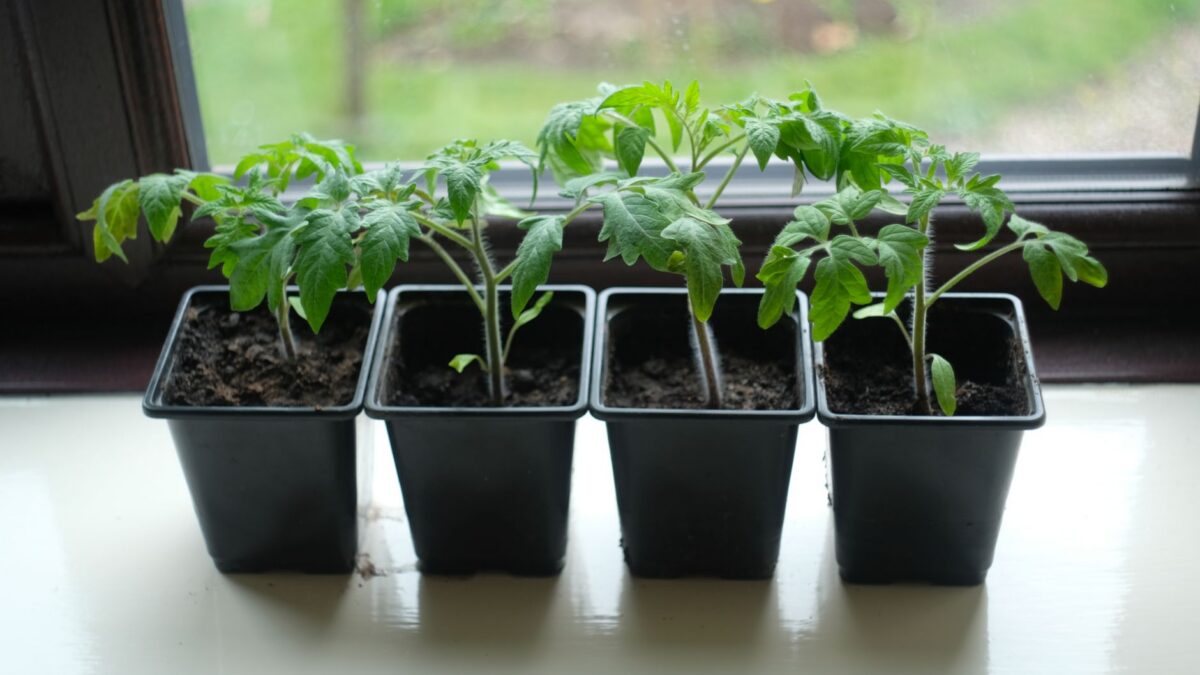
Choose stocky transplants about 6 to 10 inches tall, ideally not yet flowering. Clemson says to set them deep enough that only two or three sets of true leaves show. Leggy transplants can go in sideways in a shallow trench, because roots form along the buried stem. Install your support at the same time. Our comparison of tomato cages and stakes will help you choose.
Do not plant too late either
In warm regions, late planting is the bigger risk. University of Florida guidance advises planting in late winter or early spring and warns that large-fruited tomatoes stop setting fruit once nights get very warm, around 80°F. Cherry and grape types handle summer heat better.
Bottom line
Use your zone to choose the month, your last frost date to choose the week, and the soil thermometer and forecast to choose the day. If you are in doubt, wait another week.
FAQ
Can I plant tomatoes in April?
In warmer zones, often yes. In zones 6 and colder, April is usually too early without protection.
How do I know when the soil is warm enough?
Use a soil thermometer about 4 inches deep in the morning. Aim for 55 to 60°F for several days in a row.
Is it too late to plant tomatoes in June?
Not in most regions, if you choose a variety that can mature before fall frost or peak heat. Check the days to maturity on the tag.
Can I plant tomatoes in the fall?
In warm regions, yes. Fall crops are common in the Deep South and warmest zones. Check with your extension office for local dates.