How to Protect Young Trees From Rabbits and Voles in Winter
A single winter of gnawing can kill a young tree that looked fine in fall. A simple wire guard and a few inches of bare ground around the trunk prevent most of it.
Protect young trees by wrapping each trunk in a cylinder of 1/4-inch hardware cloth before the first lasting snow. Bury the bottom few inches, make it tall enough to stand well above your usual snow depth, and keep mulch at least 6 inches from the bark. If bark has already been chewed, don’t paint the wound. Partly girdled trees often recover, while a trunk chewed all the way around needs repair or replacement.
Why winter is the danger season
When snow covers grass and other food, rabbits and voles turn to the tender bark of young trees and shrubs. Fruit trees are a common target. Voles do most of their work unseen under snow, so damage often isn’t found until the snow melts.
The real threat is girdling. The inner bark carries sugars from the leaves down to the roots. Chew through it all the way around the trunk and the roots slowly starve, even if the tree leafs out once more in spring.
How to protect a young tree, step by step
- Choose the right material. Use 1/4-inch hardware cloth. Chicken wire can stop rabbits, but it won’t stop voles. Plastic spiral guards and tubes can deter rabbits on small trees, but they aren’t a barrier to voles.
- Work out the height. Rabbits stand on packed snow and reach up, so measure from your usual snow depth. Michigan State University suggests protection reaching 18 to 24 inches above it. Iowa State University Extension recommends fencing 24 to 36 inches tall, and high enough to stay effective after heavy snow.
- Cut and roll the cylinder. Wear gloves, since cut wire is sharp. Leave a gap between mesh and bark. Penn State Extension suggests sizing guards to allow for about five years of trunk growth.
- Sink the bottom. Voles tunnel, so bury the base. Iowa State says 2 to 3 inches, and Penn State says 4 to 6 inches. Go deeper if the soil is easy to dig.
- Anchor it. Use U-shaped pins or a stake so rabbits can’t push under it and wind can’t lift it.
- Pull mulch back. Keep wood mulch at least 6 inches from the trunk, because mulch against bark is ideal vole cover. Our guide to mulching around trees shows the right shape.
- Clear the zone around the trunk. Remove weeds, fallen fruit and prunings. Penn State suggests a vegetation-free area at least 2 feet out from each trunk. Mow the lawn until growth stops in fall so tall grass doesn’t go into winter.
- Remove cover nearby. Clear brush and junk piles that shelter rabbits.
- Install on time. Iowa State says early to mid-November for its climate. Aim for before snow accumulates in your zone.
- Check through winter. After heavy snow, clear drifts away from guards so animals can’t climb over the top. Take plastic guards off in spring so moisture doesn’t stay trapped against the bark.
Who did it? Reading the damage
| Clue | Rabbit | Vole | Deer |
|---|---|---|---|
| Height | Within about 2.5 feet of the ground, or higher from packed snow | At or below soil level, up to the depth of the snow | Up to about 6 feet or more |
| Twigs | Clean cut at about 45 degrees | Usually bark only | Rough, torn and shredded |
| Bark | Stripped patches, sometimes all the way around | Tiny elongated tooth marks in irregular patches | Shredded strips from antler rubbing, about 1.5 to 3.5 feet up |
| Other signs | Round droppings, tracks in snow | Narrow runways, about 1.5 inches wide, visible after snowmelt | Hoofprints, browsed tips higher up |
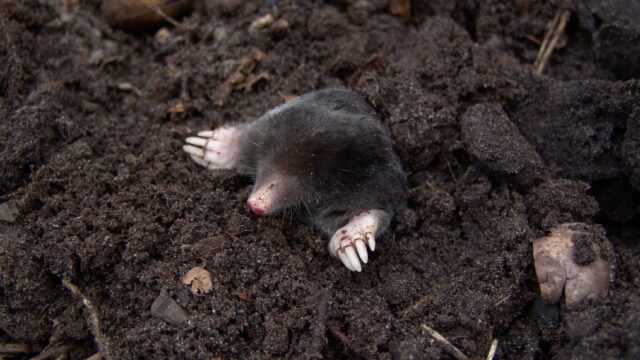
Not sure which small animal is in your yard? Our comparison of moles and voles sorts out the tunnels and mounds. If the damage is high and torn, see how to keep deer away.
What to do when bark has been gnawed
- Wait for spring. Don’t write the tree off in March. Measure the damage once the snow has gone.
- Skip wound treatments. Iowa State notes that dressings, paints and wraps don’t repair severe damage.
- Partial damage: if an unbroken strip of bark still connects top and bottom, the tree may recover. Keep it watered through dry spells, and protect it from further chewing.
- Check the base. Pull soil back slightly, because voles can chew roots and bark below ground.
- Full girdling on a valuable tree: a skilled grafter may be able to save it with a bridge graft. Scions the thickness of a pencil, cut from the previous season’s growth, are set across the wound to reconnect bark above and below. Michigan State University describes the method and says it’s done once the bark begins to slip in spring, around late April in Michigan.
- Full girdling on a very young tree: Michigan State suggests cutting below the injury but above the graft union and training a new shoot, rather than grafting. If the trunk was cut below the graft, the new shoot will be rootstock, so replacing the tree is usually better.
- Shrubs: prune girdled stems just below the damage in early spring. Many shrubs regrow from the base.
Need a way to judge recovery later? See how to tell if a tree is dead.
Repellents and poison baits
Repellents work poorly in winter, according to Iowa State. They need reapplying after heavy rain or snow and fail just when animals are hungriest. Use them only as a backup to a barrier.
Treat rodent baits as a last resort. They pose a risk to pets, children and wildlife, including animals that eat poisoned voles. If you do use them, read the label, follow it exactly and use tamper-resistant stations where the label requires them. Live trapping rabbits is another option where local rules allow it, so check with your state wildlife agency first.
Bottom line
A hardware cloth cylinder is the most reliable fix. Make it tall enough for your snow, bury the bottom, and keep mulch and weeds away from the trunk. Get guards on before snow settles. If you find chewed bark in spring, skip the wound paint, assess the damage, and water well. Reserve grafting for trees you can’t easily replace.
FAQ
How tall should a tree guard be for rabbits?
About 18 to 24 inches above your usual snow depth. Rabbits stand on packed snow, so a short guard can end up useless by midwinter.
Do plastic spiral guards stop voles?
No. They can deter rabbits, but voles get under them or chew around them. Use 1/4-inch hardware cloth with a buried base.
Can a tree survive after being chewed all the way around?
Usually not without help. It may leaf out on stored energy, then decline. Bridge grafting can save some valuable trees, but young, cheap trees are often better replaced.
When can I take guards off?
Plastic guards should come off in spring once snow has gone. Roomy wire cylinders can stay year-round if you check them each fall and loosen anything getting tight.