How to Get Rid of Japanese Beetles, Least Toxic Options First
You won't wipe out Japanese beetles, but you can protect what matters. Here's what works on roses and fruit, why traps backfire, and how grubs fit in.
The best control for a home garden is also the cheapest: knock Japanese beetles into a bucket of soapy water early each morning, before they warm up and fly. Cover roses and other prized plants with fine netting when numbers are high, and skip the bag traps, which tend to draw in more beetles than they catch. You won’t eliminate them, but you can keep the damage tolerable.
Know the pest
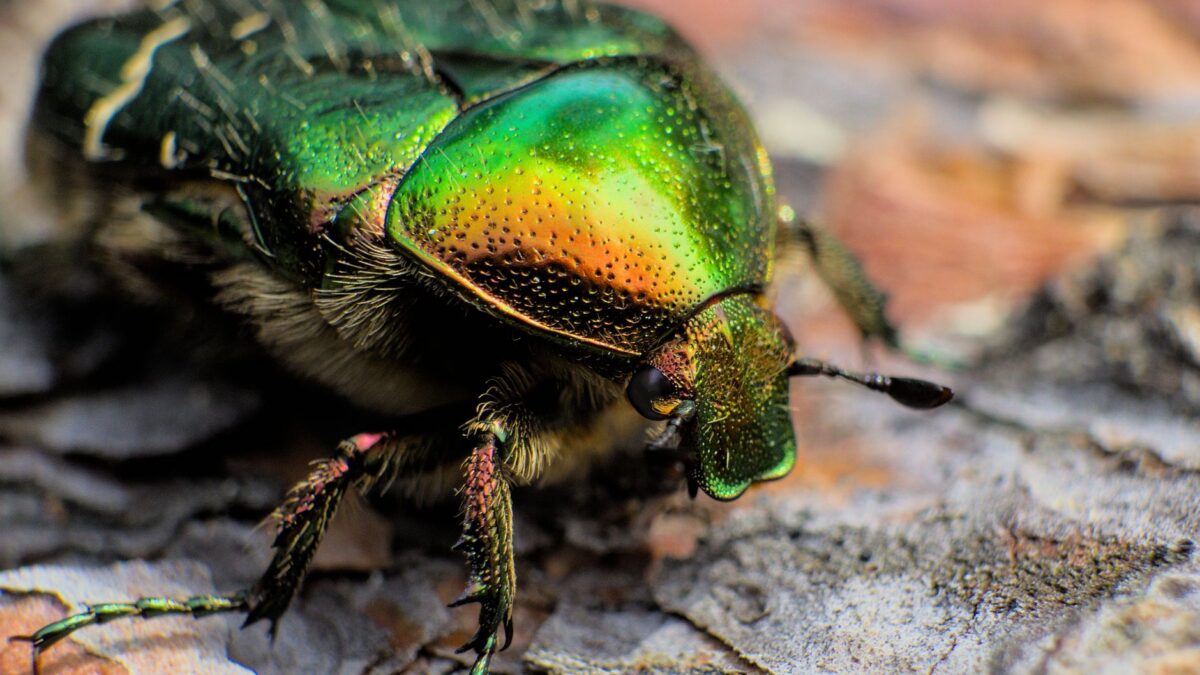
Adults are about ½ inch long, shiny metallic green with coppery wing covers and small white tufts along the sides. They chew the tissue between leaf veins, leaving a lacy skeleton, and they also eat flowers and fruit. Favorites include roses, grapes, raspberries, apples, plums, lindens and birches.
Adults emerge from the soil around mid-June to early July in much of the country, and most are active through July and August, with stragglers into September. Timing shifts with your zone. Each generation takes a year, with about 10 months spent as a grub underground.
Options compared, least toxic first
| Option | How well it works | Best for | Watch out for |
|---|---|---|---|
| Hand-picking into soapy water | Very good on small plantings if done daily | Roses, small shrubs, vegetables | Takes daily effort during peak season |
| Netting or fine screening, ¼-inch mesh or smaller | Very good, as a physical barrier | Roses, young shrubs, small fruit | Keeps out pollinators too, so wait until after bloom on fruit crops |
| Leaving established trees alone | Often enough | Mature trees and shrubs | Repeated severe defoliation can add stress |
| Bt galleriae (Btg) product | Protects foliage from adults | Landscape plants, labeled edibles | Availability varies, so check the label for your crop |
| Neem (azadirachtin) | Short-lived, about 3 to 4 days of deterrence | Light pressure | Reapply as the label allows, spray late evening |
| Pyrethrins or spinosad | Somewhat effective, needs repeating | Moderate pressure | Harmful to bees on contact, so spray only after they’ve stopped foraging |
| Conventional insecticides such as carbaryl or pyrethroids | Effective on adults, but beetles keep flying in | A last resort on high-value plants | Kill beneficial insects, and carbaryl is highly hazardous to bees |
Illinois Extension lists insecticidal soap, hot pepper, companion planting and orange peels as generally ineffective, so don’t spend time there. Our comparison of neem oil vs insecticidal soap explains why these two behave differently.
Whatever you choose, follow the label, never spray open flowers, don’t combine products, and keep children and pets away until sprays have dried. UNH Extension cautions that many of the most effective insecticides are also very toxic to bees.
How to hand-pick
- Half fill a bucket with water and add a good squirt of dish soap.
- Go out in the early morning, or in the evening, when beetles are sluggish.
- Hold the bucket under a branch and tap or shake it. Disturbed beetles drop rather than fly when it’s cool, so they fall right in.
- Leave any beetle with small white spots behind its head. Those are eggs of a parasitic fly that kills the beetle and helps control future numbers.
- Repeat daily from the first sighting. Beetles on a plant attract more beetles, and damaged leaves give off scents that draw them in, so an early start pays off.
After a day or so, bury the contents or bag them for the trash. Odors from a bucket of dead beetles can be strong.
Why traps can backfire
Bag and bucket traps use a floral scent and a sex pheromone, and they were created to monitor the beetle’s spread. Penn State Extension says they catch only about 75 percent of the beetles they attract, so the rest land on your plants. Colorado State Extension adds that traps have never been shown to reduce damage to nearby plants.
If you use one anyway, University of Maine Extension advises placing it at least 50 feet from the plants you’re protecting and emptying it as soon as it fills.
Protecting roses and fruit
Roses. Open blooms are a magnet. Pick beetles morning and evening, snip off badly chewed flowers, and drape small plants with insect screen from late June to early September, fixing the edges to the ground. Wisconsin Extension recommends this for small shrubs and young Japanese maples.
Fruit. Grapes, raspberries, blueberries, apples and peaches can all be hit. Cover small plants after pollination, and pick daily as the crop colors. If you spray a food crop, check the label for the fruit and its waiting period before harvest. Heavy feeding adds stress and can contribute to fruit loss, covered in our guide to why fruit trees drop their fruit.
Trees. Well-established trees generally tolerate the damage and leaf out normally the next spring, so spraying a large tree is rarely worth it, for you or the bees.
The link to lawn grubs
Female beetles lay eggs in turf during summer, and the eggs survive best in moist soil. The white grubs feed on grass roots, which can cause brown, loose patches, and our guide to lawn grubs shows how to check for them.
- Skip summer watering if you can. Wisconsin Extension suggests withholding irrigation from July to mid-August, because eggs and small grubs are sensitive to drying.
- Mow high so that turf has deeper roots and tolerates grub feeding better.
- Don’t expect grub control to stop adults. Beetles fly in from elsewhere, so treating your lawn protects the grass, not necessarily your roses.
- Biological controls vary. Milky spore works only on Japanese beetle grubs and builds up slowly. Wisconsin Extension reports inconsistent results for milky spore, fungal products and nematodes in field tests.
Planting around the problem
If beetles destroy the same plant every year, consider swapping it out. Wisconsin Extension lists arborvitae, boxwood, clematis, dogwood, forsythia, hemlock, holly, juniper, lilac, magnolia, red maple, tulip tree and yew among the plants that see less feeding.
Bottom line
Hand-pick daily, net what you can’t bear to lose, leave big trees alone and keep traps out of the yard. Save insecticides for high-value plants, and keep them off flowers. Beetles fly in from neighboring properties, so aim for less damage rather than zero beetles.
FAQ
Do Japanese beetle traps work?
They catch plenty of beetles, but they attract more than they catch, so damage near the trap can get worse. Extension services generally don’t recommend them.
When do Japanese beetles go away?
Numbers usually peak in July and August and taper off by early September, depending on your region.
Does milky spore get rid of Japanese beetles?
Results are inconsistent, and it only targets grubs. It doesn’t stop adults from flying in from nearby properties.
Will Japanese beetles kill my roses?
They rarely kill established roses, but they ruin flowers and strip leaves. Young plants are more at risk, so protect them with netting.