How Often to Water a Vegetable Garden: By Soil, Crop and Weather
One inch a week is a good starting point, not a rule. Soil, weather and what each crop is doing right now decide how often you should really water.
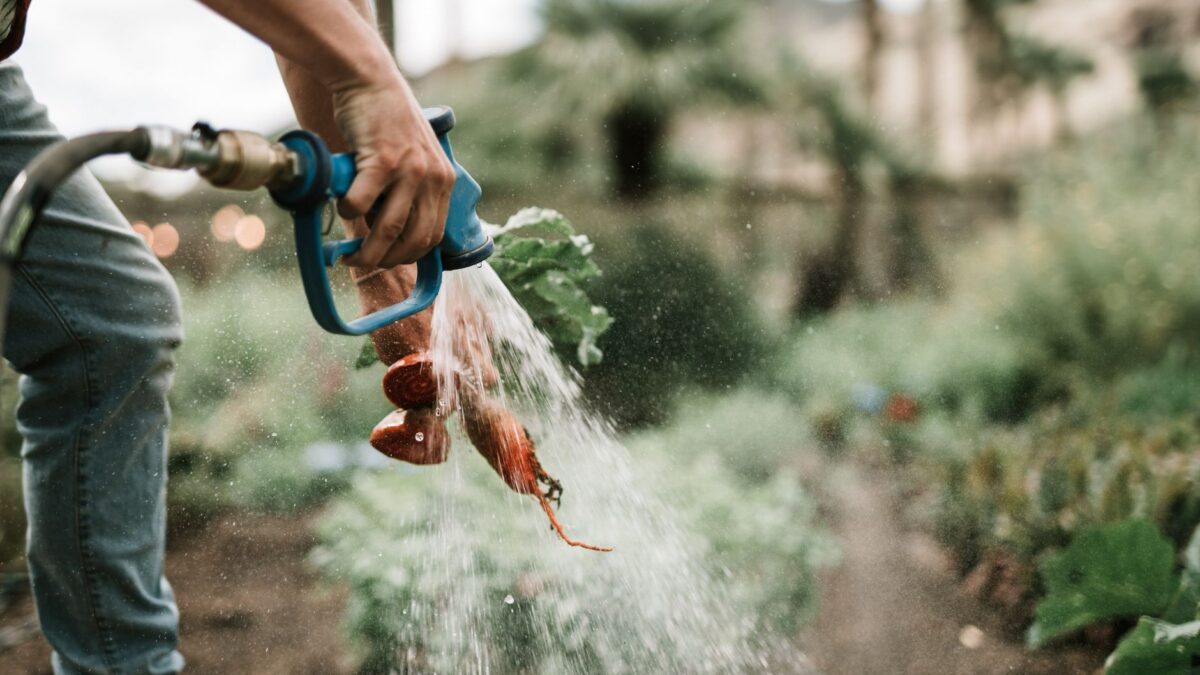
Most vegetable gardens need about 1 inch of water a week, counting rain. On clay or loam, give it all in one deep soak. On sandy soil, split it into two waterings of about half an inch. Water more during hot, windy spells and while crops are flowering and setting fruit, and check the soil with your finger before you turn on the hose.
What 1 inch of water really means
One inch of water over one square foot is about 0.6 gallon, so a 100-square-foot bed needs roughly 62 gallons for a full inch. To measure a sprinkler, set a few straight-sided cans in its path and time how long they take to collect an inch.
Treat the inch as a baseline. Utah State University notes that on hot, dry, windy days, water loss can reach 0.35 inch per day or more. That works out to well over 2 inches a week, so a heat wave can easily outrun the usual routine.
How often to water by soil type
| Soil | Water held per foot of soil | How fast it absorbs | Typical schedule | Best approach |
|---|---|---|---|---|
| Sandy | 0.25 to 0.75 inch | About 2 inches per hour | Twice a week | Half an inch each time; goes down fast, dries fast |
| Sandy loam | 1.3 to 1.8 inches | About 1.5 inches per hour | Once or twice a week | Check soil to decide |
| Loam | 1.7 to 2.2 inches | About 1 inch per hour | Once a week | One deep soak |
| Clay | 1.5 to 2.2 inches | About 0.2 inch per hour | Once a week | Water slowly, or in short rounds, to stop runoff |
The holding and absorption figures come from Utah State’s vegetable irrigation guide. The schedule follows University of Minnesota Extension advice: twice a week on sandy, well-drained soil and once a week on heavier clay or organic-rich loam. Raised beds and containers drain and warm faster, so check them more often, possibly daily in midsummer. If water sits on the surface, your soil may be compacted, and fixing compacted soil will help.
How much each crop needs, and when
Every crop has a stage when a dry spell does the most damage. Spend your water there.
| Crop group | Root depth | Most critical stage |
|---|---|---|
| Lettuce, spinach, radish, chard | Shallow, 6 to 12 inches | Leaf growth or heading |
| Tomatoes, peppers, eggplant | Moderate, 18 to 24 inches | Early flowering, fruit set, fruit sizing |
| Beans and peas | Moderate, 18 to 24 inches | Flowering, pod set and filling |
| Cucumbers and squash | Moderate, 18 to 24 inches | Flowering and fruit sizing |
| Cabbage and broccoli | Moderate, 18 to 24 inches | Head formation |
| Carrots, beets, potatoes | Moderate, 18 to 24 inches | Root or tuber enlargement |
| Onions and garlic | Moderate, 18 to 24 inches | Bulb sizing |
| Sweet corn and watermelon | Deep, 30 inches or more | Corn: silking, tasseling and ear growth. Melons: fruit sizing |
Uneven watering has its own costs. Irregular moisture during head formation can burst cabbage heads, and swings in soil moisture feed fruit problems such as blossom end rot and bitter cucumbers.
Watering by growth stage
- Seeds: Keep the top layer moist. The surface dries quickly, so light daily watering may be needed until seedlings emerge.
- New transplants: Water often for the first couple of weeks while roots spread into the surrounding soil.
- Established plants: Move to deep, less frequent watering. Frequent shallow watering keeps roots near the surface.
- Flowering and fruiting: Stay consistent. Do not let plants swing between dry and soaked.
- Ripening squash and pumpkins: Reduce water as fruit ripens.
The finger test
- Push a finger or trowel a few inches into the soil near the plant, not right against the stem.
- If it feels dry at that depth, water.
- If it feels cool and moist, wait a day and check again.
- A few hours after watering, dig down to see how far the water reached. For tomatoes, University of Wisconsin Extension suggests wetting the soil 8 to 10 inches deep.
Signs of too much or too little
| Sign | Too little water | Too much water |
|---|---|---|
| Soil | Dry and crumbly a few inches down | Soggy, sticky or smelling sour |
| Leaves | Wilted in the morning, crisp edges | Yellowing, droopy even though soil is wet |
| Growth | Stunted, small fruit | Slow, with weak roots |
| Flowers and fruit | Flowers drop; fruit stays small | Delayed harvest, poorer quality |
Afternoon wilting on a hot day does not always mean plants need water, since many recover by evening. Wilting first thing in the morning is a stronger signal. Utah State is blunt on the other side of this: over-irrigating is as detrimental as a shortage.
How to water
Water at the base rather than over the leaves, since wet foliage spreads disease. If you do use overhead water, do it in the morning so leaves dry by evening. Mulch slows evaporation and steadies moisture. For regular beds, a timer on drip or soaker lines saves real effort, and our comparison of soaker hoses and drip irrigation can help you choose.
Bottom line
Start with an inch a week, in one soak for clay or loam and two for sand. Adjust for heat, wind and crop stage, and let your finger make the final call. Steady, deep watering during flowering and fruiting pays back more than frequent light sprinkling.
FAQ
Should I water my vegetable garden every day?
Usually not. Daily watering makes sense for seeds, small containers, and sandy beds during extreme heat, but established plants do better with deep, less frequent watering.
Does rain count?
Yes. A simple rain gauge shows how much fell, and you can make up the difference. Light showers often do not reach the root zone, so check the soil.
Is it better to water in the morning or evening?
Morning is best, because leaves dry during the day. If you water at soil level, the time of day matters less.
How long should I run a soaker hose?
It depends on your water pressure and soil. Run it, then dig down to see how deep the water has gone, and use that time as your baseline.