Why Are My Seedlings Leggy? How to Fix Tall, Floppy Stems
Tall, thin seedlings are stretching for light. Stretched stems won't shrink, but the right light, cooler air and a deeper pot can still save most of them.
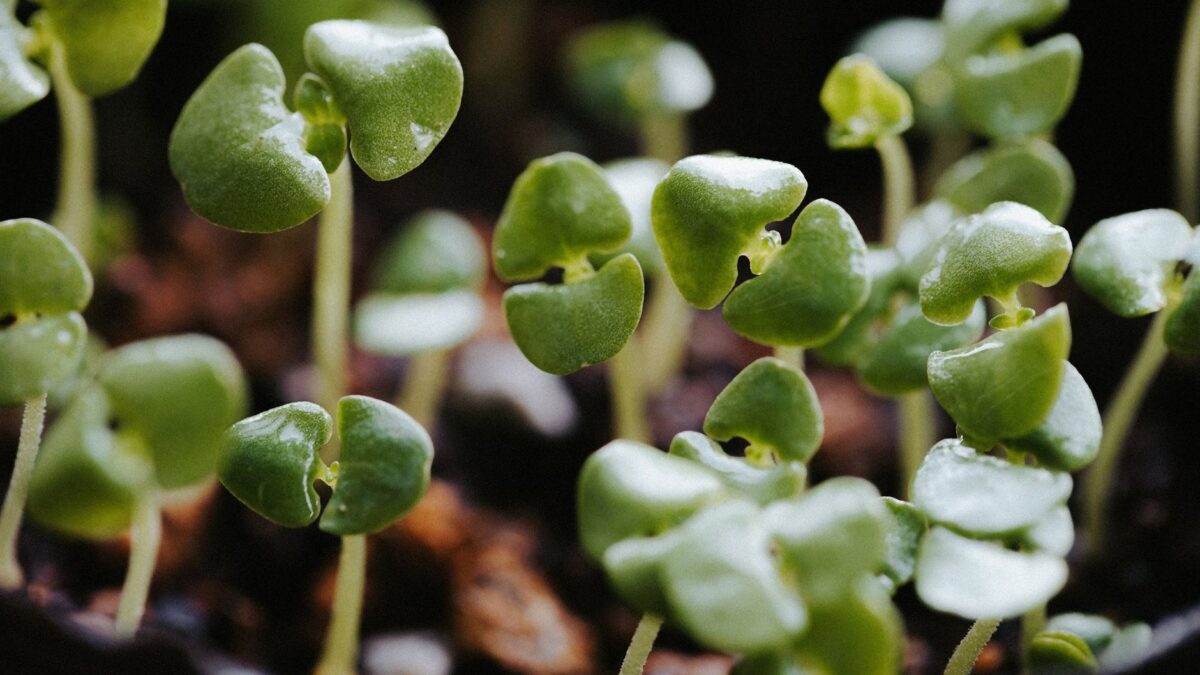
Leggy seedlings are stretching because they aren’t getting enough light. Move your light closer, run it for 14 to 16 hours a day and keep the room cooler once the seeds have sprouted. Stretched stems won’t shrink, but new growth will be stockier, and tall tomatoes can be planted deeper to fix the problem.
What’s causing it? A quick diagnosis
| What you see | Likely cause | Fix |
|---|---|---|
| Thin stems, long gaps between leaves, leaning toward a window | Too little light | Add a light, or at least turn trays regularly |
| Stretching even under a light | Light too high, on too few hours, or old tubes | Lower it, use a timer, replace dim tubes |
| Tall, pale plants packed tightly together | Crowding | Thin to one plant per cell |
| Soft, fast growth right after sprouting | Too warm | Remove the heat mat and cover, and cool the room |
| Tall plants with weeks to go before planting | Sown too early | Pot up, or resow |
| Stem dark and pinched at the soil line, plant toppled | Disease, not legginess | See our guide to damping-off |
Fix the light first
Light is almost always the main problem, and intensity drops quickly as the fixture moves away from the plants.
- Fluorescent tubes: Extension advice varies from about 2 to 6 inches above the plants. Illinois Extension says 2 to 4 inches, Cornell says 3 to 4 inches, and Iowa State says 4 to 6. A starting point of 3 to 4 inches works for most setups. Raise the light as the plants grow.
- LEDs: Follow the maker’s recommended height, because output varies widely. UNH Extension gives the example of one LED bar that needed 8 hours a day at 8 inches above the crop, but 16 hours at 20 inches.
- Hours: Aim for 14 to 16 hours a day on a timer. Plants also need a dark period, so don’t leave ordinary setups on around the clock.
- Old tubes: Fluorescent tubes dim with age, so replace them if they’ve seen many seasons.
- Windows: A sunny window rarely gives enough light in late winter. If it’s all you have, turn the trays regularly and expect some stretching. Window sills also run cold at night.
If leaves look bleached or scorched, the light is too close or too strong. Raise it a little. For more on choosing fixtures, our guide to grow lights explains how strip, bulb and panel setups differ.
Cool things down
Seeds like warmth, but seedlings don’t need it. Keep the mix around 70 to 75°F until they sprout. Then take off the cover and heat mat and move them somewhere cooler. UNH Extension suggests 65 to 70°F by day and 55 to 60°F at night to prevent soft, leggy growth. Iowa State’s simpler rule is about 10°F cooler than the germination temperature.
Give them space
Crowded seedlings compete for light and stretch to outgrow each other. Sow only a few seeds per cell, then thin to the strongest one. Snip the extras at the soil line with small scissors, because pulling them can disturb the roots you want to keep.
How to rescue seedlings that are already tall
- Fix the light today. Extra light won’t shorten a stretched stem, but it stops further stretching and makes new growth sturdier.
- Thin the tray so the remaining plants get light and air.
- Pot up into a deeper container once the first true leaves appear. Hold seedlings by the leaves or root ball, not the stem.
- Bury tomato stems. Tomatoes can form roots along a buried stem, so set them deeper, up to just below the lowest leaves.
- Keep other crops at their original depth. Peppers, eggplant and most flowers should stay at the same soil level. Support a floppy stem with a toothpick or small stake.
- Add gentle air movement. A small fan on low keeps air moving around the plants, and many growers find the breeze helps firm up stems.
- Feed lightly. If your mix has no slow-release fertilizer, Iowa State suggests a quarter-strength water-soluble fertilizer about every two weeks.
If plants are bent, yellow or falling over and you still have four or more weeks until planting, resowing may be faster. Check your dates on the seed starting calendar. Tomatoes in particular catch up quickly.
Harden off gently
Leggy seedlings are especially tender outdoors. Take about a week to acclimate them, starting with a couple of hours in a sheltered, shaded spot. Add a little time and sun each day, and keep them inside on windy days or when it falls below 45°F.
Bottom line
Treat legginess as a light problem first: get the fixture close, run it 14 to 16 hours a day and raise it as plants grow. Then cool the room, thin the tray and pot up. Tomatoes forgive almost anything because you can bury the stem, while peppers and flowers need more care and support.
FAQ
Can leggy seedlings recover?
Yes, many can. The stretched part stays long, but better light produces thicker new growth. Tomatoes recover best, since the extra stem can go underground at planting.
How close is too close for grow lights?
It depends on the fixture. Fluorescent tubes run cool enough to sit a few inches away, while strong LEDs need more height. Bleached or crisp leaves mean you should raise the light.
Do LED lights make seedlings leggy?
Not by being LEDs. What matters is how much light reaches the plant over a day. A cheap, dim LED or a strong one hung too high can both cause stretching.
Why are my seedlings leggy near a south window?
Winter daylight is short and the sun is low, so even a bright window usually falls short of what seedlings need. Add a light, or sow later when days are longer.