Why Does My Tomato Plant Have Flowers but No Fruit? A Diagnosis Checklist
Flowers that fall off without setting fruit are usually reacting to the weather. Run through this checklist to find the cause and what you can still control.
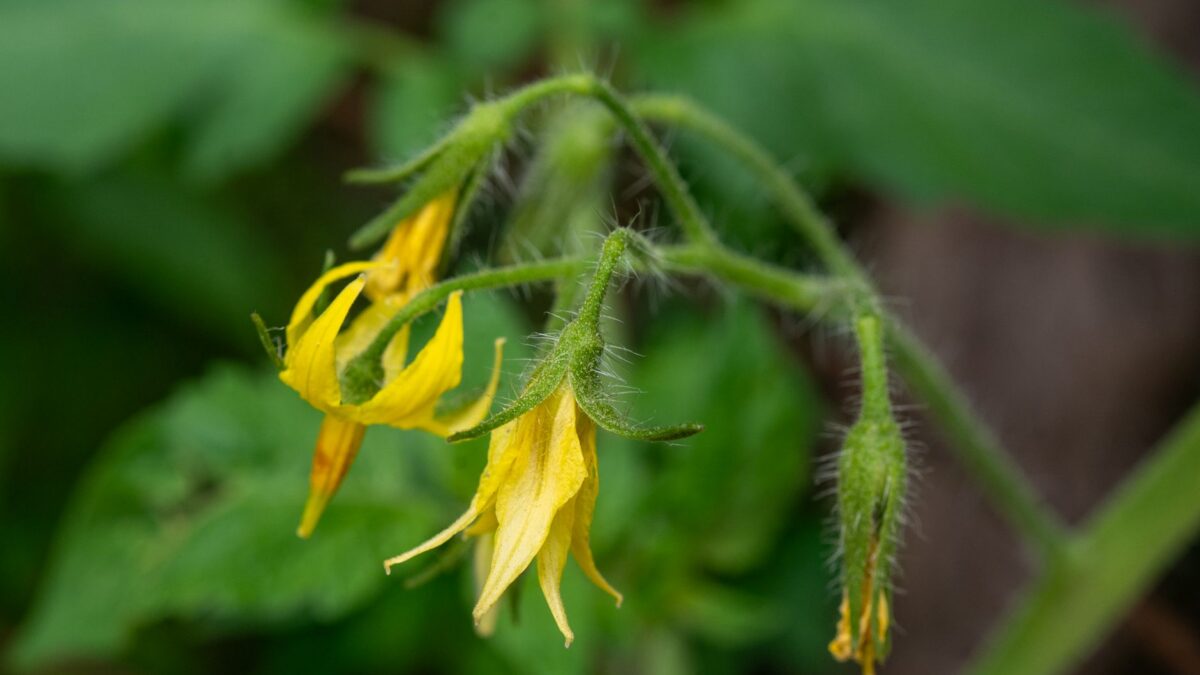
A tomato plant with flowers but no fruit usually has blossom drop, most often caused by temperature. Days above 85°F, nights below 55°F or a run of warm nights above about 70°F interfere with pollination. Keep the plant watered, stop adding nitrogen, and wait: fruit set normally resumes when temperatures settle back into range, so do not pull the plant.
The temperature window
| Condition | Temperature | What happens |
|---|---|---|
| Good days | 70 to 85°F | Best range for growth and pollination |
| Good nights | About 60 to 70°F | Pollen develops normally |
| Cool nights | Below 55°F | Pollen does not develop properly; flowers fail to set |
| Hot days | Above 85°F | Pollen becomes sticky and nonviable; flowers abort |
| Warm nights | Above 70 to 75°F, depending on the source | Several nights in a row can cause flowers to drop |
Treat these as useful guides, not hard limits. Extension sources differ on the warm-night figure: Clemson uses 70°F, while others use 72 to 75°F. A single hot afternoon will not end your harvest, but a week of it may leave a gap in the crop a few weeks later.
Diagnosis checklist
Work through these in order. More than one can apply.
1. Check last week’s weather
Look up the highs and lows for the past week or two. If days ran above 85°F or nights below 55°F, you probably have your answer. Early plantings and high-elevation gardens tend to struggle with cool nights, and southern gardens with midsummer heat.
2. Check the soil moisture
Dry soil stresses plants, and flowers can wilt or drop early. Iowa State University suggests watering deeply about once a week during dry spells. Our guide on how often to water vegetables gives more detail by soil type.
3. Think about fertilizer
Are the plants huge, dark green and leafy, with few flowers or lots of dropped ones? Too much nitrogen encourages leaves at the expense of flowers and fruit. Stop feeding and let the plant settle. Avoid lawn fertilizer or high-nitrogen products near tomatoes, and use a soil test to set next year’s rates.
4. Consider wind
Strong, steady wind dries out flowers and can cause them to drop. A temporary windbreak can help in exposed gardens.
5. Consider pollination
Tomato flowers pollinate themselves. They rely on movement from wind or a gentle shake, not on insects, and a flower has only a couple of days to be pollinated before it drops. In a sheltered spot, on a still balcony or in a greenhouse, gently tapping the flower clusters or the stake in midmorning can help.
6. Look for disease or pests
Check the leaves. Viruses such as tomato yellow leaf curl can cause flower drop along with cupped, yellow-edged new leaves and stunted growth. If you see that pattern, see our guide to tomato leaves curling. Heavy pest feeding or a badly defoliated plant can also reduce fruit set.
7. Check the variety and the plant’s age
Very young plants often drop their first flowers while roots establish. Cherry tomatoes tolerate a wider temperature range than large-fruited types. In Florida, University of Florida guidance notes that large-fruited varieties stop setting fruit once nights get very warm, while cherry and grape types generally handle summer better.
What to do now
- Water deeply and regularly, and keep a layer of mulch on the soil to hold moisture and cool the roots.
- Stop nitrogen feeding until fruit is setting again.
- Tap flower clusters gently if plants are in a still spot.
- Keep the plant healthy and wait for the weather to shift.
That last step really is the main advice. Iowa State puts it plainly: you cannot control the weather, and fruit set should improve once temperatures moderate. Clemson likewise says not to remove the plants, since fruiting should resume.
What about blossom-set sprays?
Hormone-based blossom-set sprays are sold for setting fruit in cool weather, and Colorado State University mentions them as a way to offset cool nights. They are not a cure for heat, drought or too much nitrogen, and most home gardeners can simply wait. If you use one, follow the label closely, and do not combine it with other products.
Preventing a repeat next year
- Plant at the right time. Setting plants out too early invites cool-night failure, while planting too late in hot regions pushes flowering into the worst heat. Our calendar on when to plant tomatoes helps.
- Choose suitable varieties. In hot regions, look for cherry types or varieties described as heat tolerant or heat set.
- Consider a fall crop. In warm regions, a midsummer planting can flower as temperatures cool. South Carolina’s Coastal Plain, for example, has a fall planting window of July 1 to 15.
- Feed by soil test. That avoids the extra nitrogen behind lush, fruitless plants.
Bottom line
Flowers without fruit are usually a weather problem, and the fix is patience. Check temperatures first, then moisture, then fertilizer. Water steadily, hold the nitrogen and keep the plant in the ground, because tomatoes usually pick up again when conditions return to the 70 to 85°F range.
FAQ
Will my tomato plant start producing again?
Usually, yes. New flowers should set once days and nights return to a comfortable range, though there may be a gap in the harvest.
Do tomatoes need bees to set fruit?
No. Tomato flowers are self-pollinating and rely on wind or movement, so a lack of bees is rarely the cause.
Should I hand pollinate tomato flowers?
You can tap clusters gently in still conditions, but it will not overcome heat or cold, which damage the pollen itself.
Why are my tomato flowers falling off in hot weather?
High temperatures make pollen sticky and nonviable, so flowers abort. Keep the plant watered and wait for cooler days and nights.