Snow Mold on Your Lawn: Gray vs Pink and How to Fix It
Those straw-colored circles look alarming when the snow goes, but most lawns recover with light raking and a little patience.
To fix snow mold, rake the matted patches gently once the lawn is no longer frozen or soaked, let them dry, and give the grass time to green up. Reseed only the spots that do not recover. Most home lawns do not need a fungicide: Iowa State reserves it for golf courses and other high-value turf, and by the time you see gray snow mold, the damage is done. Your real leverage is in the fall habits covered below.
What snow mold is
Snow mold is a group of cool-weather fungal diseases. They grow on grass at temperatures around freezing, especially where snow lies on unfrozen ground. You usually spot the damage during snowmelt in late winter or early spring, as circular, straw-colored patches of matted grass. The fungal growth at the patch edges may look gray or pink while the grass is still wet.
The two common types are gray snow mold, caused by Typhula species, and pink snow mold, caused by Microdochium nivale. It is worth telling them apart, since pink can do more harm.
Gray vs pink snow mold
| Gray snow mold | Pink snow mold | |
|---|---|---|
| Cause | Typhula species | Microdochium nivale |
| Needs snow? | Yes. Ohio State says it usually shows up after more than about 40 to 60 days of cover. | No. It can develop under snow, and the same fungus causes Microdochium patch in cool, wet weather without snow. |
| Patch size | A few inches to a few feet | Smaller; often under 6 inches, sometimes up to about 10 |
| Color | Grayish white or straw | Pink, tan or white, sometimes with a copper-colored ring |
| Telltale sign | Pinhead-sized sclerotia on leaves and crowns | Pink edges or salmon tint when damp |
| Damage | Usually limited to leaf blades | Can kill crowns and roots |
| Where | Regions with long snow cover | Snowy regions and cool, wet regions such as the Pacific Northwest |
Sources differ a little on patch size, so use it as a hint, not a rule. Look closely with a hand lens while the patch is still damp. The color fades as it dries. Keep in mind that a county extension or university clinic can confirm a diagnosis if you are unsure.
What to do after the snow melts
- Wait for firm ground. Walking on soft, waterlogged turf does more harm than the mold.
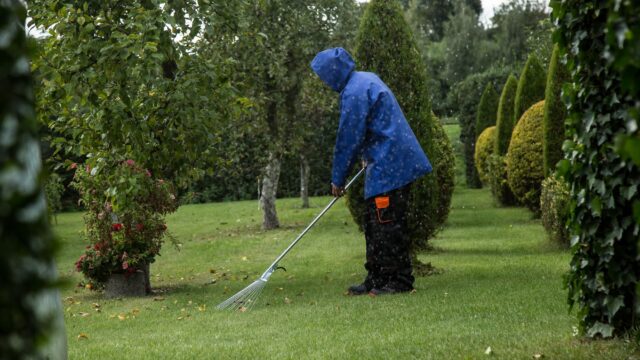
- Rake gently. Use a leaf rake or light tines to fluff and separate matted blades. That lets air and sun dry the patch, and Penn State recommends breaking up crusted, matted leaves in spring. Do not rake hard enough to tear out crowns.
- Spread out any leftover snow piles so they melt sooner.
- Clear leaves and debris that keep the surface wet.
- Wait for growth. Utah State notes that in most cases the turf recovers on its own. Give it until the rest of the lawn is actively growing.
- Feed lightly if pink snow mold was involved. Penn State suggests some nitrogen to help affected areas recover, once the grass is growing. Follow the label.
- Reseed what stays dead. Follow our guide to repairing bare spots. If the patch is pink snow mold that killed crowns, expect to need this more often.
Do you need a fungicide?
Usually not. Iowa State Extension mentions late-fall fungicide only for golf courses and other high-value turf, and Utah State says homeowner fungicides are generally not recommended. Ohio State notes that spraying after gray snow mold appears gives little to no benefit, and that treating pink snow mold after melt is usually not needed unless cool, wet conditions continue. Fungicides work best as a fall preventive, and that is only worth considering on sites with a serious repeat problem. If you go that way, choose a product labeled for home lawns and follow it exactly.
Prevent it this fall
Snow mold is a good example of a lawn problem you fix months ahead. These habits are drawn from Iowa State and Penn State guidance:
- Mow until the grass stops growing. Long, floppy grass going under snow makes a better home for the fungus. Stick with your recommended height, not a scalp.
- Go easy on fall nitrogen. Avoid heavy applications that keep lush growth going into winter.
- Clear the leaves. A heavy layer under snow is a known risk. Our guide on whether to rake or mulch leaves helps you judge how much is too much.
- Keep thatch at 1/2 inch or less. See aeration vs dethatching.
- Manage snow piles. Spread big piles from shoveling and plowing, and keep them off the same spot every year. Snow fence can help on windy, drift-prone areas.
- Finish seeding early. Newly seeded turf that has not matured before winter is more vulnerable to pink snow mold.
- Choose grasses with care. Annual bluegrass, creeping bentgrass and perennial ryegrass are among the most severely injured by pink snow mold. If a low-lying area gets hit every year, consider overseeding with a different grass.
Could it be something else?
- Winding trails across the lawn: These are vole runways made under the snow. See moles vs voles.
- Dead strips beside the road or sidewalk: These point to de-icing salt.
- Dead areas in low spots with no matting: These can be winter kill or ice damage. Check for live crowns before reseeding.
Bottom line
Snow mold looks worse than it is. Gray snow mold is mostly cosmetic and pink can go deeper, but the response starts the same way: rake gently, let the patch dry and give it time. Then prevent next year’s outbreak with late-season mowing, moderate fall nitrogen and leaf cleanup, and skip the fungicide unless you have a serious repeat problem.
FAQ
Does snow mold kill grass?
Gray snow mold usually damages only the blades, so the grass grows back. Pink snow mold can kill crowns and roots, so some patches may need reseeding.
Can I get snow mold without snow?
Pink snow mold can. In cool, wet weather without snow the same fungus causes Microdochium patch. Gray snow mold needs long snow cover.
When is it too late to prevent snow mold?
Once the snow has fallen, cultural steps are done for the season. You can still spread out heavy snow piles. Plan the rest for next fall.
Should I mow low before winter?
No. Keep mowing at your normal height until growth stops. Scalping stresses the grass, and close-cut turf is more prone to pink snow mold.