Why Are My Seedlings Falling Over? Damping-Off Causes and Prevention
Healthy-looking seedlings that topple overnight usually have damping-off. You can't save the ones that fell, but you can protect the rest of the tray.
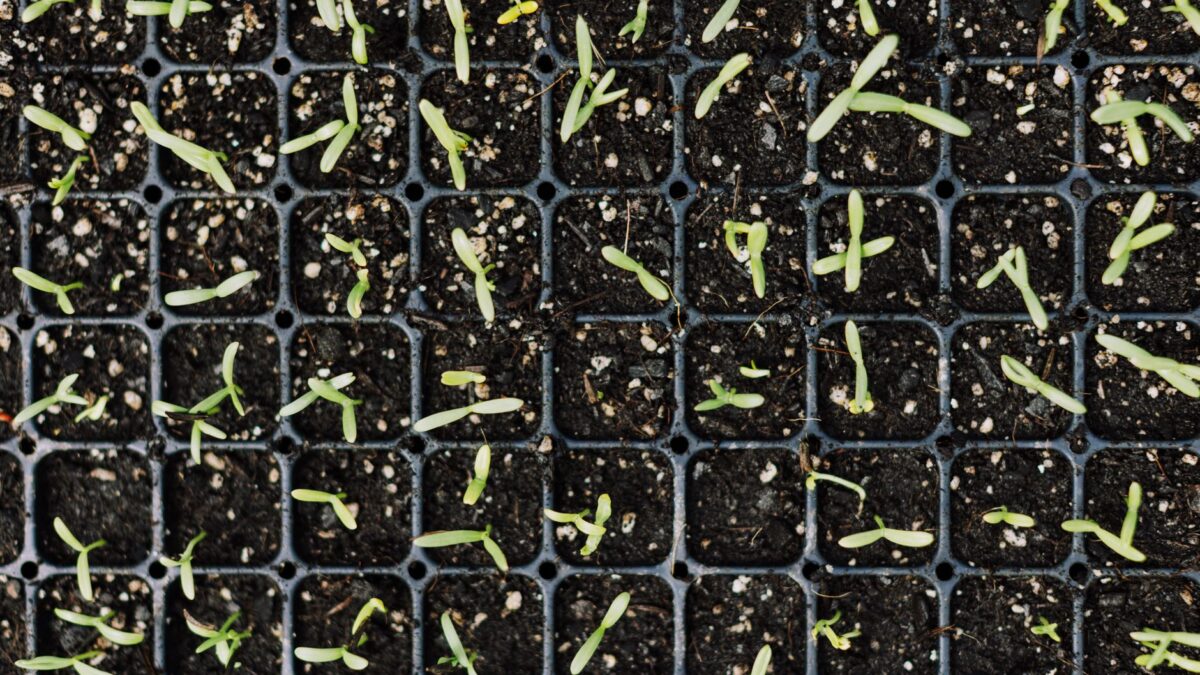
If seedlings suddenly collapse with dark, pinched stems at the soil line, the cause is almost certainly damping-off, a soil-borne disease. Collapsed seedlings can’t be saved, so remove them with the mix around them, ease up on watering and improve airflow to protect the rest. Next time, start with clean containers, fresh sterile mix and warm conditions.
Is it damping-off? Check the symptoms
| What you see | Likely problem | What to do |
|---|---|---|
| Seedlings looked fine, then the lower stem darkened and they fell over | Damping-off after emergence | Remove them and follow the steps below |
| Bare spots in the tray where nothing came up | Damping-off before emergence, or a seed problem | Check why seeds fail to germinate |
| Tall, thin plants leaning, stems still firm and green | Legginess from low light | See our guide to leggy seedlings |
| Whole tray wilted, mix dry and light | Thirst | Water and watch for recovery within hours |
| Whole tray wilted, mix soggy | Roots short of oxygen | Drain, and let the mix dry slightly |
What causes damping-off
Several soil-borne organisms are responsible, mainly Pythium, Rhizoctonia, Fusarium and Phytophthora, according to Utah State University Extension. They attack seeds and young stems, and they favor the same warm, moist setup that seed starting creates.
Common routes into your tray include:
- Dirty containers. The pathogens survive on reused trays, even in tiny amounts of leftover soil.
- Garden soil or old mix. Both can carry small amounts of these organisms.
- Too much water. The risk rises when seedlings are kept very wet. Pythium spores can even swim through films of water.
- Cool, wet mix. Illinois Extension says damping-off is most common in these conditions.
- Slow starts. Seed sown too deep, or seedlings growing slowly in poor light, stay exposed for longer.
What to do when it shows up
- Remove collapsed seedlings right away, along with the mix around them. Put them in the trash, not in a home compost pile. Our guide to composting diseased plants explains why.
- Separate healthy pots or cells from affected ones, and don’t share a water tray between them.
- Take off any plastic cover and let the surface dry slightly before you water again.
- Improve airflow. A small fan on low, placed to the side, keeps air moving.
- Check the neighbors daily. Keep watching the remaining plants closely for several days, because the disease can keep spreading.
- Resow in clean conditions if you’ve lost a lot. If most of a tray has gone down, throw out the whole thing and start again with a clean container and new mix.
Prevention checklist
- Use new, sterile seed-starting mix. Don’t use garden soil, compost or last year’s mix. See potting mix vs garden soil for the differences.
- Store opened mix in a container with a lid.
- Use new trays when you can. For reused ones, scrub off all soil first, then soak them in a 10% bleach solution (1 part bleach to 9 parts water) and rinse well. Illinois Extension soaks for 30 minutes, and Utah State uses one hour.
- Wear gloves when handling bleach, use it with water only and never combine it with any other cleaner.
- Sow shallowly, at the depth on the packet.
- Sow thinly, so air can move between plants.
- Start seeds warm, at about 70 to 75°F. Bottom heat speeds germination.
- Keep the mix moist but not wet, and don’t let it dry out completely either.
- Water with clean tap water, not pond water or runoff.
- Remove covers as soon as seedlings appear.
- Give seedlings strong light so they grow steadily.
- Set individual pots in their own saucers to limit spread through shared water.
- If a crop keeps failing, look for fungicide-treated seed. Follow the packet directions and keep it away from children and pets.
A low-risk seed-starting routine
If damping-off keeps coming back, change the whole routine instead of trying one fix at a time. A tidy sequence looks like this:
- Before sowing: Scrub your bench or table thoroughly with the same 10% bleach solution, then rinse it. Moisten the fresh mix before filling the cells, so you won’t need to flood the tray afterward.
- At sowing: Cover the seed lightly, label the tray and add a clear cover to hold humidity.
- Until sprouting: Keep the tray warm and check it daily. The cover usually holds enough moisture that you’ll rarely need to water.
- At sprouting: Take off the cover, move the tray under strong light and turn off any bottom heat.
- After sprouting: Water when the surface starts to dry, thin crowded cells and keep air moving.
Young seedlings are the most vulnerable, so steady growth in good light is part of your protection.
Bottom line
Damping-off is much easier to prevent than to treat. You won’t get collapsed seedlings back, but quick cleanup can save the rest of the tray. The habits that matter most are clean containers, fresh mix, warm starts and a light hand with the watering can.
FAQ
Can seedlings recover from damping-off?
No. Once the stem has rotted and the plant has fallen, it usually can’t be saved. Focus on removing it quickly and protecting the plants nearby.
Can I reuse the mix from an affected tray?
No. Throw it out, since it may carry the pathogens. Clean and disinfect the container before using it again.
Does watering from the bottom prevent damping-off?
It can help keep the surface drier, but it isn’t a cure. Don’t leave trays standing in water, and avoid sharing one water tray among many pots, because water can carry the disease.
Can damping-off happen outdoors?
Yes. Seeds sown directly into cold, wet garden soil can rot or collapse the same way. Waiting for warmer soil and sowing at the right depth are the best defenses.