Bypass vs Anvil Pruners: Which Cut Each Makes and When to Use It
One cuts like scissors, the other like a knife on a board. Here's what that means for your plants, plus the branch sizes where hand pruners should give way.
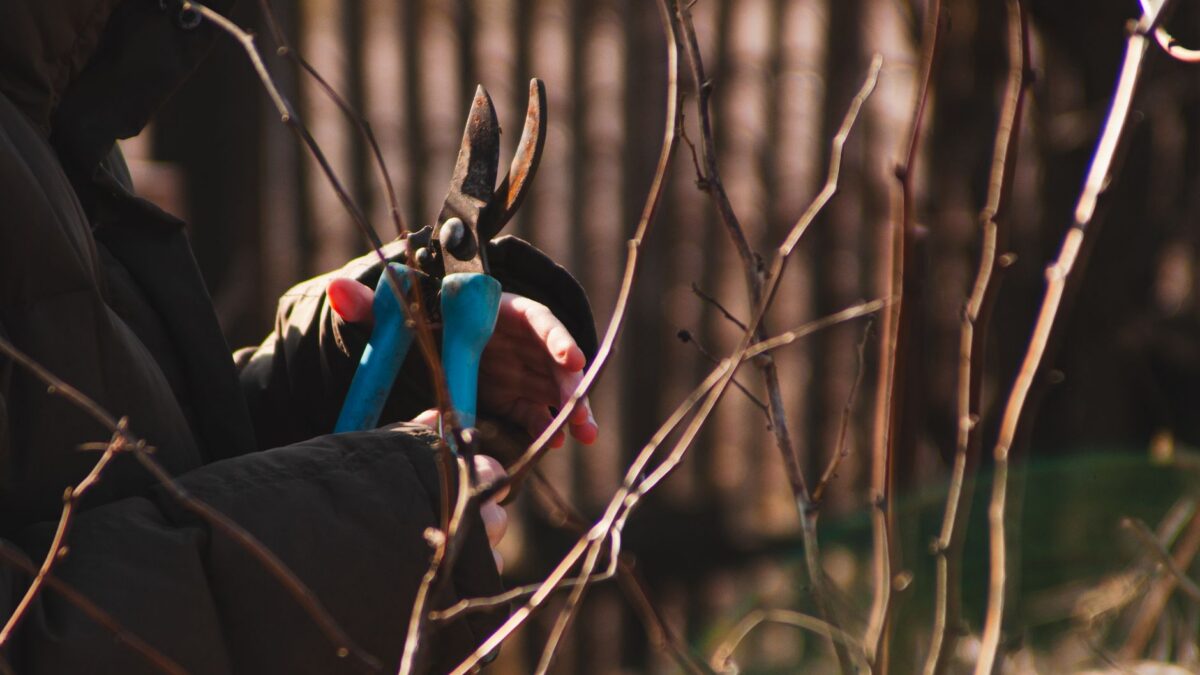
For most gardeners, bypass pruners are the better first buy: the blade slides past a curved hook like scissors and leaves a clean cut on living stems. Anvil pruners press a blade onto a flat plate, which suits dead, dry wood but can crush soft growth. Neither is right for thick wood, so move up to loppers or a saw when a branch doesn’t fit comfortably in the jaws.
How each one cuts
Bypass pruners have one sharpened blade that passes a thicker curved hook. The hook holds the stem while the blade slices through. When sharp, they make close, clean cuts and fit into tight branch angles.
Anvil pruners have one sharpened blade that closes against a flat or curved surface, much like a knife meeting a cutting board. The stem is pinched between the two, which gives good force on hard, dry wood. On soft, green stems, the same pinch can crush tissue on one side of the cut.
That difference matters because a clean cut closes faster. University of Maryland Extension rates bypass pruners as superior because they reduce tearing and crushing of tissue. Anvil tools aren’t simply bad, though. NC State Extension notes that newer anvil designs with a curved blade and anvil give a much cleaner cut than older flat ones.
Bypass vs anvil at a glance
| Feature | Bypass | Anvil |
|---|---|---|
| Cutting action | Two curved parts slide past each other | Blade presses onto a flat or curved surface |
| Best on | Live green stems | Dead, dry, hard wood |
| Cut quality on live wood | Clean | More likely to crush |
| Getting close to a branch | Good | The anvil can get in the way, so cuts sit farther out |
| Tight spots | Slim head reaches into angles | Often bulkier |
| Jamming on tough wood | More likely | Less likely |
| Main weakness | Blades can be forced apart by too-thick or twisted cuts | Crushes soft stems, and a dull blade makes that worse |
Which to use for common jobs
| Job | Better choice |
|---|---|
| Deadheading and cutting back roses | Bypass |
| Fruit tree spurs and shoots | Bypass |
| Shaping live shrubs | Bypass |
| Taking cuttings | Bypass |
| Removing dead twigs | Anvil or bypass |
| Chopping dry stems and prunings to size | Anvil |
If you buy one pair, make it bypass. Most pruning you do will be on living plants at the right season, and our guides on when to prune shrubs and when to prune fruit trees show how that plays out. A second anvil pair is a nice extra if you often clear dead wood.
When to switch tools
Hand pruners are often pushed past their limit, and that’s when cuts tear. Extension sources disagree a little on the exact sizes, so use these as a guide.
| Tool | NC State | Iowa State |
|---|---|---|
| Hand pruners | Under ½ inch | Up to ¾ inch |
| Loppers | ½ to about 1½ inches | ¾ to 1½ inches |
| Pruning saw | Over 1½ inches | Over 1¾ inches |
University of Maryland gives a higher limit of up to one inch for hand pruners, so ratings on the packaging will vary too. A tool’s rating is a maximum, not a comfortable working size. Iowa State Extension warns that forcing thicker branches through hand pruners often gives torn, jagged cuts and may damage the tool.
A simple test: if you need both hands, need to twist, or the jaws barely close, you’ve picked the wrong tool.
Loppers
Loppers come in the same bypass and anvil styles, and the same logic applies: bypass for live wood, anvil for dead. Their long handles add leverage and reach, with lengths from about 20 to 40 inches, and some handles telescope.
Pruning saws
Saws take over for anything thicker. Narrow, curved blades suit crowded canopies, and folding saws are easy to carry. Iowa State recommends pruning saws over chainsaws for home gardeners. For large high branches, or anything near power lines, hire a trained arborist.
Getting a clean cut
- Keep the blade toward the plant. With bypass pruners, place the blade side closest to the part that stays, so any slight crushing from the hook lands on the piece you’re removing.
- Cut, don’t wrestle. Squeeze straight through, without twisting or levering.
- Get the branch deep in the jaws. Cutting at the tip of the blades strains the tool.
- Keep blades sharp. A dull blade tears and bruises, whichever style you use. See how to sharpen garden tools.
- Clean between diseased plants. Sap and disease can travel on blades. Our fire blight guide shows a case where this matters most.
What to look for
Fit matters more than features, so hold a pair in your hand before buying if you can.
- High-quality steel and a slim cutting head
- Handles that suit your hand size, with left-handed versions if you need them
- Replaceable blades and parts, so the tool lasts
- A lock that’s easy to work with one hand
- Ratchet action if you have limited grip strength, which cuts in stages
- On anvil models, a curved blade or anvil that reduces crushing
Wear gloves, keep your free hand clear of the blades, and lock the pruners when you put them down.
Bottom line
Choose bypass pruners for living plants and anvil pruners for dead wood. If you only own one pair, bypass covers more of what gardeners actually do. When branches get thicker than about ½ to ¾ inch, step up to loppers, and move to a saw past about 1½ inches.
FAQ
Are anvil pruners bad for plants?
Not when used on dead wood. On live stems, they’re more likely to crush tissue, particularly with older flat designs or a dull blade.
Can bypass pruners cut dead wood?
Yes, on smaller stems. Dry, hard wood is tougher on bypass blades and can jam them, so don’t force it.
Do I need both?
Most home gardeners don’t. A good bypass pair plus loppers and a folding saw handles nearly every job.
What size branch can hand pruners cut?
Plan on up to about ½ to ¾ inch. Some sources allow up to an inch, but cuts get rougher as you approach the limit.