When to Prune Fruit Trees: Calendar by Tree Type and Zone
Late winter suits most fruit trees, but the order matters. Here's what to prune when, why peaches come last, and which cuts to leave alone.
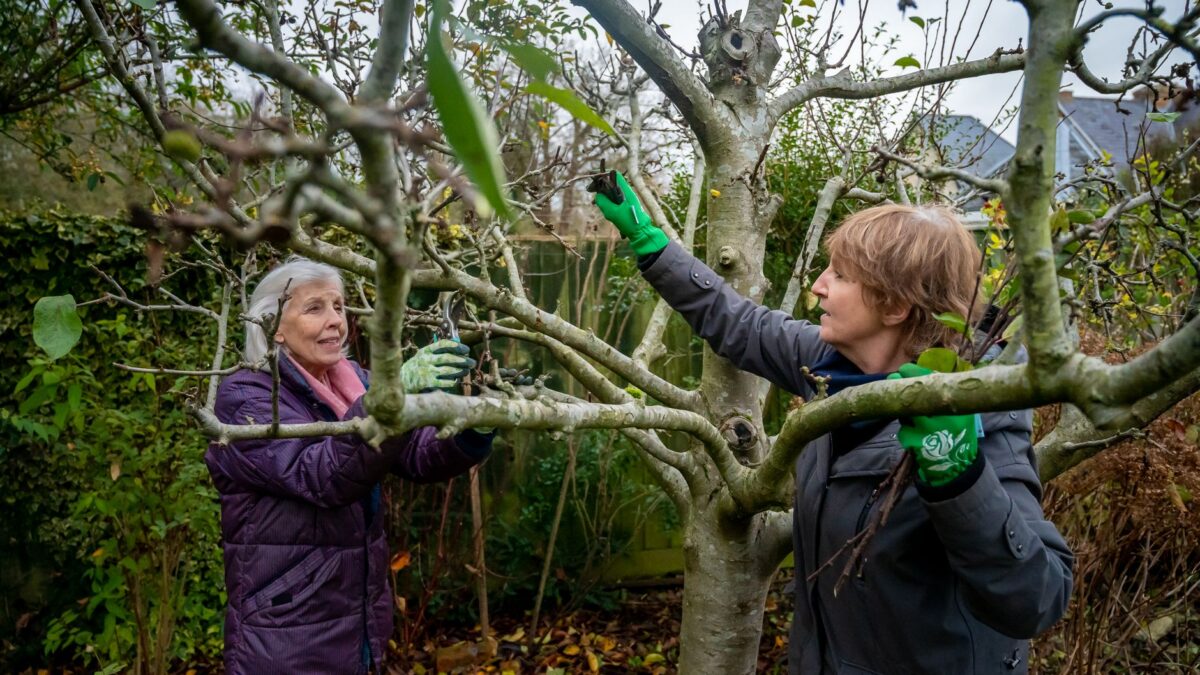
For most of the US, the best time to prune fruit trees is late winter, after the worst cold has passed and before buds open. Start with apples and pears, leave peaches and nectarines for last, and take extra care with cherries and plums in wet-winter climates. If it’s November where you are, it’s too early: remove dead or broken wood only, and wait.
Why late winter works
A dormant tree shows its structure clearly and puts its full energy into spring regrowth. Timing is the catch. Cut too early and you can reduce cold hardiness: pruned wood is more vulnerable to winter injury if a hard freeze follows. Michigan State University Extension gives January through March, before buds open, as the window for fruit trees, and warns against pruning too early in winter. Cut too late and you lose a little vigor, though a late prune usually beats an early one.
Calendar by tree type
| Tree | Best time | Why |
|---|---|---|
| Apple, crabapple | Late winter while dormant | Spring and summer cuts raise the risk of fire blight |
| Pear | Late winter while dormant | Same fire blight concern, and pears are often more susceptible |
| Tart and sweet cherry | Very late winter, just before growth, or in dry summer weather after harvest in wet-winter climates | Wounds are entry points for canker and silver leaf |
| Plum, apricot | As for cherries; March in cold areas | Same wound concerns, and early bloom is easily damaged |
| Peach, nectarine | Last of all, from late winter up to just before bloom | Most sensitive to cold after pruning |
Calendar by USDA zone
Use this as a rough guide built around published extension windows, then adjust. Your zone tells you winter lows, not when your buds will open, so a warm or cold year can shift these dates by weeks.
| USDA zone | Apples, pears | Cherries, plums, apricots | Peaches, nectarines |
|---|---|---|---|
| 3 to 4 | March to early April | Late March to early April | Rarely grown |
| 5 to 6 | Late February to March | March | Late March until just before bloom |
| 7 to 8 | February to early March | Late February to March, or after harvest in dry weather | Late February until bloom |
| 9 to 10 | December to February, while dormant | Dry winter spells, or after harvest | Winter, once leaves have dropped |
Published dates vary because climates do. The University of Minnesota gives February to early April for apples and March for stone fruits. In mild California, UC Cooperative Extension says mature peaches are typically pruned in December. Your county Extension office can give you the local answer.
Why peaches come last
Peaches are more cold-tender than apples, and pruning makes them more so. Virginia Tech Extension advises against pruning peach trees before February and says winter pruning can reduce a tree’s cold tolerance for about two weeks. Trees pruned just before severe cold can suffer poor flower bud survival, shoot dieback and injured bark. Virginia Tech also recommends pruning young trees after mature ones and says it’s better to prune a little late than too early. Pruning during or shortly after bloom isn’t ideal, but it won’t harm the tree or the fruit.
Peaches also need more pruning than most fruit trees, since they fruit on the previous year’s growth. Skipping a year means the crop moves further out along the branches, away from the center.
Why cherries and plums are different
Stone fruits such as cherries and plums are prone to diseases that enter through wounds. The best known is silver leaf, a fungal disease that gives leaves a silvery sheen and then kills the branch. The Royal Horticultural Society says infectious spores are active from September to May, and advises pruning susceptible trees in summer, when there are fewer spores and wounds close faster.
US advice is less uniform. Nebraska Extension suggests late spring, just before new growth, for sweet cherries and peaches, while Minnesota says March. Disease pressure differs by region, so the sensible rule is this: in cold or dry-winter areas, prune as close to bud break as you can. In wet, mild-winter climates, ask your Extension office whether summer pruning after harvest suits your area better. Whichever you choose, prune on a dry day with a dry forecast.
What to cut, in order
- Dead, damaged and diseased wood. This can go any time, including now.
- Crossing and rubbing branches. Keep the better placed one.
- Water sprouts and root suckers. Remove the straight upright shoots from limbs, and the shoots from the base.
- Crowded limbs. Open the canopy so light reaches the fruit.
- Narrow crotches. On young trees, remove one of two competing branches that form a tight V, since these crotches are weak.
- Step back and stop. Look at the tree from all sides before each extra cut.
Sharp, well-matched tools help with all of this. Our comparison of bypass and anvil pruners shows which to use on live wood and when to move to a saw.
Cuts to skip
- Topping. Cutting the top off leaves stubs that sprout dense foliage and shade the center of the tree.
- Flush cuts. Research cited by Virginia Tech found flush cuts are more prone to infection. Cut just outside the raised collar at the branch base instead.
- One big renovation. Excessive pruning delays fruiting and creates leafy regrowth. Take a neglected tree back over two or more years, and see why trees stop fruiting if this sounds familiar.
- Fall pruning. It can reduce hardiness going into winter.
- Wound paint. Rutgers Cooperative Extension says these products don’t prevent decay or aid healing. The RHS makes a limited exception for recurring silver leaf.
Disease work is a separate job
Don’t combine shaping with disease removal. If your tree has fire blight, follow those pruning steps on their own, and don’t shape the tree in the same session. Peach owners should also check our peach leaf curl guide, since the dormant spray window runs alongside your pruning season.
Bottom line
Wait for late winter, prune apples and pears first, and finish with peaches as close to bloom as you can manage. Treat cherries and plums according to your climate, and keep your cuts light. If you’re unsure, waiting a little is safer than cutting early.
FAQ
Can I prune fruit trees in November?
Only dead, damaged or diseased wood. Routine pruning this early can reduce winter hardiness, particularly on peaches.
What if I missed the late winter window?
Light pruning around bloom won’t ruin the tree, but stick to essentials. Avoid heavy cuts during the growing season on apples and pears, since fire blight risk rises.
How much can I remove at once?
Keep it modest. There’s no single safe number for every tree, but heavy cutting causes a flush of leafy shoots and fewer fruit, so spread larger jobs across several winters.
Should fruit trees be pruned every year?
Peaches and nectarines benefit from yearly pruning. Apples and pears usually need only light annual maintenance once their shape is set.