Seed Starting Calendar: When to Start Seeds Indoors by Crop and Zone
Your USDA zone won't give you a sowing date, but your last frost date will. Here's how to count back for vegetables and flowers, with sample dates.
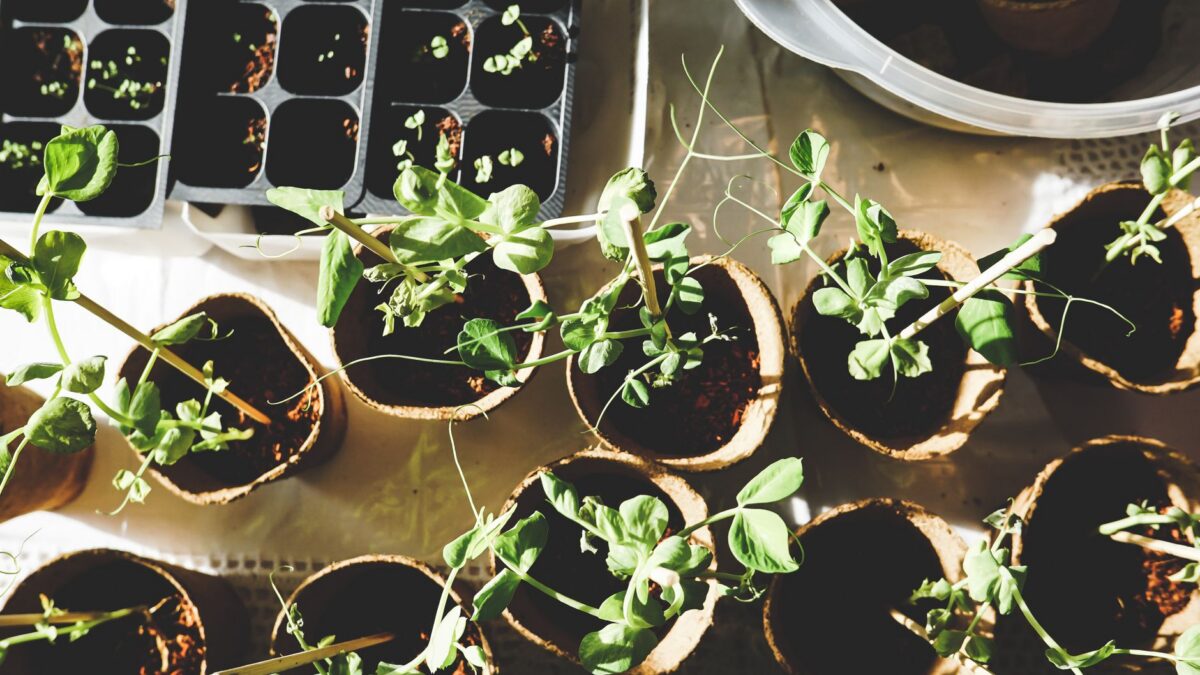
Start seeds indoors by counting back from the date each crop can safely go outside. Onions and leeks need the longest lead, about 12 to 14 weeks before your last frost; peppers and eggplant need about 6 to 8, tomatoes about 4 to 7, and cucumbers and squash only 1 to 3. Sowing much earlier usually gives you tall, weak plants that sit indoors waiting for warm weather.
Find your last frost date first
Your USDA hardiness zone is only a rough guide here. The USDA zone map is based on the average coldest winter temperature, not on frost dates, so two gardens in the same zone can have very different springs. Ask your county extension office for the average last frost date where you live, or check with your state climate office.
Remember that the date is an average, not a promise. Cautious gardeners add a margin: University of New Hampshire Extension, for example, treats Memorial Day as a conservative last frost date for central New Hampshire.
How to count back from your frost date
- Mark your last frost date on a calendar.
- Find the safe planting-out date for the crop. Cabbage can usually go out about 4 weeks before the last frost. Peppers should wait until about 2 weeks after it.
- Find the indoor growing time on the seed packet. Peppers take about 8 to 10 weeks from sowing to transplant size.
- Count back that many weeks from the planting-out date. That’s your sowing window.
Here’s a worked example. With a May 15 last frost, peppers go out around May 29. Counting back 8 to 10 weeks puts sowing between March 20 and April 3.
Seed starting calendar by crop and zone
The sowing weeks below are worked out from the seed-to-transplant times and planting-out windows in UNH Extension’s planting chart. The three date columns are examples for a sample frost date. The zone labels are approximate, so go by your own frost date, then fine-tune with the seed packet.
| Crop | Sow indoors (weeks before last frost) | Last frost mid-March (often zones 8-9) | Last frost mid-April (often zones 6-7) | Last frost mid-May (often zones 4-5) |
|---|---|---|---|---|
| Onions, leeks | 12 to 14 | Dec 7 to 21 | Jan 7 to 21 | Feb 6 to 20 |
| Cabbage, kale | 8 to 10 | Jan 4 to 18 | Feb 4 to 18 | Mar 6 to 20 |
| Lettuce | 7 to 9 | Jan 11 to 25 | Feb 11 to 25 | Mar 13 to 27 |
| Broccoli, cauliflower | 6 to 8 | Jan 18 to Feb 1 | Feb 18 to Mar 4 | Mar 20 to Apr 3 |
| Peppers, eggplant | 6 to 8 | Jan 18 to Feb 1 | Feb 18 to Mar 4 | Mar 20 to Apr 3 |
| Tomatoes | 4 to 7 | Jan 25 to Feb 15 | Feb 25 to Mar 18 | Mar 27 to Apr 17 |
| Basil | 4 to 6 | Feb 1 to 15 | Mar 4 to 18 | Apr 3 to 17 |
| Cucumbers, squash, melons | 1 to 3 | Feb 22 to Mar 8 | Mar 25 to Apr 8 | Apr 24 to May 8 |
Cool-season crops such as cabbage and lettuce can handle light frost, so they go out before the last frost once hardened off. In zones 8 and warmer, spring can turn hot quickly, and many gardeners also grow these crops in fall and winter. Your state extension planting guide will have local dates.
Flowers to start indoors
Colorado State University Extension counts these in weeks before the average frost-free date.
| Flowers | Sow indoors | Note |
|---|---|---|
| Petunia, snapdragon, verbena, lobelia | About 8 weeks before | Snapdragon seed needs light, so press it onto the surface without covering it. |
| Salvia, annual vinca, annual phlox | About 6 weeks before | Sow at the depth on the packet. |
| Marigold, zinnia, cosmos | About 4 weeks before | Often easier sown directly in the garden. |
Crops better sown outdoors
Not everything needs a head start. Beans, beets, carrots, corn, peas, radishes and turnips go straight into the garden. UNH’s chart plants peas as soon as the soil thaws, beets once the soil reaches 45°F, and carrots and corn at 60°F. Cucumbers and squash can also be sown outdoors once the soil reaches about 70°F, which saves you transplanting them.
Why tomato dates differ between calendars
Many calendars say to sow tomatoes 6 to 8 weeks before the last frost. UNH’s chart treats 6 to 8 weeks as the time from seed to transplant and sets plants out 1 to 2 weeks after the last frost, which works out to sowing about 4 to 7 weeks before it. Both approaches work. Earlier sowing gives you a bigger plant, but that plant needs strong light and a larger pot. If you’re growing on a windowsill, choose the later date.
Common timing mistakes
- Starting too early. Seedlings held indoors too long get stretched and weak. If yours are already tall, see our guide to leggy seedlings.
- Trusting old packets. Check how long seeds last before you build a schedule around them.
- Rushing warm-season crops. Frost isn’t the only limit, because cold soil stalls tomatoes and peppers. Our guide to when to plant tomatoes covers this.
- Keeping trays too wet. Cool, soggy mix invites damping-off.
- Skipping hardening off. Give seedlings about a week to adjust. Start with a couple of hours outside in a sheltered spot, then add time and sun each day.
Bottom line
Get a local last frost date, find when each crop can safely go outside, and subtract its indoor growing time. Use the table as a starting point and the seed packet as the tiebreaker. When in doubt, sow a little later, because a younger, stocky plant is easier to handle than an overgrown one.
FAQ
Can I start seeds in November or December?
Only for a few crops. If your last frost comes in mid-March, onions and leeks can start in December. Most gardeners have nothing to sow indoors until January or later, so use the early winter months to plan, check old seed and set up lights.
What if I missed my sowing date?
You’re usually fine. Sow now and plant out a little later, choose a faster variety, or buy transplants. Cucumbers and squash need so little indoor time that they’re easy to catch up.
Do I need grow lights?
For most crops, yes. Seedlings do best with about 14 to 16 hours of strong light a day, which a window rarely provides in late winter. A simple shop light kept a few inches above the plants and raised as they grow is often enough.
How early can cool-season transplants go out?
UNH’s chart sets out cabbage, kale and onions about 4 weeks before the last frost, and broccoli 2 to 4 weeks before. Harden them off first and keep row cover handy for hard freezes.