Tomato Cages vs Stakes: Which Support Fits Your Plants?
The right tomato support depends on your variety and how much tending you want to do. Here is how cages, stakes, the Florida weave and trellises compare.
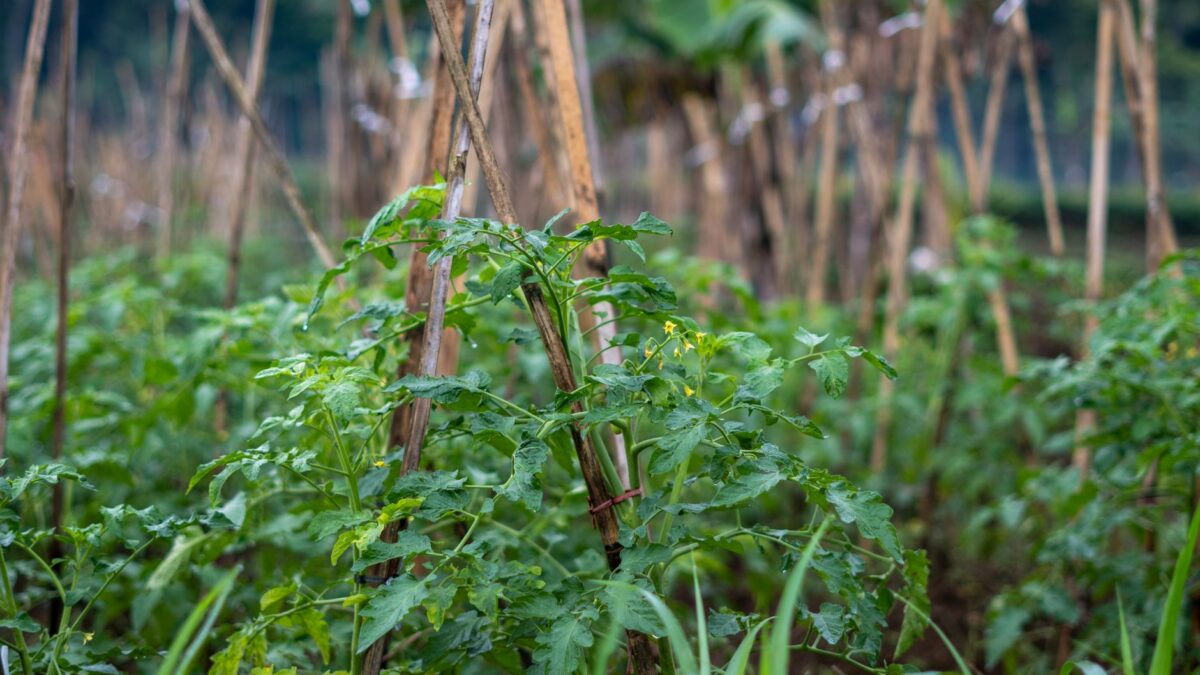
Match the support to the variety. Determinate (bush) tomatoes do well in a standard cage or on a short stake. Indeterminate (vining) tomatoes need a tall stake, a trellis or a large wire cage, because they keep growing all season. Cages take less work and usually give more fruit, while staked and pruned plants ripen a little earlier with cleaner fruit. For a row of plants, the Florida weave is hard to beat.
Comparison table
| Support | Best for | In-row spacing | Effort | Airflow | Rough cost per plant |
|---|---|---|---|---|---|
| Store-bought cage | Determinate types | About 2 feet | Low | Moderate | About $3 to $10 |
| Large wire cage | Indeterminate types | About 2 to 3 feet | Low once built | Moderate | About $5 to $30, homemade or heavy-duty |
| Single stake | Either; tall stake for indeterminate | About 1.5 to 2 feet | High: tying and pruning | Good | About $2 to $8, plus ties |
| Florida weave | Rows of 4 or more plants | About 1.5 to 2 feet | Medium | Good | About $1 to $5 |
| Trellis or overhead string | Indeterminate types, heavily pruned | About 1.5 feet | High | Very good | About $2 to $10, depending on frame |
Prices are rough ranges that vary widely by region, material and whether you reuse supports for years.
Start with your variety
The plant tag or seed packet should say which type you have. Determinate plants stop at a set size, often around 3 to 4 feet, and set most of their fruit in a shorter window. Indeterminate plants keep growing and fruiting until frost and can reach 6 to 10 feet.
That difference settles most of the question. A short store-bought cage is fine for a bush tomato, but a big vining plant will quickly fold it over.
Cages
Cages are the simple option. Set one over each plant at planting time, anchor it with a stake, and tuck stems inside as they grow. Caged plants need little or no sucker removal, which saves regular work.
Size matters: indeterminate plants need a cage about 5 feet tall, and determinate plants about 3 feet. Homemade cages often outperform store versions. Penn State suggests concrete reinforcement wire with 6-inch openings, so you can get your hand and the fruit through. A roughly 6-foot length rolled into a cylinder gives a cage about 22 inches across.
The trade-off is density. Foliage stays bushier, so air moves less freely, and fruit tends to ripen a bit later. Wire cages are also harder to clean at the end of the season.
Single stakes
Penn State Extension suggests stakes about 6 to 7 feet long for indeterminate varieties and about 4 feet for determinate, driven about a foot into the ground. Place the stake 3 to 4 inches from the plant, on the side away from the first flower cluster so fruit does not get trapped.
Tie stems loosely with soft material in a figure-eight, every 8 to 12 inches as the plant grows. Staked plants generally need pruning to stay manageable. Illinois Extension describes the range: heavy pruning on a trellis, moderate on a stake and light in a cage.
Pruned, staked plants tend to ripen earlier and keep fruit cleaner, but yields are usually lower and fruit can be more prone to sunscald with fewer leaves for shade.
Florida weave
Also called the basket weave, this method holds plants between layers of twine strung along a row. University of New Hampshire material says it uses about half as many stakes as individual staking.
- Set plants 18 to 24 inches apart, with a stake every second or third plant and a stronger post at each end.
- When plants reach about 12 inches, tie twine to an end post 8 to 10 inches above the ground.
- Run the twine down the row, looping it around each stake and pulling it tight, then come back along the other side of the plants.
- Add a new layer 6 to 8 inches higher every week or two.
The twine forms two walls that hold plants upright, improve airflow and help leaves dry, which reduces moisture-loving diseases. It suits rows of plants more than one or two tomatoes in a small bed.
Trellises and strings
A strong frame with strings or wire works well for indeterminate plants trained to one or two stems, and it saves ground space. It also takes the most tending, since you need to prune and guide stems every week. Suckers are easiest to remove while they are small, generally under about 4 inches.
Which gives the fewest disease problems?
Any support beats letting plants sprawl, since leaves and fruit stay off wet soil. Open systems dry faster, which helps with the leaf diseases covered in our guide to early blight and late blight.
Hygiene matters too. University of Illinois Extension points out that pathogens can survive winter in crevices on supports, so wipe stakes and cages with rubbing alcohol before reusing them. Penn State notes stakes are easier to sanitize than wire cages.
Bottom line
One or two bush tomatoes: use cages. Big vining types: use a tall stake, a trellis or a large wire cage. A row of any type: use the Florida weave. Install supports at planting time so you do not disturb the roots later, and see when to plant tomatoes for timing.
FAQ
Can you use both a cage and a stake?
Yes. In fact, a stake or two driven through a cage is a good way to anchor it against wind and heavy fruit.
Do caged tomatoes need pruning?
Usually very little. Removing leaves that touch the soil is often enough.
When should I put supports in?
At planting, or soon after. Waiting can damage roots and leaves you trying to wrestle a sprawling plant upright.
Should I prune determinate tomatoes?
Generally no. Pruning them does not help plant health or yield, and Ohio State suggests clearing only suckers below the first fruit cluster.