Soaker Hose vs Drip Irrigation: Which Is Right for Your Garden?
Both put water at soil level, but they suit different gardens. Here is how they compare on setup, coverage, pressure, upkeep and rough cost.
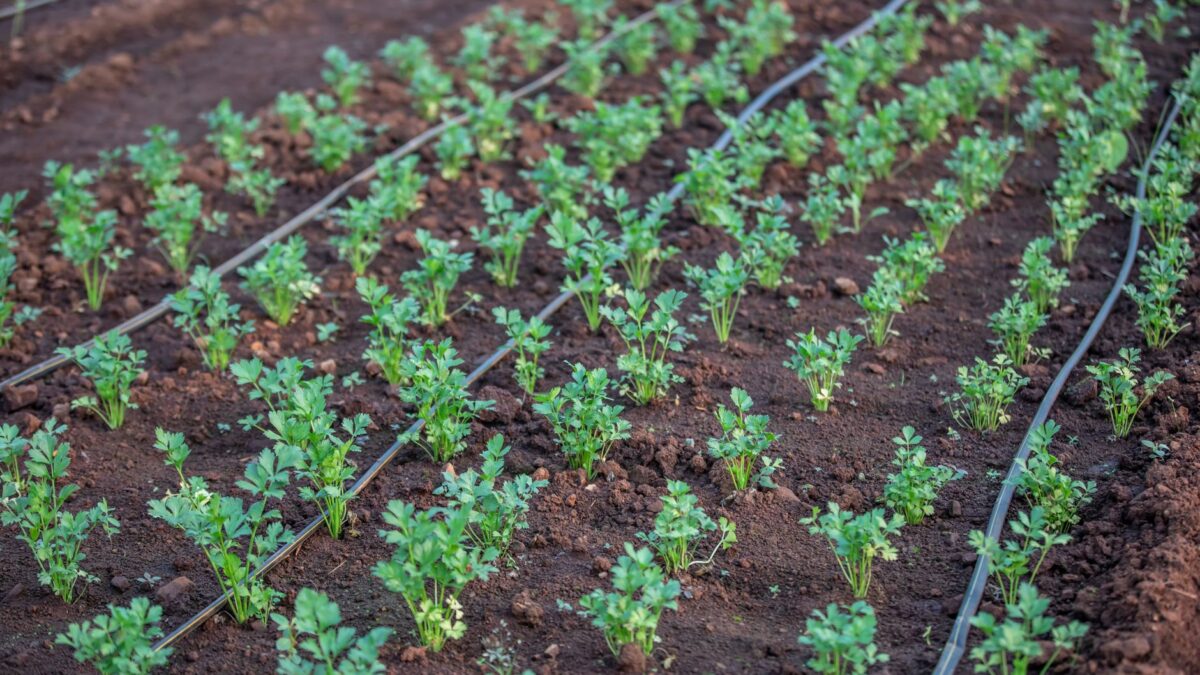
Choose a soaker hose for a small, level bed and a tight budget. Choose drip irrigation for long rows, slopes, mixed plantings or a system you want to keep for years. Soaker hoses are cheap and take minutes to lay out, but they water unevenly over long runs. Drip costs more and has more parts, but it delivers a steady, measured amount of water along the whole line.
Both keep water at soil level, where roots can use it and leaves stay dry. Neither is automatically better. The right pick depends on the size and shape of your garden, your water source and how much fiddling you are willing to do.
Soaker hose vs drip at a glance
| Feature | Soaker hose | Drip irrigation |
|---|---|---|
| How it works | Porous hose weeps water along its whole length; no emitters | Tubing or tape with emitters at set spacing, or plug-in emitters |
| Best for | Small beds, raised beds, short level rows | Long rows, large areas, slopes, separate plant groups |
| Evenness | Varies along the hose, with more water near the faucet | Even along the line, especially with pressure-compensating emitters |
| Practical length | About 25 feet or less per run | Mainline up to about 200 feet per zone on a permanent system |
| Pressure | Flow disc in the hose fitting, or a 25 psi regulator | Usually 20 to 30 psi; drip tape 10 to 12 psi |
| Filter | Recommended on town water, required on a well | 150 to 200 mesh is typical on town water; more for well or pond water |
| Setup | Connect, snake through bed, cap the end | Plan the layout, cut tubing, add fittings and emitters |
| Upkeep | Inspect for leaks and clogs; replace when uneven | Clean filter, flush lines, check emitters |
| Rough cost | About $15 to $40 for 50 feet | Roughly $30 to $100 or more for a small-garden kit, plus any timer |
Prices move around by season and brand, so treat those as a rough guide.
Soaker hose: simple and cheap
A half-inch soaker hose connects with standard hose fittings and can often be cut to length. Clemson Extension suggests laying it in a serpentine pattern, staking it with landscape staples if needed, and covering it with mulch or straw.
The main limit is length. Colorado State University Extension says to keep soaker lines to about 25 feet or less for uniform watering, because a longer hose delivers more at the top and less at the bottom. The ground also needs to be fairly level. On a slope, use several short runs.
A few tips for a better result:
- Keep the flow disc. Most hoses come with a small plastic disc in the female end that limits flow. Make sure it is in place, or use a regulator.
- Cap the far end so water is forced out through the walls.
- Allow enough time. With the disc in place, Colorado State says it may take around an hour to water a garden.
- Use regular hose as the lead if the bed isn’t right beside the faucet.
- Space runs about 12 inches apart in a raised bed, so a 4-foot-wide bed gets about four runs.
Drip irrigation: more parts, more control
A drip system lets you put water exactly where you want it. Emitter tubing has built-in emitters at preset spacing, and it irrigates evenly over its whole length. Plug-in emitters suit shrubs and containers. Drip tape is thin, cheap per foot and aimed at long rows.
Household pressure is often 50 to 70 psi, far too high for drip parts. A basic setup at the faucet runs in this order:
- Backflow preventer, which protects your drinking water. Small antisiphon devices thread onto a hose bib. Check local rules.
- Timer or valve, if you want one.
- Filter, to keep debris out of the emitters. Y or T filters are easier to clean than in-line ones.
- Pressure regulator, matched to your system. On a timer setup it goes on the outgoing side.
- Mainline, commonly 1/2-inch poly tubing, running along one side of the garden.
- Tubing or emitters, connected to each row or plant.
Soil sets the spacing. Colorado State Extension suggests emitters about 12 inches apart in sand, 18 inches in loam and 24 inches in clay. Buy emitters from one maker, since flow-rate color codes differ between brands. On a slope, add 5 psi for every 10 feet of rise.
Which one should you choose?
| Your garden | Good choice |
|---|---|
| One raised bed near a faucet | Soaker hose |
| Several raised beds with different crops | Drip, with coupling valves to shut off each bed |
| Rows longer than about 25 feet | Drip tape or emitter tubing |
| Sloped garden | Drip with pressure-compensating emitters, or short soaker runs |
| Shrubs, trees or pots | Drip emitters |
| Well or pond water | Drip with good filtration, with frequent filter cleaning |
| Rental or trial garden | Soaker hose |
Steady water matters most for crops that react badly to swings, such as tomatoes prone to blossom end rot and cucumbers that turn bitter.
How long to run it
Run time depends on your soil, your emitters and the weather, so check instead of guessing. Dig down a few inches after watering to see how far it soaked in. As starting points, Clemson suggests two 20-minute windows a day on sandy soil, and a 30-minute window every other day on clay. Adjust timers as the season changes. Our guide on how often to water vegetables explains what to aim for.
Upkeep and winter care
In spring, flush the mainline, clean the filter and check that each emitter is working. Flush again after any repair.
Before a freeze, detach the faucet parts (timer, backflow device, filter and regulator) and store them indoors. Uncap the mainline to drain it, then recap it. Colorado State notes that poly mainline tolerates freezing and most emitters can stay outdoors. Soaker hoses are simple to drain and bring inside. How early you do this depends on your USDA zone.
Bottom line
A soaker hose is a fine, low-cost way to water one small, level bed, as long as runs stay near 25 feet. Drip takes more planning and money, but it is the better long-term tool for long rows, slopes and bigger gardens. Whichever you choose, protect your household water with a backflow device and use a filter and pressure control.
FAQ
Can I put a soaker hose on a timer?
Yes. A hose-end timer works well, and it helps prevent overwatering. If you add a regulator, place it on the outgoing side of the timer.
Should I bury a soaker hose?
Lay it on the soil under mulch, which is the usual approach. Colorado State says it can also be buried about 2 inches to protect it from sunlight.
Does a soaker hose need a pressure regulator?
The small flow disc in most hoses is designed to limit flow, but a 25 psi regulator with hose-end fittings tends to work better. Don’t run one at full faucet pressure.
Can I connect a soaker hose to a drip system?
Half-inch soaker hose can be run from a regulated line. Keep quarter-inch soaker tubing on its own zone, since its higher delivery rate doesn’t match other drip parts.