Peach Leaf Curl: Why It Appears in Spring and When to Spray
The red, blistered leaves show up in spring, but the spray that prevents them goes on when the tree is bare. Here's the calendar, and how to nurse a curled tree.
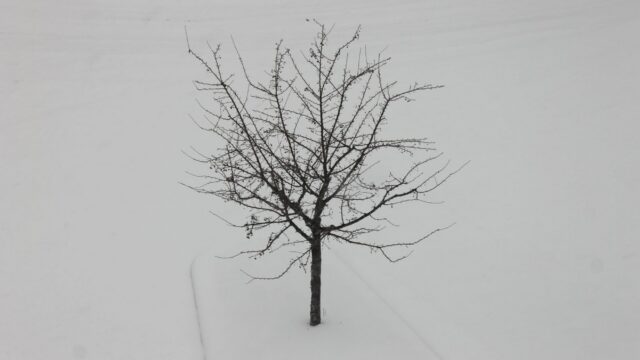
Peach leaf curl can’t be treated once you can see it. The red, puckered leaves come from an infection that began as the buds opened, so the fix is a fungicide spray while the tree is bare: after the leaves drop in fall, or before buds swell in late winter. If your tree is curled right now, help it through the season with water and a lighter fruit load, and put the dormant spray on your calendar.
What peach leaf curl looks like
- New spring leaves turn red or pink, thicken and pucker into blistered, curled shapes.
- Affected areas fade to yellow, then gray-white with a velvety coating of spores.
- Sick leaves usually fall within a few weeks, and a second flush of healthy leaves replaces them.
- Severely hit shoots can thicken, stunt and die.
- Fruit symptoms are uncommon.
The disease affects peaches and nectarines, including ornamental types. A single bad spring costs vigor and fruit, while repeated infection year after year can lead to tree decline.
Look-alikes
| Problem | How leaves look | Key difference |
|---|---|---|
| Peach leaf curl | Thick, red, blistered, then powdery gray | Spring only, on the first leaves |
| Aphids | Curled but not thickened or red-blistered | Insects and sticky honeydew on the leaf undersides. See our aphid guide |
| Herbicide drift | Twisted, narrow, cupped new growth | Follows a nearby spray, no red blisters or spores |
Why symptoms appear long after the spray window
The fungus, Taphrina deformans, spends winter as spores on twigs and buds. When buds open in spring, rain or irrigation splashes spores onto the tender new leaves. According to UC IPM, infection needs more than 12.5 hours of wetness at temperatures below 61°F, and it’s worst when trees stay wet for two or more days.
Once the fungus is inside a leaf, no spray can reach it. That’s why a dry, warm spring can bring no curl at all on an unsprayed tree, and a cool, wet one can bring a severe outbreak. As warm weather arrives and leaves mature, new infection stops, so you won’t see fresh symptoms in summer.
Spray-timing calendar
Timing follows the tree, not the date. The dates below are rough, so watch your own tree.
| Region | Main spray (after leaf drop) | Optional or alternate spray (before bud swell) |
|---|---|---|
| USDA zones 5 to 6 | Mid to late November | Early to mid March, if temperatures allow |
| Zones 7 to 8 | Late November to December | February |
| Zones 9 to 10 | December to early January, once leaves are off | Late January to February |
| Any zone, buds showing color or green | Too late for this year | Too late. Spray next dormant season |
| Any zone, growing season | Do not spray | Do not spray. It has no effect on this disease |
Extension sources agree on the principle. Penn State Extension says one well-applied spray after leaves drop or before bud swell gives control. Its warning: unusually warm late-winter weather can swell buds early and make a spring spray useless, which is why many gardeners prefer the fall spray. In wet winters or high-rainfall areas, UC IPM suggests considering a second application in late winter, as the flower buds begin to swell but before green leaf tips show.
Which fungicides to use
| Active ingredient | Notes |
|---|---|
| Fixed copper products | The standard option. Copper builds up in soil and harms aquatic life, so limit runoff |
| Chlorothalonil | A synthetic alternative. Alternating years with copper limits copper buildup |
| Copper soap (copper octanoate) | Lower toxicity, with some early evidence of protection |
Product availability varies by state, and older guides list Bordeaux mixture and lime sulfur, which can be hard to find or not sold for home use. Horticultural oil alone doesn’t work on this disease. Pick a product whose label lists peaches or nectarines and leaf curl.
- Choose a calm, dry day with no rain forecast.
- Read the whole label and wear the protection it calls for.
- Keep children and pets away until the spray has dried.
- Cover every twig, branch and the trunk, working from all sides. Spraying from one side can miss spores.
- Use one product at a time. Don’t combine products unless the label specifically says to.
How to support a curled tree this season
- Leave the leaves. Picking them off or cutting shoots hasn’t been shown to improve control, and they’ll fall on their own.
- Water in dry spells. University of Illinois Extension suggests about 1 inch per week during dry periods.
- Feed sensibly. Follow a balanced program based on a soil test. Our guide to reading a soil test can help.
- Thin the fruit. A tree that lost its first leaves has less energy, so reduce the crop. See our fruit thinning table.
- Plan next winter’s spray. Treat the following dormant season, even if the tree looks fine by summer.
Resistant varieties
If you’re choosing a new tree, resistance saves work. UC IPM lists ‘Frost’ (tolerant, but still needs spraying for its first 2 to 3 years), ‘Indian Free’, ‘Muir’ and ‘Q-1-8’. ‘Redhaven’ and many of its offspring are tolerant, while ‘Redskin’ types range from susceptible to highly susceptible. For nectarines, ‘Kreibich’ is one of the few resistant options. Check that any variety also suits your zone and chill hours.
Bottom line
Peach leaf curl is a spring symptom with a winter cure. Spray thoroughly after leaf drop or before bud swell, skip all sprays once leaves are showing, and help affected trees with water and lighter crops. The dormant season is also when you’ll be planning your pruning, so see our fruit tree pruning calendar.
FAQ
Can I spray once the leaves have curled?
No. The fungus is already inside the leaf and sprays won’t help. Save your effort for the next dormant season.
Is one spray a year enough?
Usually, if coverage is thorough and timing is right. In wet winters or on trees with a history of severe curl, a second dormant spray can help.
Should I remove curled leaves?
There’s no need. They drop within a few weeks and are replaced by healthy ones, and removing them hasn’t been shown to help.
Will peach leaf curl kill my tree?
One outbreak rarely does. Repeated severe infection weakens a tree, reduces fruit and can lead to decline, which is why yearly dormant protection matters.