Why Is My Tree Dying From the Top Down? A Diagnosis Checklist
Bare branches at the top of a tree are a symptom, not a diagnosis. Walk through this checklist to find the likely cause and decide what's safe to do yourself.
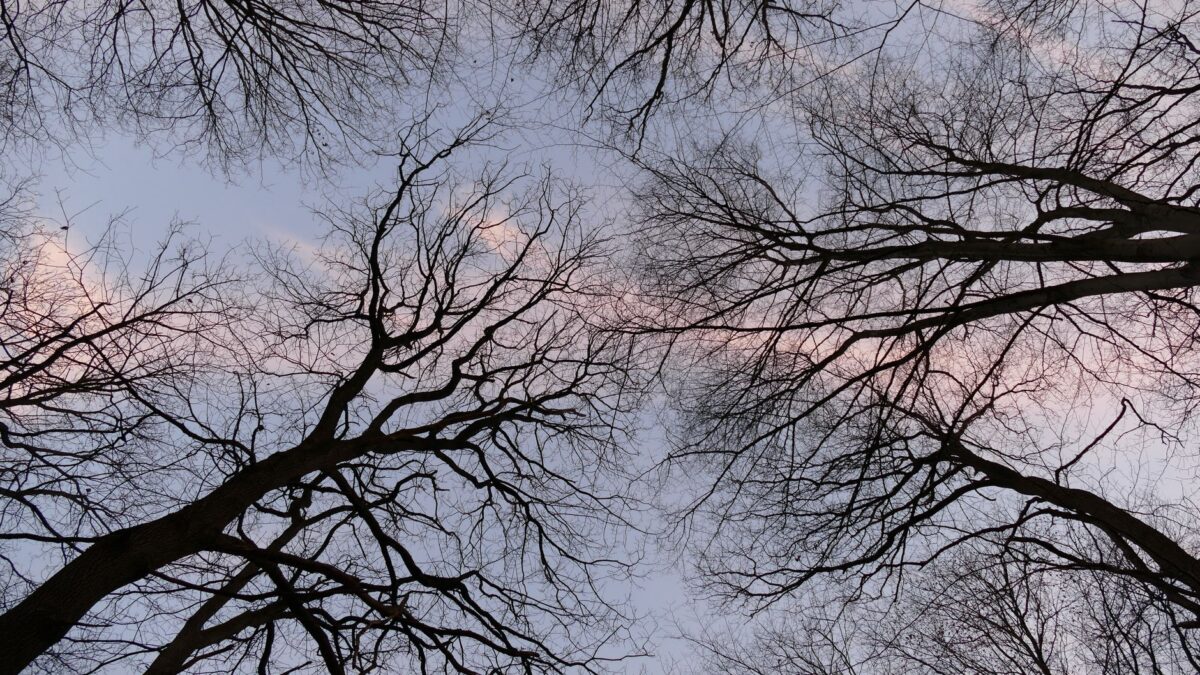
A tree that dies from the top down usually has a water supply problem. The highest branches are the farthest from the roots, so they suffer first when drought, damaged roots, borers or disease interrupt the flow. Work through the checklist below, then remove dead wood that could fall, and call a certified arborist if large limbs are dead or the tree could hit anything when it fails.
Why the top goes first
Water has to travel the whole height of the tree, so any shortage shows up at the far ends. University of Maryland Extension notes that drought stress affects top and outer leaves first. University of Wisconsin Extension draws a useful line between two terms: decline means the whole crown is thinning or losing vigor, while dieback is more localized, with healthy branches next to dead ones.
The cause often lies years in the past. Large trees may take several years to die after insect, disease or drought injury, and a root cut from grading can take up to five years to kill a tree. Most declining trees have more than one problem, so don’t stop at the first thing you find.
Diagnosis checklist
Walk around the tree with a screwdriver or trowel, and take photos as you go.
| Check | What to look for | Points to |
|---|---|---|
| Recent weather | Dry late summers or heat waves in the last few years | Drought stress |
| Soil 6 inches down | Dust-dry, or soggy and sour-smelling | Drought, or poor drainage and root dieback |
| Ground under the canopy | Trenching, new paving, soil added or removed, tracks from vehicles | Root damage or compaction |
| Base of the trunk | No visible flare, like a post set in the ground, or roots circling the trunk | Buried flare or girdling roots |
| Bark on trunk and limbs | Small holes, sawdust-like frass, woodpecker damage, bark splitting over tunnels | Borers |
| Sunken or dark bark patches | Dead areas with a clear edge, sometimes oozing | Canker disease or old wounds |
| Fungus at the base or on the trunk | Mushrooms, shelf fungi, soft crumbling wood | Root or trunk rot, a safety concern |
| Pattern in the crown | One side only, or scattered branches wilting suddenly | Wilt disease or damage to one side of the roots |
| Tree age and species | An old tree, or a naturally short-lived species | Natural decline |
The main causes
Drought and heat
North Carolina State Extension calls late-summer drought or heat the most common cause of tree death. Drought also weakens a tree’s defenses against insects and disease, so it often sets up the other problems on this list. Lingering dieback can appear a year or two after the dry spell ended.
Root damage and soil changes
Most tree roots are near the surface and spread well past the canopy. NC State says roots can extend two to three times the canopy’s width. Trenching, new driveways, parked vehicles and changed grades all cut roots or starve them of oxygen. University of Maryland Extension advises against adding or removing more than 3 inches of soil or mulch in the root zone. Packed soil is a common culprit too, and our guide to fixing compacted soil covers the checks.
Mulch or soil piled against the trunk causes similar trouble. If your tree sits in a mound, see how to mulch around trees and fix a volcano.
Borers
Borers usually arrive second, preferring trees that are already stressed. Their larvae tunnel under the bark and cut the tissue that moves water and sugars, which kills everything beyond the damage. Examples include two-lined chestnut borer on oaks, bronze birch borer on birches, and emerald ash borer on ash, which leaves D-shaped exit holes and thins the crown from the top. Once they’re in the wood, borers usually can’t be controlled with garden sprays. Ash trees still in good health may be candidates for professional treatment, so ask an arborist promptly.
Disease
Canker diseases such as cytospora kill bark and branches on poplars, willows, aspens, maples and other trees, often working from the tips inward. Wilt diseases, including verticillium wilt and oak wilt, block water movement and need a proper diagnosis, often a lab test. Where oak wilt occurs, avoid pruning oaks in spring and early summer; your state’s Extension service will give local dates. Bark that has cracked or split can be another entry point, as our guide to splitting tree bark explains.
Age
All trees have a natural life span. An old tree slowly dying back may simply be near the end, and at that stage safety matters more than treatment.
What you can do now
- Water during dry spells. Check the soil about 6 inches deep, then soak slowly across the root zone, not just at the trunk. Skip this if the soil is already wet, and don’t water frozen ground.
- Remove dead wood you can reach from the ground. Cut small dead branches just outside the branch collar. Not sure what’s dead? Use the checks in how to tell if a tree is dead.
- Protect the root zone. Keep vehicles, stored materials and new digging off it.
- Spread mulch in a wide, thin ring. Keep it off the trunk.
- Hold off on fertilizer until you know the cause. Maryland notes fertilizer helps only if enough healthy roots remain to take up nutrients. On a stressed tree it can do little or add to the strain.
- Take dated photos. Comparing next summer’s crown to this year’s shows whether dieback is spreading.
Don’t cut the top off the tree. Topping doesn’t address the cause, and it leaves stubs that decay and sprout weak growth.
When to call an arborist
- Large limbs are dead, hanging or too high to reach from the ground.
- The tree could hit a house, driveway, fence, walkway or play area.
- You see fungus at the base, deep cracks, a new lean, or soil lifting on one side.
- Dieback has spread from one year to the next.
- Branches are near power lines. Stay away and contact your utility or a qualified line-clearance arborist.
- It’s a valuable tree you’d like to keep, or you suspect emerald ash borer or oak wilt.
Look for an ISA Certified Arborist with insurance, and be wary of anyone who pushes topping or removal before examining the tree. Your county Extension office can often help identify the problem from clear photos and a branch sample.
Bottom line
Top-down dieback is a sign that water isn’t reaching the crown. Check the weather history, soil, root zone, trunk base and bark, fix what you can, and prune only dead wood. The more of the crown that’s dead, the poorer the outlook, and a tree that could hit something deserves a professional look soon.
FAQ
Can a tree recover from top dieback?
Sometimes. A tree with a small amount of dieback and a fixable cause, such as drought, can stabilize. NC State cautions that once a large tree is in serious decline, reversing the damage is very difficult.
Should I cut off the dead top?
Remove dead branches, but don’t top the tree. Work at height is best left to a trained arborist, particularly on a tree with weak wood.
Will fertilizer save a dying tree?
Rarely. Fertilizer doesn’t fix drought, root damage or borers, and it helps only when enough healthy roots remain.
How long does a tree take to die from the top down?
It can take several years, especially for large trees. Root damage may take up to five years to show its full effect.