How to Get Rid of Tomato Hornworms: Find Them, Pick Them, Spare the Wasps
Stripped tops and dark droppings give hornworms away. Hand-picking handles most home gardens, and some caterpillars are better left exactly where they are.
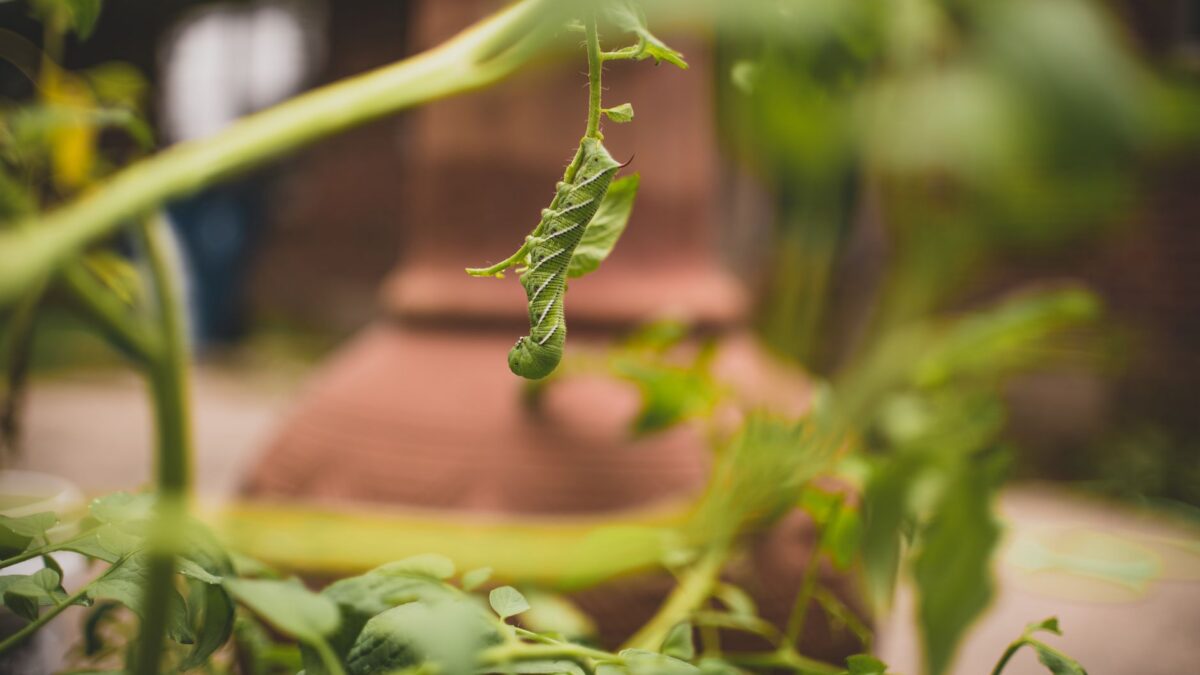
The best way to get rid of tomato hornworms in a home garden is to hand-pick them. Look for dark droppings and stripped stems, then search the foliage above at dusk or dawn. Drop the caterpillars into soapy water, but leave any carrying white, rice-like cocoons, because those are raising the wasps that control the next round. Bt or spinosad is only worth using if picking cannot keep up.
How to identify hornworms
Hornworms are often the largest caterpillars in a vegetable garden, reaching up to about 4 inches. All sizes have a horn at the rear end, and their green color and stripes make them hard to spot. Two species do almost identical damage.
| Feature | Tomato hornworm | Tobacco hornworm |
|---|---|---|
| Side markings | Eight white V-shaped marks | Seven diagonal white stripes |
| Horn | Black | Usually red or orange |
| Stripe edges | Green margins | Black margins |
| Control | Same | Same |
The horn looks fierce but does not sting. The adults are large hawk moths with wingspans up to 5 inches, often mistaken for hummingbirds. They feed on nectar and do not damage plants.
Signs you have them
- Droppings. Large black or green pellets on leaves or the ground under the plant are usually the first clue, according to UC Statewide IPM.
- Stripped tops. Whole leaves and small stems disappear, often at the top of the plant.
- Chewed green fruit. Large bites may rot on the vine or dry into scars.
- Fast damage. University of Wisconsin Extension says larvae can eat up to four times their body weight in a day and can defoliate a plant.
Bare stems with no droppings could mean deer or another browser, so check for both. Yellow rather than missing leaves point elsewhere: see tomato leaves turning yellow.
Steps, least toxic first
- Scout regularly. Wisconsin suggests checking often from early July through August. Timing varies, so start earlier in warm regions. Damage tends to peak in midsummer, with a smaller peak in late summer.
- Search at the right time. Larvae are easiest to see near dusk and dawn, when they feed on the outside of the plant. Find droppings, then look at the stems directly above them.
- Check each caterpillar before removing it. White cocoons on its back mean leave it alone.
- Pick by hand. Wear gloves if you prefer. Drop caterpillars into a bucket of soapy water, or snip them with shears.
- Try Bt if numbers are high. Bacillus thuringiensis subspecies kurstaki targets caterpillars and works best on small ones. Sources differ on how well it handles large hornworms, so treat early and hand-pick the big ones. It must be eaten, so spray the leaves they are feeding on and follow the label.
- Use spinosad only as a further step. It works against smaller larvae, but it is toxic to bees. Do not spray open flowers or let it drift onto blooming plants where bees forage. Spray in the evening if the label allows.
- Clean up after harvest. Larvae pupate in the soil. Wisconsin says tilling after harvest can destroy up to 90% of those trying to pupate. In a small bed, turning the soil with a fork helps.
Options compared
| Option | Best for | Effect on beneficial insects | Notes |
|---|---|---|---|
| Hand-picking | Small gardens, any size caterpillar | None | Repeat every few days |
| Leaving parasitized caterpillars | Any garden | Helpful | Costs nothing |
| Bt kurstaki | Young caterpillars, larger plantings | Low; targets caterpillars | Coverage matters; reapply per label |
| Spinosad | Heavy infestations of small larvae | Toxic to bees | Avoid open flowers and drift |
| Fall soil turning | Next year’s population | None | Do after harvest |
Skip broad-spectrum insecticides. They rarely pay off, since hornworms seldom cause enough damage to justify them in home gardens, and they also kill the insects doing the work for you. Soaps and oils are better suited to soft pests, as our neem oil and insecticidal soap comparison explains. Follow the label on anything you use, never mix products, and store them away from children and pets.
Why to leave wasp-parasitized caterpillars alone
Those white rice-like cocoons belong to a tiny braconid wasp, most commonly Cotesia congregata. The wasp lays eggs in the caterpillar, the larvae feed inside it, and then they spin cocoons on its skin. The hornworm has mostly stopped feeding by that stage and will die. When the wasps emerge, they go after other hornworms.
Remove that caterpillar and you throw away your free pest control. If it is on a plant you want to keep tidy, just leave it. These wasps do not bother people.
Other allies include Trichogramma wasps, which attack the eggs, and lady beetles and green lacewings, which feed on eggs and young larvae. UC IPM says natural enemies often keep hornworms in check on their own.
Preventing next year’s problem
- Turn the soil after harvest, then keep beds tidy.
- Rotate tomatoes where you can.
- Keep pesticide use low so beneficial insects stay around.
- Grow plants on supports, which makes caterpillars and droppings easier to see.
Bottom line
Follow the droppings, pick the caterpillars at dusk or dawn, and leave any with white cocoons. Most home gardens never need a spray. If numbers get high, Bt on young caterpillars comes first, and spinosad only with care around bees.
FAQ
Why can I not find the hornworm when the damage is obvious?
Their color matches tomato stems and leaves. Look at dusk or dawn, follow the droppings upward, and check the undersides of stems.
Are hornworms dangerous to touch?
No. The horn does not sting. Gloves are only for comfort.
What are the white things on my hornworm?
Those are cocoons of a parasitic wasp. Leave the caterpillar in the garden so the wasps can emerge.
Do hornworms eat anything other than tomatoes?
Yes. They also feed on related plants such as eggplant, so check nearby crops too.