How to Get Rid of Clover in Your Lawn (and When to Keep It)
Clover moves in where grass is hungry and thin. Fix that first, then decide whether the patch needs pulling, spot-treating or simply leaving alone.
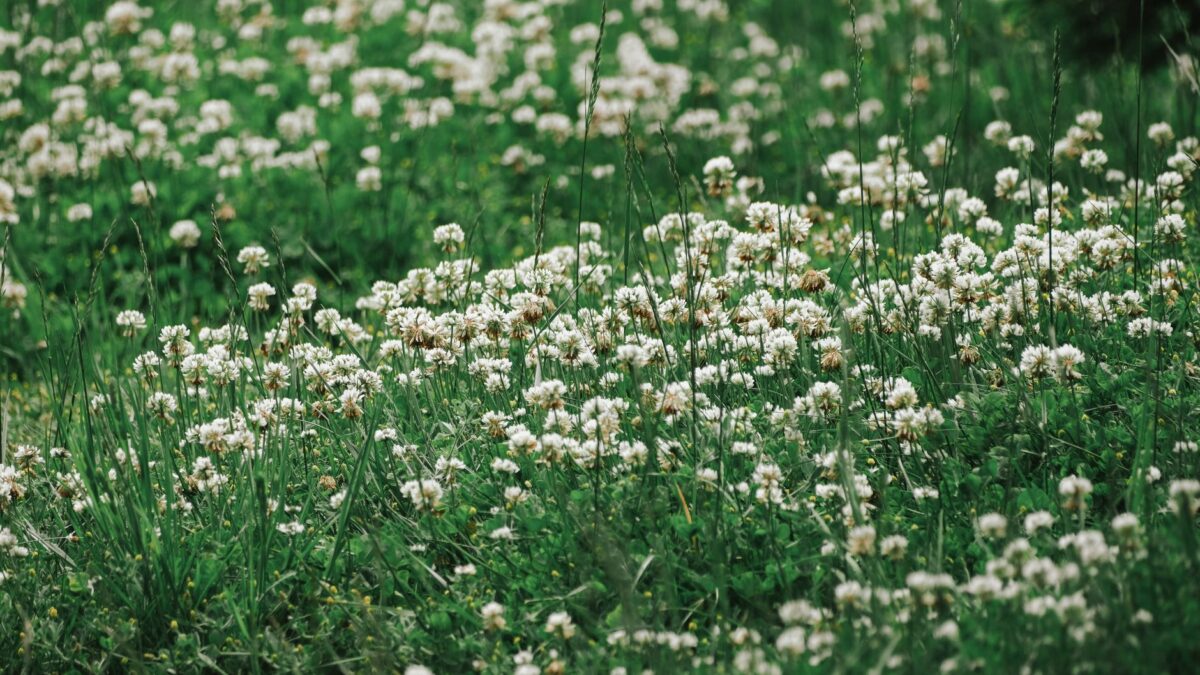
Clover usually means your grass is short on nitrogen and too thin to compete. Feed and thicken the lawn, pull small patches by hand, and if you still want it gone, spot-treat with a selective broadleaf herbicide in fall. You can also keep it, because clover adds nitrogen to the soil and feeds bees.
Why clover moves in
White clover is a perennial legume. Bacteria in its root nodules help it take nitrogen from the air, so it can thrive where lawn grass is hungry. Penn State Extension describes it as very common in under-fertilized lawns.
It spreads along the ground on creeping stems that root as they go, forming patches in thin turf. It tolerates mowing and partial shade. University of Minnesota Extension adds that it can point to compaction and drought stress as well as low nitrogen. Its hard-coated seeds can also lie dormant in the soil for a long time, so expect some to return even after a good cleanup.
Treating clover without fixing those conditions is usually a temporary win.
Your options compared
The options below run from the least toxic to the most, with keeping it as a separate choice at the end.
| Option | Best for | Effort | Watch out for |
|---|---|---|---|
| Hand-pulling | Small, young patches in moist soil | High | Stems left behind can regrow |
| Feeding the lawn | Thin or pale turf | Low | Slow results; test soil first |
| Mowing higher | Any lawn | Low | Won’t remove clover by itself |
| Overseeding thin areas | Patchy turf | Medium | Timing, and any herbicide waiting period |
| Spot-treating | Scattered patches | Low | Label limits, pets, bees, drift |
| Whole-lawn treatment | Clover throughout the lawn | Low | More chemical and more risk to nearby plants |
| Keeping it | Low-input lawns | None | Bees on flowers, winter die-back |
How to reduce clover, least toxic first
- Test the soil. A soil test shows what the lawn actually needs, including whether pH is holding the grass back.
- Feed at the right time. Adequate nitrogen makes large patches less likely. For Kentucky bluegrass lawns in Iowa, Iowa State Extension suggests late April or early May, mid-September, and late October or early November. Warm-season lawns need different timing, so check locally and follow the fertilizer label.
- Mow higher. Cornell notes that better soil conditions and a higher mowing height can reduce clover dominance. Most cool-season lawns do well at around 2.5 to 3 inches.
- Pull small patches. Work when the soil is moist and try to lift the creeping stems as well as the crown.
- Fix the bigger causes. Loosen compacted soil and fill gaps using our steps for repairing bare spots, so grass can close in.
If you decide to use an herbicide
Choose a product labeled for white clover and for your type of grass. Some warm-season grasses are sensitive to certain herbicides, so check before you buy.
- Ingredients that work: Extension sources point to triclopyr, fluroxypyr, quinclorac, dicamba and MCPP, often in combination. Products with 2,4-D alone won’t control it well.
- Ingredient to avoid: Penn State says clopyralid products shouldn’t be used on residential lawns.
- Best timing: Fall. Iowa State says mid-September to early November beats late spring or summer, and clover often regrows after spring treatments. If you’re reading this in November in a cold area, the window may be closing, so check the label and plan for next fall if the clover is no longer actively growing.
- Weather: Colorado State advises treating only well-watered plants and avoiding temperatures above 85°F, when control can drop and vapor drift can harm nearby plants.
- Spot-treat when you can. It carries less risk to other plants than spraying the whole lawn.
- Protect bees. University of Maryland Extension advises mowing off flowers before using any product that might harm pollinators.
- Protect people and pets. Keep children and pets off the lawn until it has fully dried, or longer if the label says so. Never mix products.
Crabgrass preventers won’t help. They don’t control existing white clover, as our guide to pre-emergent vs post-emergent herbicides explains. Avoid nonselective weed killers on patches too, because they’ll kill the grass along with the clover.
The case for keeping clover
Many gardeners have stopped fighting it, and there are good reasons for that:
- Free nitrogen. As a legume, clover adds nitrogen, and its clippings can reduce how often you need to fertilize.
- Food for bees. Michigan State University notes that the flowers attract bumble bees and smaller bees, though Maryland Extension cautions that non-native lawn plants mostly help generalist species.
- Less weed pressure. Illinois Extension says microclover, a smaller-leaved selection of white clover, competes well with weeds and blends with most turfgrasses better than common white clover when seeded at appropriate rates.
There are trade-offs. Clover’s top growth dies back in winter, which can leave bare spots. Illinois Extension says microclover doesn’t tolerate high heat and drought and performs poorly in shade. Most lawn broadleaf herbicides will kill it, too. If anyone at home is allergic to bee stings, mow before it flowers or keep it out of play areas.
Bottom line
Clover is more of a symptom than a threat. Start with the soil test, feeding, higher mowing and a thicker lawn. Pull what you can, and save herbicide for fall if you still want it gone. If you can live with it, it’s one of the more useful weeds in a lawn.
FAQ
Does clover mean my soil is bad?
Not exactly. It usually means nitrogen is low, the turf is thin or the soil is compacted. All three can be fixed, and a soil test will narrow it down.
Can I get rid of clover permanently?
Probably not forever. Seeds can stay dormant for a long time, so new plants may appear. A dense, well-fed lawn keeps them from taking hold.
Should I treat clover in spring or fall?
Fall is usually better. Spring treatments can burn back the foliage, but the plant often regrows.
Can I add clover to my lawn on purpose?
Yes. Illinois Extension describes seeding microclover between early spring and late summer without tilling, then keeping the soil moist with daily watering for the first 7 to 10 days. Seed can be expensive and hard to find in stores.