How to Choose a Fresh Christmas Tree: Needle, Trunk and Species Checks
A fresh Christmas tree has flexible needles that stay put and a sticky, pale trunk. See the lot checks and which species hold needles longest indoors.
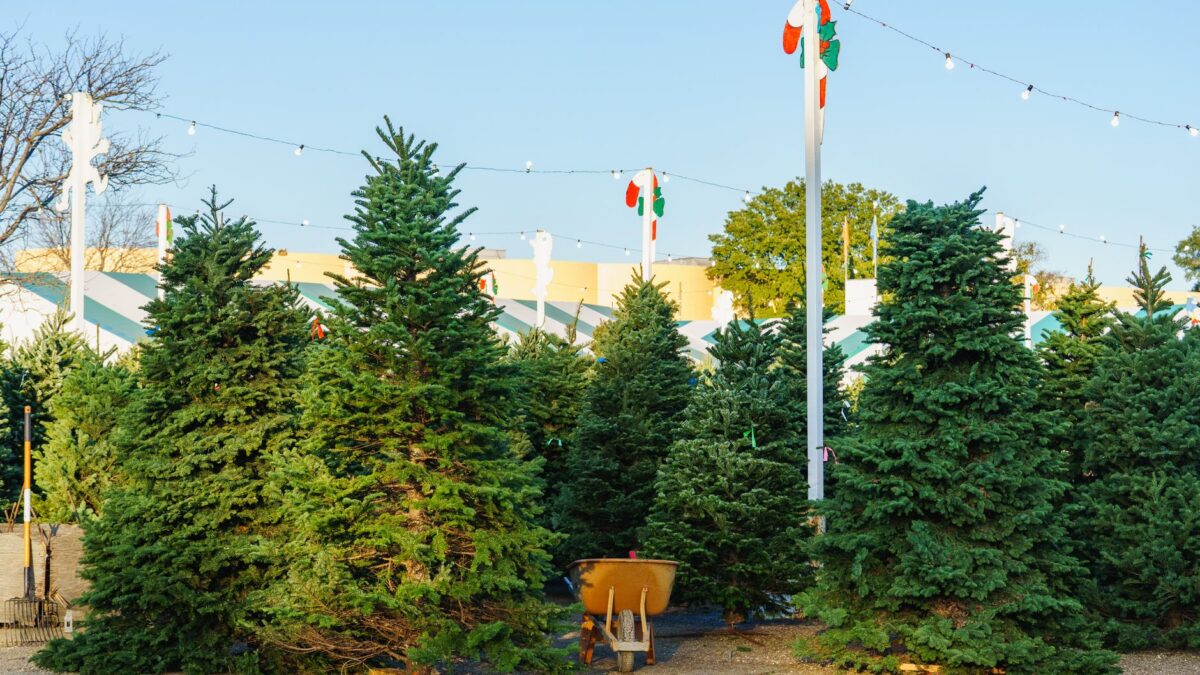
To choose a fresh cut Christmas tree, look for deep green color, needles that bend without snapping, very few needles falling when you tap the trunk on the ground, and a cut end that looks moist or sticky rather than dry and gray. Pick a species known for good needle retention, such as Fraser fir, noble fir, Nordmann fir or Scotch pine, and the tree will usually stay fresh through the season if you get it into water quickly and keep the stand full.
Start with the overall look
Before handling any branches, step back and look at the whole tree. Freshness problems often show from a few feet away.
- Color: needles should be a rich, even green (or blue-green for some firs and spruces). Dull, grayish, yellow or brown patches suggest the tree has been drying out.
- Brown inner needles: a small amount of brown needles deep inside the tree is normal, since conifers shed older interior needles naturally. Browning at branch tips is not normal.
- Fragrance: a fresh fir or pine smells strongly when you brush the branches. A tree with almost no scent may have been cut long ago.
- Where it has been stored: trees kept in shade, out of wind, and with their bases on damp ground or in water hold moisture better than trees stacked in full sun on hot pavement.
The needle test
The needle test is the quickest freshness check and takes only a few seconds per tree.
- Bend a needle. On a fir, bend a single needle between your fingers. A fresh needle bends and springs back; a dry one snaps cleanly. Pine needles should feel flexible rather than brittle.
- Run a branch through your hand. Hold a branch near the trunk and gently pull your loosely closed hand toward the tip. A few needles coming off is fine. A handful of loose needles is a warning sign.
- Tap or bounce the tree. Lift the tree a few inches and drop the cut end firmly on the ground, or ask the seller to shake it. Some interior needles will fall. If green needles from the outer branches shower down, move on.
Spruces have sharp, stiff needles, so the bend test is less telling for them. Rely more on the branch pull and the tap test, and wear gloves.
Check the trunk and cut end
The trunk tells you how the tree has been handled and whether it will set up straight in your stand.
- Look at the cut end. A moist, pale, slightly sticky surface with sap is a good sign. A dark, cracked or very dry cut end means it has been out of water for a while. Combined with a failed needle test, it confirms the tree is dry.
- Check for a straight base. The bottom 6 to 10 inches (15 to 25 cm) should be straight and fairly smooth, without large stubs or a sharp bend, or the tree will lean in the stand.
- Measure the diameter. Make sure the trunk fits your stand without heavy trimming. Shaving bark off the sides of the trunk to make it fit removes the outer layers that take up the most water, so choose a tree that fits or a bigger stand.
- Ask for a fresh cut. Many lots will saw a thin disk off the base when you buy. Ask them to make it straight across rather than angled or V-shaped, which do not help water uptake and make the tree harder to stand.
Which species hold needles longest
Species matters as much as freshness. As a general rule, most firs and pines hold their needles well indoors, while many spruces drop needles sooner once they dry out.
- Fraser fir: one of the most widely sold trees in the United States, with good needle retention, a pleasant scent and sturdy branches for ornaments.
- Noble fir: stiff, well-spaced branches and excellent needle retention; popular in the Pacific Northwest and elsewhere for heavy decorations.
- Nordmann fir: the most common choice in the UK and much of Europe, valued for soft, glossy needles that stay on well and have little scent.
- Balsam fir: strong classic fragrance and good retention, common in the northeastern US and eastern Canada.
- Douglas fir: soft needles and a sweet scent; retention is fair to good when kept watered.
- Scotch pine: keeps its needles well even when it starts to dry, which is why it has long been a popular lot tree.
- White pine: long, soft needles and good retention, though branches are flexible and suit lighter ornaments.
- Spruces (Norway, blue, white): attractive shape and color, but they tend to drop needles faster in a warm room. Norway spruce in particular is known for shedding, so buy it later in the season.
Timing, transport and the first hours at home
- Buy closer to when you will set it up if you choose a spruce, or if lots in your area store trees in sun and wind.
- Measure first: note your ceiling height and leave room for the stand and the top ornament, usually about 1 foot (30 cm) less than the ceiling.
- Wrap it for the drive. Netting or a tarp protects the tree from wind, which dries needles quickly on the highway.
- Recut and water fast. If the tree will not be in water within a few hours of the lot’s cut, saw about 1 inch (2.5 cm) off the base before placing it in the stand. Sap seals the cut end and slows water uptake.
- Use a large enough stand. A common guideline is about 1 quart (1 liter) of water capacity per inch (2.5 cm) of trunk diameter, and a fresh tree may drink more than that in the first days.
For the full routine after setup, including how often to check the water and what not to add to it, see our guide to keeping a cut Christmas tree fresh.
Common mistakes to avoid
- Choosing the fullest tree without doing the needle test.
- Letting the stand run dry even once; the cut end can seal and the tree may stop drinking.
- Placing the tree near a fireplace, radiator, heating vent or space heater, which dries it quickly and raises fire risk. Keep it well away from heat sources and turn off tree lights when you go to bed or leave the house.
- Trimming bark off the trunk to force it into a small stand.
After the holidays, many communities collect trees for chipping, and shredded branches make a useful mulch. If you use it in your yard, follow the basics of mulching around trees without piling it against the trunk.
Quick answers
How long does a fresh cut Christmas tree last indoors?
A fresh tree of a good needle-holding species often stays in good condition for about four to five weeks if the stand never runs dry and it is kept away from heat. Spruces and trees that were dry at purchase fade sooner.
Is a pre-cut lot tree as fresh as a cut-your-own tree?
It can be, if the lot stores trees in shade with their bases protected and you pass the needle and tap tests. A cut-your-own tree is guaranteed fresh on the day, but it still needs a prompt fresh cut and water.
Can a tree that fails the needle test be revived?
Not reliably. A fresh cut and plenty of water help a slightly dry tree, but needles that already snap or fall in handfuls will not recover. Choose another tree.
Which Christmas tree drops the fewest needles?
Firs such as Fraser, noble and Nordmann, along with Scotch pine, are generally the best at holding needles. Spruces, especially Norway spruce, tend to drop the most.