Why Are My Pepper Plants Not Producing? A Symptom Checklist
Big green plants with no peppers usually point to the weather or too much nitrogen. Use this checklist to find the cause and get fruit setting again.
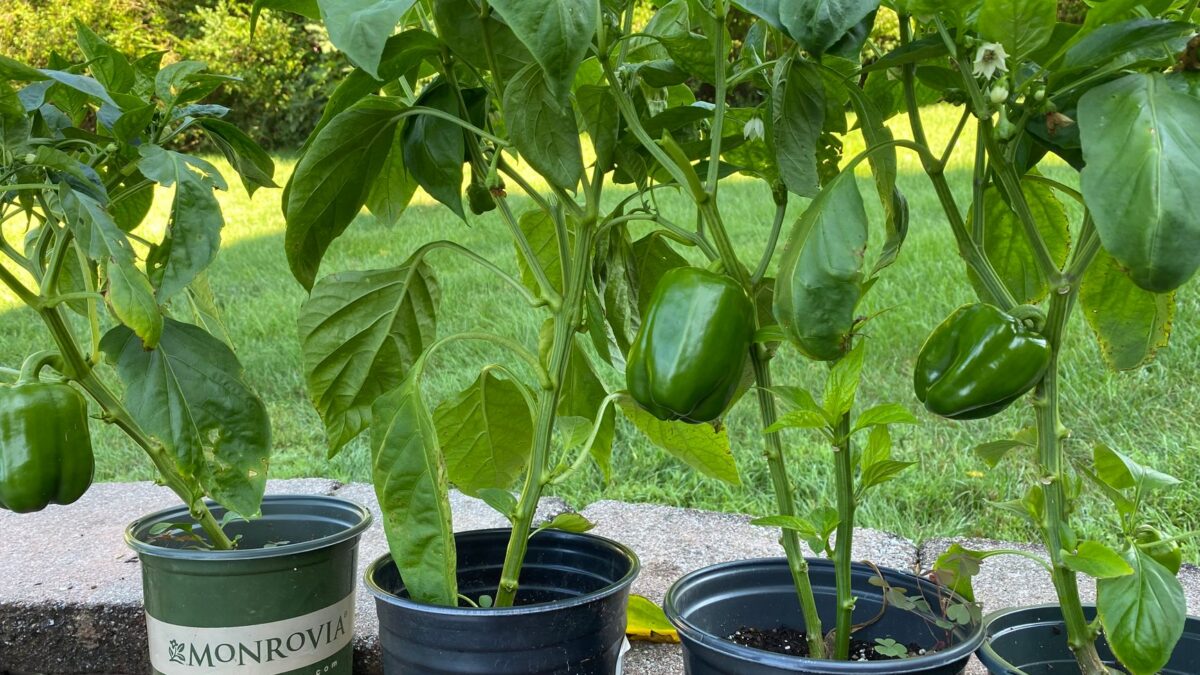
Pepper plants usually fail to fruit because of temperature: nights below about 60°F or above 70 to 75°F, or days above 90 to 95°F, make flowers and tiny fruit drop. The next suspects are too much nitrogen, which gives big leafy plants with few peppers, and uneven watering. During a hot spell, the best move is often to keep plants watered and wait. Healthy plants usually start setting fruit again when the weather improves.
The pepper symptom checklist
| What you see | Likely cause | What to do |
|---|---|---|
| Flowers drop in cool spring weather | Cold nights | Wait for warmer nights; transplant later next year |
| Flowers and tiny fruit drop in midsummer | Hot nights or very hot days | Water steadily, wait, and consider afternoon shade |
| Huge, bushy, dark green plants, few flowers | Too much nitrogen | Stop feeding; test the soil before adding more |
| Blossoms fall during a dry spell | Water stress | Water deeply, then mulch |
| Plants wilt and yellow in soggy ground | Prolonged wet soil | Improve drainage; water less often |
| Tall, thin plants with few blooms | Too much shade | Move to a sunnier spot next season |
| Blossoms drop on windy days | Hot, dry wind | Set up a windbreak |
| Few new flowers, ripe fruit left on plant | Plant is carrying its load | Harvest regularly |
| Stunted plants fruiting while tiny | Fruit set too early | Remove early flowers on small transplants |
Temperature: the most common cause
Peppers have a fairly narrow comfort zone for setting fruit. Published cutoffs differ a little, so treat them as a range, not a hard line.
| Source | Night limits | Day limit |
|---|---|---|
| University of Maryland Extension | Below 60°F or above 75°F | Above 95°F |
| University of Illinois Extension | Above 70°F (problems also below 50 to 55°F) | Extreme heat, especially with wind |
| Oregon State University Extension | Below 58°F | Above 85°F |
| Utah State University Extension | Below 55°F | Above 90°F |
Very high heat can kill pollen, so a flower that opens during a heat wave may never set fruit. The University of Maryland Extension notes that plants often stop producing blossoms and fruit during hot midsummer weather, then resume in late summer and early fall. Utah State agrees that the problem usually disappears as the weather improves.
If you are not sure, check a week of night lows in your area against the table before you change anything. Blossom drop that lines up with a cold snap or hot spell needs no treatment, and no spray will fix it. What helps is making sure heat isn’t compounded by drought. Maryland Extension also suggests a spot with late afternoon shade for better season-long yields, which is especially useful in hot regions.
Nitrogen: when the plant is all leaves
A lush, oversized plant with few flowers is a classic sign of too much nitrogen. University of Minnesota Extension says too much leads to plants that are bushy, leafy and slow to bear fruit. Check for high-nitrogen lawn fertilizer drifting into the bed or heavy fresh manure.
- Stop fertilizing for now. The plant needs to use up what it has.
- Test the soil before the next season. See how to read a soil test.
- Time feeding better. University of Illinois Extension suggests a starter fertilizer at transplanting, then side-dressing after the first flush of peppers has set.
Water: steady beats heavy
Both drought and soggy soil can cost you flowers. Utah State suggests watering peppers deeply and infrequently, about 1 to 2 inches a week, and warns that irregular watering can cause flower drop. Illinois adds that hot, dry winds and dry soil can prevent fruit set or make small fruit abort. Use mulch to hold moisture, and see how often to water vegetables for details by soil type.
Uneven moisture can also cause blossom end rot, the dark sunken patch on the bottom of the fruit. If your peppers form but go bad, that is the likely reason.
Pollination, light and young plants
In peppers, pollination trouble is usually a temperature issue and not a shortage of plants. You don’t need a second plant to get fruit. Our guide on tomato plants that flower without fruit covers a very similar problem, and many of the fixes carry over.
Light matters too. Peppers prefer a sunny location, and excessive shade reduces fruit set. Spacing plants well also helps, since crowding keeps them shaded.
Young plants need a different approach. Oregon State advises removing flowers and fruit on newly set plants, because a plant that sets fruit while too small ends up stunted. A bigger plant can carry far more peppers.
A plan for next season
- Time planting to your zone. Peppers can’t take frost and sulk in cold, wet soil. Utah State suggests transplanting when soil reaches 60°F and frost danger has passed. Your date depends on your USDA hardiness zone and last frost.
- Choose earlier varieties in short-season climates, so plants flower during your best weather.
- Pick a sunny, well-drained site with moderate fertility and plenty of organic matter.
- Mulch and water evenly from the start, ideally with drip irrigation.
- Feed lightly, based on a soil test.
- Harvest regularly. Maryland Extension notes that failing to pick can signal plants to slow down.
Bottom line
Look at the weather first. If nights have been under about 60°F or over 70 to 75°F, blossom drop is expected, and it usually ends when temperatures settle. If the weather is fine and the plant is huge and leafy, ease off the nitrogen. Keep moisture even, give peppers full sun, and pick often.
FAQ
Should I pick off the first pepper flowers?
On small transplants, yes. Removing early flowers lets the plant build size first, which supports a bigger crop later on.
Will my peppers start producing again after a heat wave?
Usually, yes. Healthy plants often resume flowering and fruiting in late summer and early fall when temperatures come back down, so keep them watered.
Will Epsom salt help peppers set fruit?
Don’t rely on it. University of Maryland Extension says Epsom salt should not be added to soil unless a soil test recommends it, and too much magnesium can make calcium less available.
Why do I have lots of flowers but no peppers?
The flowers are probably dropping before they set. Look for fallen blossoms beneath the plant, then compare recent night temperatures with the ranges above.