Why Are My Citrus Leaves Turning Yellow? Causes by Leaf Pattern
Which leaves are yellow, and in what pattern, tells you most of what you need to know. Here's how to read them on in-ground and potted citrus.
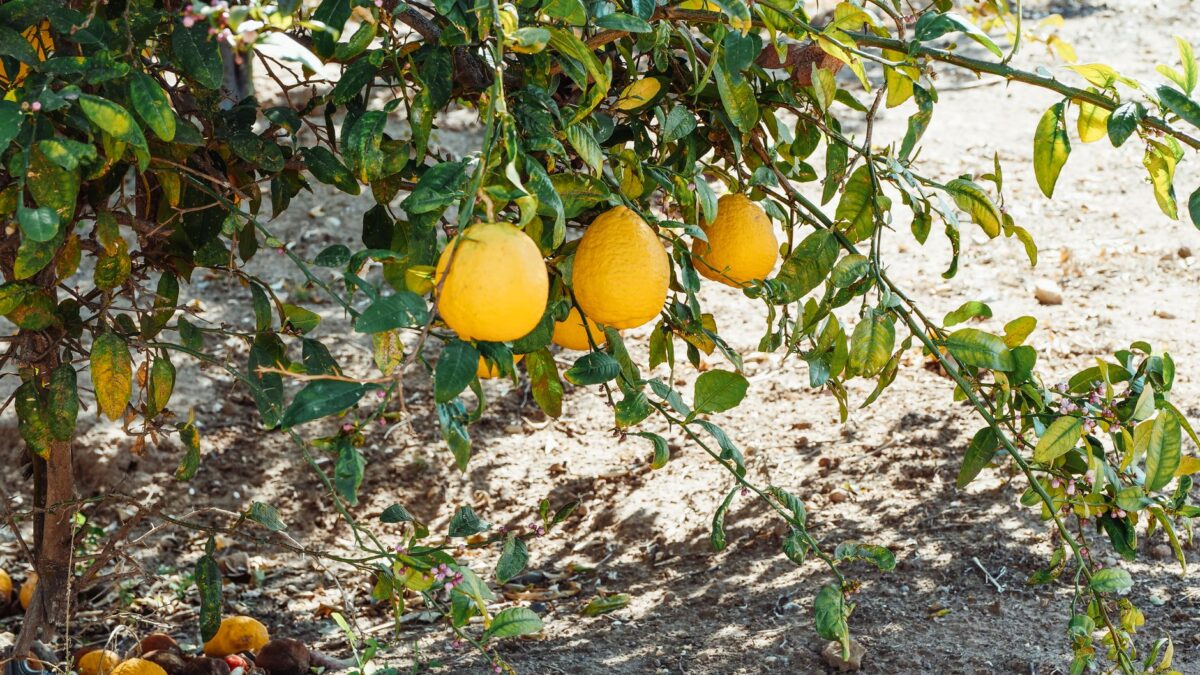
Citrus leaves most often turn yellow because of watering and root problems, low nitrogen, iron or zinc shortage, or cold soil. Check the soil first, then note which leaves are yellow and in what pattern. Blotchy, lopsided mottling that doesn’t match from one side of the leaf to the other deserves a report to plant health officials, since it can signal citrus greening.
Start with soil and roots
Fertilizer won’t help a tree whose roots aren’t working, and it can make matters worse. Before you feed anything, push a finger or trowel a few inches into the soil.
- Wet and heavy: roots may be short of oxygen. Stop watering and improve drainage.
- Bone dry: water deeply, then keep a steadier routine.
- Evenly moist: move on to the leaf pattern.
Damaged roots can’t take up nutrients, so a watering problem can look just like a nutrient shortage. That’s why this check comes first.
Read the leaf pattern
| Pattern | Likely cause | What to do |
|---|---|---|
| Older leaves evenly pale yellow-green | Nitrogen shortage | Feed with a citrus fertilizer, following the label |
| Older leaves with yellow blotches and a green inverted V at the base, often near heavy fruit | Magnesium shortage | Soil test first, then use a magnesium product if confirmed |
| New leaves very pale, with greener veins | Iron shortage, usually high-pH soil | Check pH, use a chelated iron product suited to alkaline soil |
| Small new leaves, green bands along the veins, yellow between | Zinc, often with manganese shortage | Apply a citrus micronutrient product, following the label |
| Yellowing all over, leaf drop, soggy soil | Overwatering or root rot | Let soil dry, check roots, fix drainage |
| Dull, curling, yellowing leaves, dry soil | Underwatering | Water deeply and mulch, keeping mulch off the trunk |
| Pale leaves over winter, improving in spring | Cold soil slowing root uptake | Wait for warm weather, and don’t overwater |
| A scattering of oldest leaves yellowing and dropping around new spring growth | Normal leaf turnover | Nothing |
| Blotchy mottling that crosses veins and differs on each half of the leaf | Possible citrus greening | Report it (see below) |
Symptoms don’t always match pictures. University of Florida IFAS notes that two or three nutrients can be short at once and produce confusing patterns, and that a mild, temporary deficiency pattern on new shoots usually needs no action. Its citrus deficiency guide is a good reference for photos. For a general reference across plants, see our nutrient deficiency chart, and for the green-vein pattern, our guide to iron chlorosis.
In-ground trees
- Watering. Water deeply and less often, letting the top few inches of soil dry before the next soak. Frequent shallow watering keeps the crown wet and the deep roots dry.
- Trunk base. Keep grass, mulch and sprinkler spray away from the trunk, since constant moisture there encourages foot rot. Oozing gum or dead bark at the base needs attention.
- Soil pH. Iron problems are mainly a problem on alkaline, calcareous soils. A soil test tells you whether iron is the real issue. Adding more iron to the wrong soil type wastes money.
- Feeding. Citrus are fairly heavy feeders, but follow the label for tree size and your local fertilizer rules, which in some areas limit summer application.
Potted trees
- Drainage. Use a container with holes, and empty the saucer after watering.
- Check the mix. Water when the top couple of inches feel dry, and expect to water much less in winter, particularly indoors.
- Inspect the roots. If leaves keep yellowing, slide the tree out of the pot. Healthy roots look pale and firm, while rotting roots look brown and mushy. Our guide to saving a plant from root rot covers the rescue.
- Feed lightly and often. Frequent watering flushes nutrients out of pots faster than garden soil, so nitrogen shortage is common. Use a citrus fertilizer during active growth.
- Give light. A tree brought indoors in winter drops leaves in dim rooms. Use the brightest window you have.
Pet note: citrus plants are listed as toxic to dogs and cats, so keep indoor trees and fallen leaves or fruit out of reach.
Cold damage
Frost-hit leaves often yellow, curl, or brown and then drop, sometimes weeks later. Wait until new growth appears in spring before pruning, so you can see which wood is alive. Before the next cold night, protect young trees and bring pots inside; see how to protect plants from frost.
When to report citrus greening
Citrus greening, also called huanglongbing or HLB, is a serious bacterial disease spread by the Asian citrus psyllid. It has no cure, and it matters beyond your own yard. According to USDA APHIS, it’s found in Georgia, Florida, Mississippi, Puerto Rico and the US Virgin Islands, plus parts of Alabama, Arizona, California, Louisiana, South Carolina and Texas.
Warning signs include:
- Asymmetrical, blotchy mottling on leaves, unlike the symmetrical patterns of most nutrient shortages
- Small, lopsided, bitter fruit that stays partly green
- Twig dieback and early fruit drop
- Take clear photos of leaves and fruit, showing both sides.
- Don’t move the tree, cuttings or fruit, and check the quarantine map on the APHIS page before moving any citrus.
- Report it right away. APHIS asks people to contact their State Plant Health Director, and its page lists contacts by state. Your county Extension office can also help.
Zinc shortage can look similar, but its pattern is usually symmetrical. Only a lab test can confirm greening, so report rather than guess.
Bottom line
Check the soil and roots before reaching for fertilizer, then use the leaf pattern to narrow down the cause. Older leaves point to nitrogen or magnesium, new leaves to iron, zinc or manganese, and all-over yellowing with wet soil to the roots. Judge your fix by the new growth, and report blotchy, lopsided mottling promptly.
FAQ
Will yellow citrus leaves turn green again?
Sometimes, if the cause is mild and corrected quickly, but older leaves often stay yellow and drop. Healthy new growth is the sign your fix worked.
Should I remove yellow leaves?
There’s no need. The tree drops them on its own, and they’re useful for diagnosis in the meantime.
Should I use Epsom salt on a citrus tree?
Only if a soil test or clear symptoms show low magnesium. Otherwise it won’t fix the problem.
Why is my potted lemon tree dropping yellow leaves in winter?
Usually low light, cold roots or watering at the summer rate. Move it to bright light and let the mix dry more between waterings.