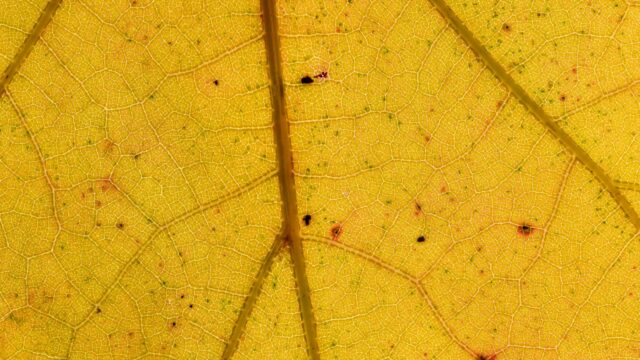
Iron Chlorosis: Why Leaves Turn Yellow With Green Veins
The soil often has plenty of iron, but the plant can't take it up. That's why a soil test comes before any product, and why some fixes barely last a season.
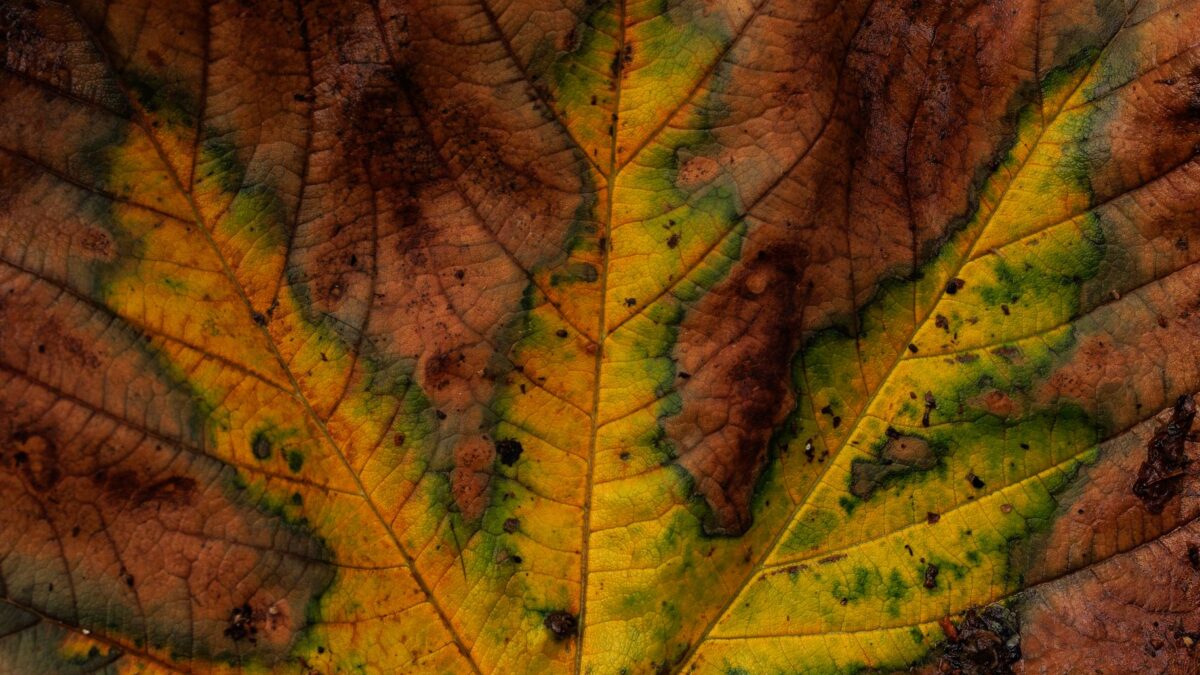
Yellow leaves with green veins, especially on new growth, usually mean iron chlorosis. In most cases the soil isn’t short of iron, but the pH is too high for the plant to take it up, often made worse by wet or compacted soil. Test the soil first, then use chelated iron for a fairly quick response and look at drainage, sulfur or a better-suited plant for the long term.
What iron chlorosis looks like
- Yellow or pale green tissue between the veins, with veins staying darker green
- Symptoms that are usually worst on the newest leaves
- Sometimes only a few branches affected, sometimes the whole plant
- In severe cases, white leaves that scorch brown at the edges, followed by branch dieback
Left untreated, severely affected trees can die over several years, so it’s worth acting early.
Rule out the look-alikes
| What you see | Likely cause | Clue |
|---|---|---|
| Yellow between veins on new leaves | Iron, or sometimes manganese | High pH; a leaf tissue test separates the two |
| Whole leaf pale, older leaves first | Nitrogen shortage | Veins yellow too |
| Starts like iron, then reddish-purple blotches and brown edges | Magnesium shortage | Confirm with a soil test |
| Pale, wilting plant in soggy soil | Overwatering or root rot | Soft, brown roots |
| Bright yellow foliage all over and healthy growth | A yellow-leaved cultivar | The tag or the original plant description |
For a wider look, see our plant nutrient deficiency chart.
Why pH is usually the real cause
As pH rises, iron shifts into forms that roots can’t absorb. North Dakota State University Extension says the problem is most common at pH 7.5 or higher, while acid-loving plants can struggle sooner. University of Maryland Extension says iron is most available to azaleas and rhododendrons between pH 4.5 and 6.0, and may be unusable above 6.5.
Other things can trigger or worsen chlorosis, even where pH is only part of the story. Nebraska Extension lists wet, compacted soil with poor oxygen, root damage, roots buried too deep and high nitrogen or phosphorus levels that bind up iron.
Plants often named as sensitive include river birch, pin oak, some maples, bigleaf hydrangea, azalea and rhododendron, rugosa rose, raspberry and blueberry. If your yellowing azalea is the problem, see our guide to azalea leaves turning yellow.
Test before you treat
- Get a soil test. Our guide to reading a soil test shows what to look for. pH is the key number.
- Do the vinegar test. NDSU’s iron chlorosis publication suggests adding about 1 tablespoon of soil to 2 tablespoons of household vinegar. If it fizzes, the soil contains lime, and trying to lower the pH is unlikely to work.
- Check the drainage. Dig a small hole and see whether the soil stays soggy. Fix that first, since iron products may not work well until roots can breathe.
- Consider a leaf test on valuable trees. Nebraska Extension says leaf tissue and soil testing are the only way to know accurately whether iron or manganese is the cause.
Fix table
| Fix | Best for | Speed | Lasts | Notes |
|---|---|---|---|---|
| Improve drainage, relieve compaction | All | Slow | Long term | Do this first where the soil stays wet |
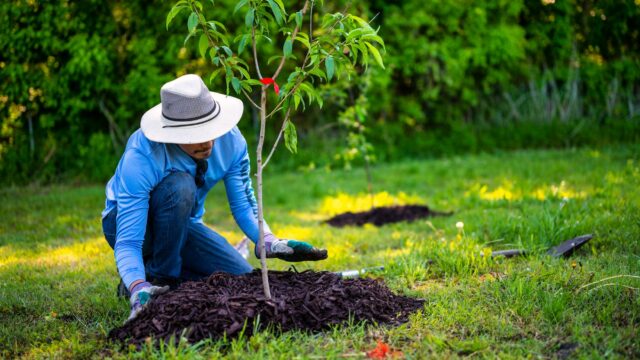
| Chelated iron on soil | Shrubs, small trees | Relatively quick | About a year | Match chelate to pH; apply late winter to early spring before buds break |
| Iron spray on leaves | Shrubs, small trees | Often within 2 weeks | Current leaves only | Spray in cool weather or evening; new leaves may stay yellow |
| Elemental sulfur | Soils without free lime | Months to a couple of years | One to three years | Rate from soil test; poor choice on limey soil |
| Trunk implant or injection | Large trees | Often within a month | Up to about 2 to 3 years | Wounds the tree; use a certified arborist |
| Replace the plant | Badly declining plants on limey soil | Immediate | Permanent | Choose a species suited to your pH |
Choosing a chelate
A chelate is a form of iron held in a molecule that keeps it available to roots. The type matters. NDSU gives these limits:
- EDTA: keeps iron soluble at pH 6.3 and below
- DTPA: pH 7.5 and below
- EDDHA: up to pH 9.0, the choice for alkaline soils
Purdue Extension also singles out FeEDDHA as the chelate that works well under high pH. Check the label for the chelate type and rate. Iron products can leave permanent rust stains on concrete, so rinse any spills immediately.
Using sulfur
Sulfur is slow and works through soil microbes. As an example, NDSU’s table calls for about 1.1 to 2.3 pounds per 100 square feet to take soil from pH 7.5 to 6.5, depending on texture, with sandy soil needing least and clay most. Use your own soil report instead of these figures. On lawns, NDSU says no more than 0.5 pound per 100 square feet at a time, and not in summer. Details are in our guide on raising or lowering soil pH.
On soil with free lime, Purdue says elemental sulfur has limited value. In that situation, chelated iron or a different plant is the realistic answer.
What not to do
- Don’t use aluminum sulfate. NDSU doesn’t recommend it because of the risk of aluminum toxicity.
- Don’t bury nails or iron shavings. Nebraska Extension says they aren’t effective in alkaline soil.
- Don’t mix products or exceed the label rate. Iron, sulfur and fertilizers should each be used on their own.
- Don’t drill or dig without calling 811 first, even for a small hole, so that underground utilities can be marked. The call is free, and lead times and depth exemptions vary by state, so check with your state’s 811 center.
Keep sulfur and iron products in their original containers, away from children and pets, and wear gloves and eye protection as the label directs.
Bottom line
Green veins on yellow new leaves usually mean the plant can’t get iron from the soil, not that the soil has none. Test pH, fix drainage, and pick a chelate that suits your pH. If the soil is limey and the plant is a poor fit, replacing it is often better than treating it every year.
FAQ
How long does chelated iron take to work?
Results are relatively quick. Foliar sprays often show within two weeks on existing leaves, and soil-applied chelates typically last about a year.
Will the yellow leaves turn green again?
Leaves that are only yellow often green up at least partly. Leaves that have turned brown or scorched won’t recover, so watch the new growth instead.
Why did chlorosis come back the next year?
Iron treatments don’t change soil pH. Unless drainage, compaction or pH are addressed, symptoms usually return.
Is Epsom salt a fix for yellow leaves with green veins?
Only if a test shows magnesium is short. It won’t help iron chlorosis.