Why Is My Hydrangea Not Blooming? Causes by Hydrangea Type
The fix depends on which hydrangea you own. Work out whether it blooms on old wood or new wood, and the likely cause usually becomes obvious.
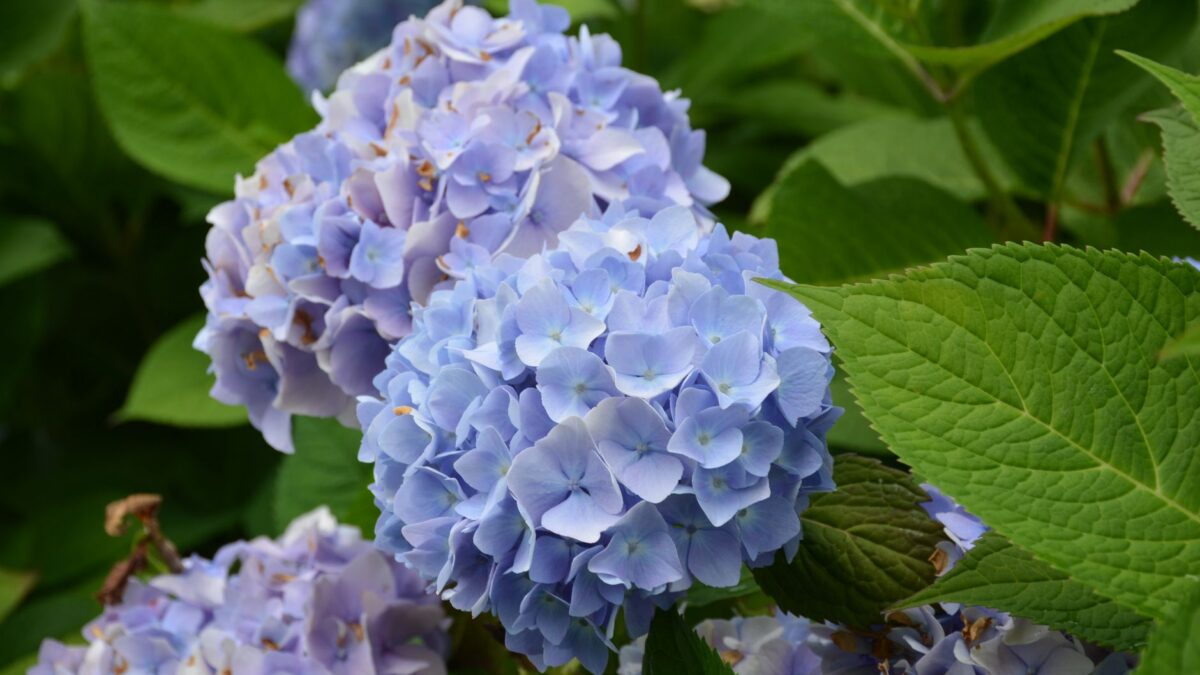
Most hydrangeas that won’t bloom were either pruned at the wrong time or lost their flower buds to winter cold. Bigleaf, mountain and oakleaf hydrangeas carry next year’s buds on old stems, so a fall or spring cutback removes the flowers. Smooth and panicle hydrangeas bloom on new growth, so if one of those skips a year, look at shade, plant age or too much nitrogen instead.
Start by identifying your hydrangea
Every fix depends on one fact: whether the plant forms its buds on old wood (stems from last year) or new wood (stems grown this spring). A plant tag settles it if you still have one. If not, use this table. Zones come from NC State Extension’s plant database, and individual cultivars can differ.
| Type | How to spot it | Blooms on | USDA zones |
|---|---|---|---|
| Bigleaf (H. macrophylla) | Round mopheads or flat lacecaps in blue, pink or purple; large, glossy leaves | Old wood; rebloomers use old and new | 6–11 |
| Mountain (H. serrata) | Looks much like a lacecap bigleaf | Old wood | Check the tag |
| Oakleaf (H. quercifolia) | Lobed leaves shaped like an oak’s; long white flower cones; peeling bark | Old wood | 5–9 |
| Panicle (H. paniculata) | Cone-shaped blooms that open white and age to pink; a large shrub or small tree | New wood | 3–8 |
| Smooth (H. arborescens) | Rounded white heads, sometimes pink, as in ‘Annabelle’ | New wood | 3–9 |
One useful shortcut: University of Maryland Extension notes that bigleaf and mountain hydrangeas are the only commonly grown species that can produce blue or purple flowers.
Causes and fixes by type
| Cause | Types affected | Clues | Fix |
|---|---|---|---|
| Pruned at the wrong time | Mainly bigleaf, mountain, oakleaf | Healthy leaves, no buds, and the plant was cut back in fall, winter or spring | Prune only right after flowers fade. Our hydrangea pruning calendar covers each type |
| Winter bud kill | Mainly bigleaf and mountain | A hard winter, then little or no bloom, with new shoots rising from low on the plant | Protect the base, pick a sheltered site, or switch to a hardier or reblooming cultivar |
| Late frost | Old-wood types; fresh shoots on any type can be nipped | Buds or new leaves blacken after a cold spring night | Cover plants when frost is forecast. See how to protect plants from frost |
| Deer browsing | Any type, most costly on old-wood types | Stem tips bitten off over winter | Fence, net or reapply repellent through the cold months |
| Too much shade | All, especially panicle | Long, thin stems, sparse leaves and few buds | Give it more sun, or move it in the dormant season. Morning sun with afternoon shade suits most types |
| Too much nitrogen | All | Lush, dark growth with few flowers, often beside a fertilized lawn | Stop high-nitrogen feeding and keep lawn fertilizer off the root zone |
| Young or recently moved plant | All | Planted or moved within the last year or so | Wait, water steadily and avoid heavy feeding |
Pruning damage or winter damage?
Both leave you with green leaves and no flowers, but the stems tell them apart.
- Stems leaf out along their length, but no flower buds appear. The stems survived. Buds were probably cut off or killed by cold while the wood lived.
- Old stems stay bare and shoots rise from the base. The top died back. University of Maryland Extension warns that a hydrangea killed to the ground, or pruned too drastically, may not bloom until the following year.
- Stem tips look torn or bitten off. Look for deer. Extension sources list browsing alongside cold, drought and late frost as ways overwintering buds are lost.
In colder zones this matters most, because a bigleaf hydrangea’s buds sit exposed on the stems all winter. A flower bud can die while the roots stay perfectly healthy, which is why a plant can look vigorous and still have no blooms. Penn State Extension’s hydrangea guide explains how early and late freezes can damage these buds and stems.
What to do next
- Put the pruners away for old-wood types. From late summer until after next year’s flowers, cut only dead wood. NC State Extension advises finishing any bigleaf pruning before August 1. Colder zones may need to finish earlier.
- Wait for spring buds before removing anything. Once buds swell you can see which stems are alive. Our guide to freeze-damaged shrubs explains the wait.
- Shelter bigleaf types in cold zones. Mulch the base after the ground begins to cool. Some gardeners also wrap plants in burlap or ring them with wire filled with dry leaves. Results vary, and a very cold winter can still kill buds.
- Check the light. Oakleaf hydrangeas still need some sun to bloom, and panicle hydrangeas bloom best with several hours of direct sun. If a nearby tree has grown, thin it or plan a move.
- Hold the nitrogen. University of Maryland Extension notes that heavy high-nitrogen feeding can reduce flowering. A balanced product is enough if you fertilize at all, and a soil test will tell you if the plant needs anything.
- Choose differently next time. Reblooming bigleaf cultivars form buds on both old and new wood, so they have a second chance after a bad winter. University of Maryland Extension also notes more winter-hardy bigleaf cultivars are available. In the coldest zones, panicle and smooth types are the dependable choice.
Gift hydrangeas are a special case
Potted hydrangeas sold as gifts are often bigleaf types. Penn State Extension notes they may not be winter hardy in colder regions. If one was planted out and returns each year with leaves only, the plant may simply be poorly suited to your zone. Keeping it as foliage or replacing it are both reasonable options.
A note for pet owners
The ASPCA lists hydrangea as toxic to dogs, cats and horses. Signs are usually stomach upset, such as vomiting and diarrhea. If a pet has eaten any part of the plant, call your veterinarian or ASPCA Animal Poison Control at (888) 426-4435 (a fee may apply).
Bottom line
Identify the type first. For bigleaf, mountain and oakleaf hydrangeas, suspect pruning or winter bud kill, and change when you cut or how you protect the plant. For panicle and smooth types, suspect shade, heavy nitrogen or a young plant. Change one thing, then give it a full season, since this year’s mistake usually shows up in next year’s flowers.
FAQ
Will my hydrangea bloom next year if I cut it back this fall?
A smooth or panicle hydrangea should, because it flowers on growth made next spring. A traditional bigleaf or oakleaf hydrangea probably won’t bloom well, because the cuts removed stems holding its buds.
Why didn’t my reblooming hydrangea rebloom?
Rebloomers still need good light, steady water and a season long enough for new wood to flower. Late pruning can also delay or shorten the second flush. In cool zones, flowers on new wood can arrive late in the season.
Should I use a bloom-booster fertilizer?
Not as a first step. Most no-bloom cases come from pruning, cold or shade, and fertilizer won’t fix those. Avoid high-nitrogen products and test the soil before adding anything.
Does soil pH affect whether hydrangeas bloom?
Soil pH changes the color of bigleaf flowers, turning them blue in acidic soil and pink in alkaline soil. It isn’t a usual reason for a plant not blooming at all.