Why Is My Christmas Cactus Not Blooming? Long Nights, Cool Air and Buds
Holiday cacti bloom on a signal: long nights or cool temperatures in fall. Stray lamp light is the usual reason one stays green.
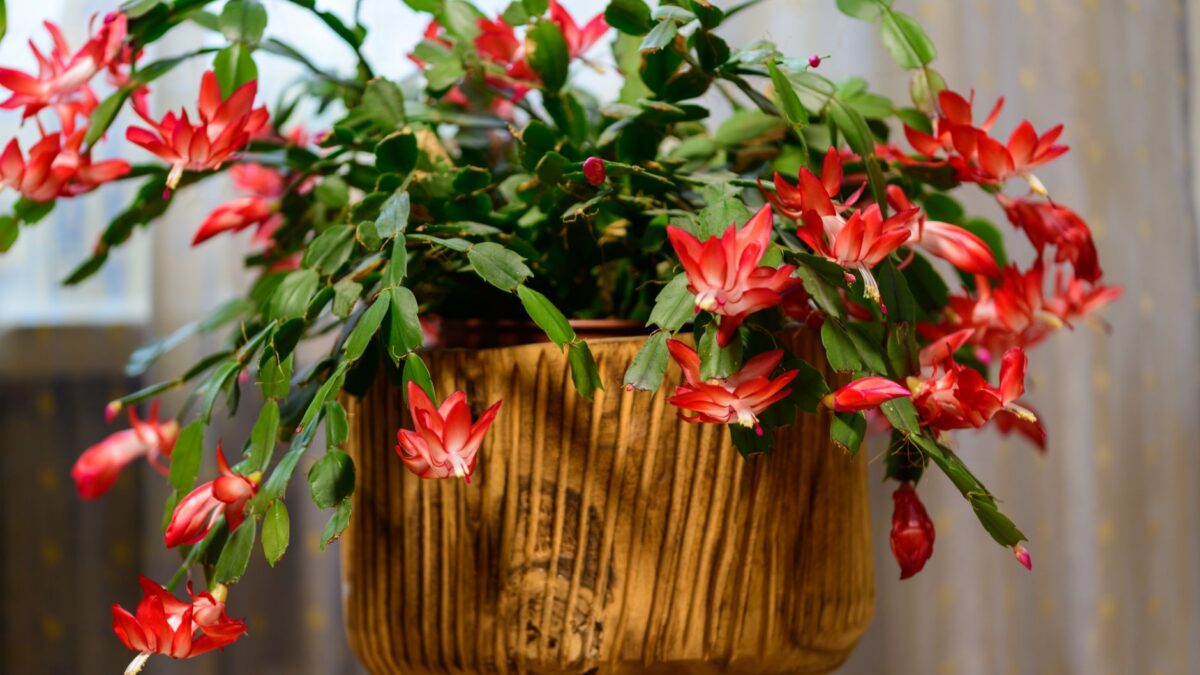
A Christmas cactus that won’t bloom usually isn’t getting enough uninterrupted darkness or cool nights in fall. Give it 14 or more hours of continuous darkness every night for at least six weeks, or keep it in a spot at 50 to 59°F at night. Buds usually appear within three to four weeks. Then keep the mix evenly moist and avoid sudden changes, or the buds may drop.
Holiday cacti are triggered by season, not by size or feeding. Lamps in the room you use every evening can cancel out the short days of fall, so a healthy, green plant may simply never get the signal to bloom. This guide draws mainly on Clemson Extension’s holiday cactus factsheet.
Is it a Christmas or a Thanksgiving cactus?
Look at the stem segments, because many plants sold around the holidays are Thanksgiving cacti. Both are tropical forest cacti and both need the same care, so this mainly affects when to expect flowers.
| Feature | Thanksgiving cactus | Christmas cactus |
|---|---|---|
| Name | Schlumbergera truncata | Schlumbergera x buckleyi |
| Stem segment edges | 2 to 4 saw-toothed points | Rounded edges |
| Pollen-bearing anthers | Yellow | Purplish-brown |
| Bloom timing | About a month earlier | About a month later |
A third relative, the Easter cactus, blooms mainly in spring, so a plant that flowers then may simply be following its own calendar.
Why yours isn’t blooming
| Cause | What’s happening | Fix |
|---|---|---|
| Evening light | As little as 2 hours of interrupted light can inhibit buds. Lamps, TVs, street lights and car headlights all count. | Move to an unused room, or cover or set in a closet each evening |
| Warm nights with long days | Without cool nights or long darkness, there is no bud signal | Give long nights, or night temperatures of 50 to 59°F |
| Too much shade | The plant can’t store enough energy to flower | Bright, filtered light, plus fuller sun in fall and winter |
| Late feeding | Fertilizing into fall encourages leafy growth, not buds | Stop in late summer |
| Too much pot room | These plants flower best when somewhat pot-bound | Repot only about every three years, in spring |
| Unhealthy roots | Overwatering causes root rot, the main disease of these plants | Check the roots; see the rescue guide below |
The bud-setting timeline
Clemson suggests starting long nights around mid-September. If you have missed that, you can still try now. The plant will simply bloom later than usual.
| When | What to do |
|---|---|
| Late summer | Stop fertilizing. Bring plants in before temperatures fall below 50°F. |
| Week 1 (about mid-September) | Start long nights: 14 or more hours of total darkness, with bright light in the day. Keep nights at 60 to 68°F, or use cool nights instead. |
| Weeks 2 to 3 | Keep the routine going every night. Water when the mix feels dry. |
| Weeks 3 to 4 | Look for tiny buds at the tips of stem segments. |
| Weeks 5 to 6 | Continue for at least six weeks in total. Once buds have set, darkness no longer matters, so you can move the plant carefully to a display spot. |
| Buds visible onward | Keep the mix evenly moist, never soggy. Avoid drafts, heat and big changes. |
| Bloom | Enjoy. Clemson reports flowering can last 7 to 8 weeks at around 68°F. |
How to provide the dark
A spare bedroom or an unused room with a window is the easiest choice, since the plant can stay in place. Otherwise, move it into a dark closet or cover it with a box every evening at about 5 p.m. and uncover it around 7 a.m. Keep the routine going every night. One missed night is not a disaster, but regular interruptions will cost you flowers.
The cool-night route is simpler if you have an unheated porch or a chilly spare room. Clemson says night temperatures of 50 to 59°F set buds regardless of day length, though growth slows, and bud drop may occur at 50°F. Keep it above that. For more on bright spots and timers, see our guide on whether houseplants need grow lights, and remember that a grow light left on at night can interrupt the signal too.
Why buds drop
Bud drop is the second most common frustration. According to Clemson, the usual triggers are:
- A sudden change in temperature or light, including a move to a new room
- Mix that dries out after buds have formed
- Too many buds for the plant to carry
- Temperatures that climb too high (Clemson warns against exceeding 90°F) or fall to around 50°F
Keep plants away from heat vents, fireplaces and cold doors. If you bring one home in bud, expect a few to fall, and leave it in one spot with bright, indirect light.
Year-round care that leads to flowers
- Light: light shade from spring to summer, since bright summer sun can turn plants pale and yellow. More direct sun helps in fall and winter.
- Water: water when the mix feels dry. Despite the name, this is a forest plant, but it still hates soggy roots. Never leave water in the saucer. If in doubt, see our guides to overwatered vs underwatered plants and root rot.
- Feeding: monthly from late winter through summer at half strength, then stop.
- Pruning: pinch stems in early June to encourage branching, which gives more tips for flowers.
Bottom line
Long, unbroken nights or cool nights in fall are the key. Give at least six weeks of 14-hour darkness, or 50 to 59°F nights, stop feeding in late summer, then keep the mix evenly moist and the plant in one place once buds appear. Evening light is the most common reason a healthy plant stays green.
FAQ
Is it too late to get my Christmas cactus to bloom this year?
Not necessarily. Start long nights or cool nights now. Buds usually show in three to four weeks, so flowers may simply arrive later than the holiday.
Why is my Christmas cactus blooming in November?
It may be a Thanksgiving cactus. Check for saw-toothed stem edges and yellow anthers. Both are often sold under the Christmas name.
Should I put my Christmas cactus in a closet?
Only for the dark hours, and only for the bud-setting weeks. It needs bright light during the day, so bring it out every morning.
Is Christmas cactus safe for cats and dogs?
The ASPCA lists Christmas cactus as non-toxic to dogs, cats and horses. Eating plant material can still cause a mild upset stomach, so it’s best kept out of reach.