Why Are the Tips of My Plant Leaves Turning Brown? Causes and Fixes
Brown tips rarely threaten the plant, but they do point to something in its care. Here is how to find the cause, and how far trimming really helps.
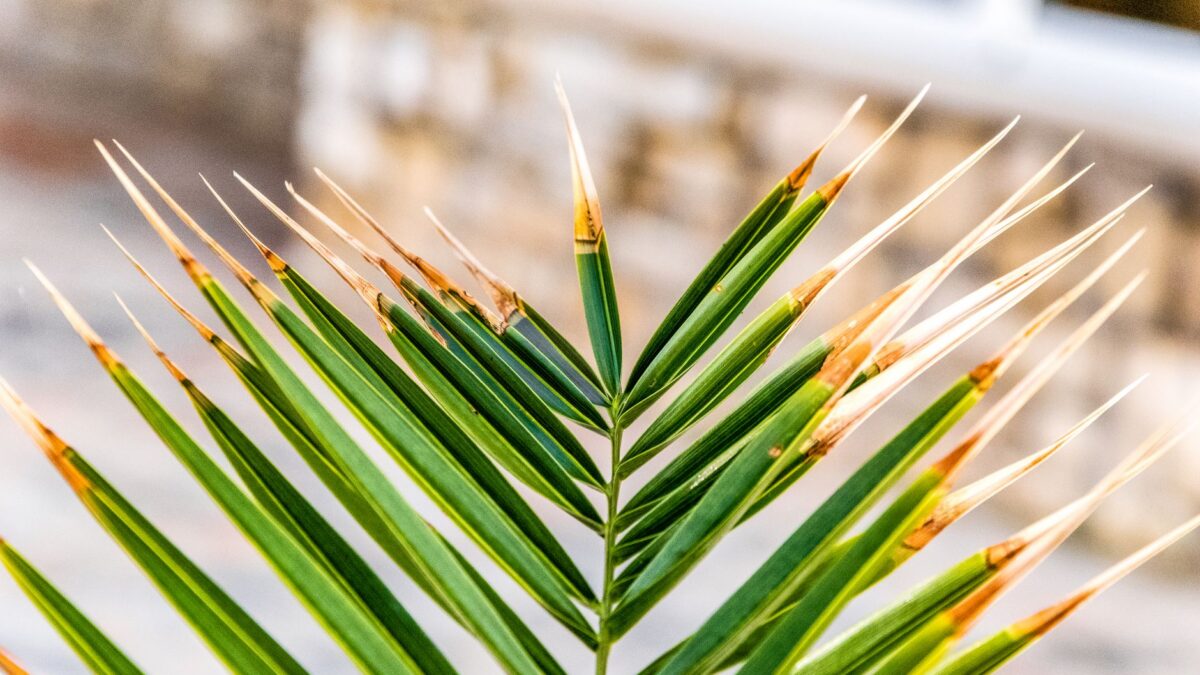
Brown leaf tips usually come from one of four things: dry indoor air, uneven watering, salt buildup from fertilizer, or chlorine and fluoride in tap water on sensitive plants. Find the cause first, because trimming only improves the look. The browning comes back unless something in the plant’s care changes.
Leaf tips sit farthest from the roots, so they tend to show trouble first. The good news is that brown tips alone are rarely dangerous. They are a slow warning, not an emergency, and you have time to work out which cause applies to your plant.
Sources weigh the causes a little differently. Iowa State University Extension calls low humidity the most likely cause, while UC IPM puts salt buildup and irregular watering at the top of its list. In practice, look at the clues on your own plant and season.
Match the symptom to the cause
| What you see | Likely cause | Fix |
|---|---|---|
| Tips turn brown in winter while the heat is running; thin leaves suffer most | Low humidity | Group plants, use a humidifier or set pots on a pebble tray |
| Brown tips plus a white or gray crust on the soil or pot rim | Salt buildup from fertilizer or hard water | Flush the pot, cut back feeding, repot if the crust returns |
| Tips and edges brown after the mix keeps drying out completely | Uneven watering | Water thoroughly when the top inch feels dry |
| Spider plant, dracaena, ti plant, prayer plant or calathea browning despite good care | Fluoride, chlorine or other chemicals in the water | Switch water source |
| Brown tips with yellow leaves and constantly wet soil | Root damage from overwatering | Let the mix dry, check the roots |
| Crisp patches on the side facing a window or heater | Excess sun, heat or a draft | Move the plant and acclimate it slowly |
Dry air
Heated homes get very dry. Iowa State notes that most tropical houseplants prefer 40 to 50% humidity, while winter indoor air can fall to around 10%. Thin-leaved tropicals show it first.
What helps:
- A humidifier near your plants is the most effective fix, especially for a group of them.
- Grouping plants so their foliage holds a little more moisture around them.
- A pebble tray filled with water, with the bottom of the pot sitting above the waterline.
- Moving plants away from heat registers and radiators.
Skip the mister. It barely changes room humidity and wet foliage can spread disease, although a light spray does help rinse off dust.
Salt buildup
Fertilizers are salts, and hard water leaves minerals behind too. As water evaporates from the pot, those salts stay in the mix and can damage roots. A white or gray crust on the soil surface or around the rim of the pot is the giveaway. Clemson Extension recommends drenching the soil to leach the salts, not over-fertilizing, emptying saucers, and repotting periodically.
To flush a pot:
- Take the plant to a sink or tub and scrape off any crust on the surface.
- Water slowly with plain, room-temperature water until it pours freely from the drainage hole.
- Let it drain, then repeat once or twice so the water carries dissolved salts out.
- Empty the saucer so the drained water can’t soak back in.
- Hold off on fertilizer for a while, and when you resume, use a half to a quarter of the general-purpose strength during active growth only.
If the crust keeps coming back or the mix is old, repotting in fresh mix is the cleanest reset.
Uneven watering
A plant allowed to dry out for too long between waterings will often brown at the tips, even if you water well the rest of the time. Roots lost in a dry spell cannot keep the leaf ends supplied. Check the top inch of soil rather than following a calendar, and water until it runs out of the bottom.
Too much water can produce similar tips. Overwatered roots die back, so the plant cannot move water to its leaves even though the pot is wet. If you are unsure which side you are on, our guide to overwatered vs underwatered plants walks through the checks. Mushy roots call for a root rot rescue, not more humidity.
Water quality
Iowa State lists spider plant, ti plant, dracaena, prayer plant and calathea as sensitive to chlorine, fluoride and other chemicals in water, with damage building over time. Softened tap water can also leave unwanted residue.
- Rainwater or distilled water is the simplest switch for sensitive plants.
- Letting tap water stand for a day, as Clemson suggests, lets chlorine escape. It does not remove fluoride, so it helps only with part of the problem.
- Avoid water from a softener if you can.
How far trimming helps
Trimming is purely cosmetic, but it is perfectly fine. The brown tissue will never turn green again, so cutting it off harms nothing as long as you stay out of healthy leaf.
- Use clean, sharp scissors.
- Follow the natural shape of the leaf, cutting to a point rather than straight across.
- Leave a hairline of brown at the edge so you don’t wound green tissue.
- Do not remove the whole leaf unless most of it is brown. The green part is still feeding the plant.
If the new growth comes in clean after you change something, the fix worked. Older leaves that already browned will keep their marks.
Bottom line
Brown tips are a care signal, not a crisis. Winter and dry air point to humidity, a crust on the pot points to salts, cycles of bone-dry soil point to watering, and sensitive plants point to your tap water. Fix that first, flush the pot if salts are the issue, and trim the tips last.
FAQ
Should I cut off brown leaf tips?
Yes, if they bother you. It does not hurt the plant when done neatly, but it also does not cure anything. Without a change in care, new tips will brown too.
Does misting stop brown tips?
Not reliably. Misting raises humidity for only moments. A humidifier, a pebble tray or grouping plants works better.
Is tap water bad for houseplants?
Most houseplants handle ordinary tap water well. A few, including spider plants and dracaenas, can react to fluoride or chlorine over time, so those are the ones worth watering with rainwater or distilled water.
Can brown tips be a sign of something serious?
On their own, rarely. Pay closer attention if browning spreads quickly, or comes with yellowing, wilting, soft stems or a sour smell from the pot. Those signs point to the roots.