Hardwood Mulch vs Pine Bark vs Straw: Which Goes Where?
Each of these mulches has a job it does best. Here is how they compare on depth, lifespan and weed control, plus a check on the myths you keep hearing.
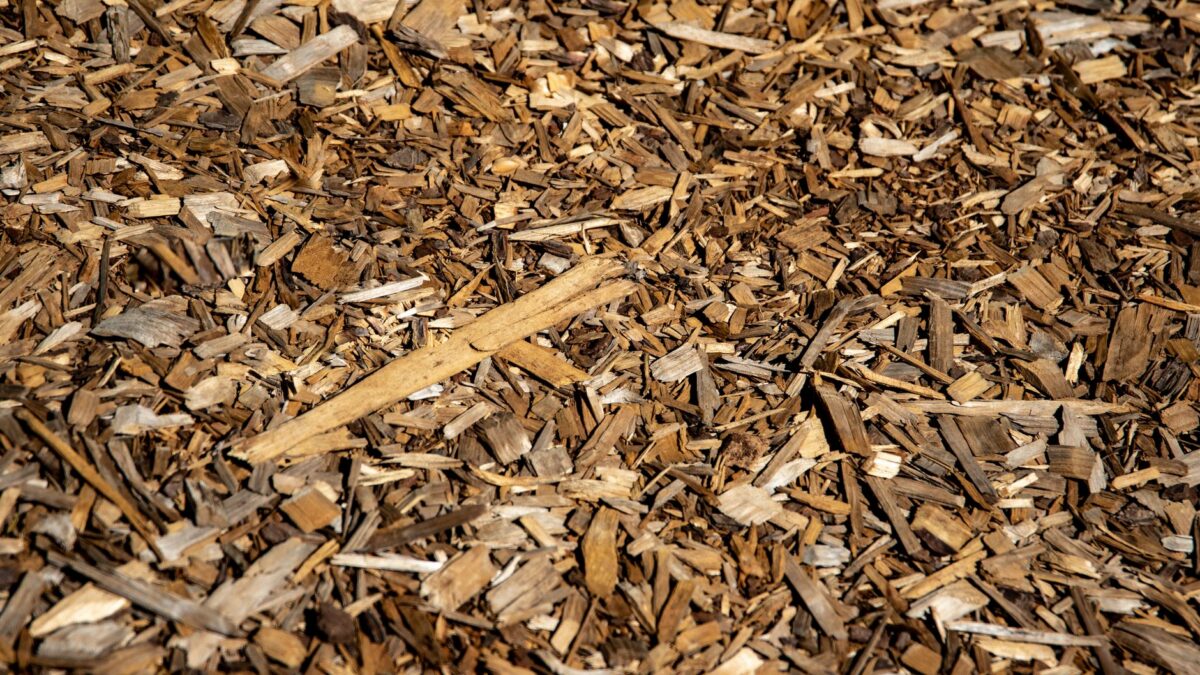
Use shredded hardwood in flower and shrub beds, especially on gentle slopes where it stays put. Use pine bark around trees and shrubs on level ground, where it lasts well and looks neat. Use straw in vegetable beds, since it’s light and breaks down fast enough to turn in or replace each year. None of the three will meaningfully change your soil pH, steal nitrogen from plants when left on the surface, or draw termites to your yard.
Mulch comparison at a glance
| Trait | Shredded hardwood | Pine bark | Straw |
|---|---|---|---|
| Best for | Ornamental beds, gentle slopes | Trees, shrubs, level beds | Vegetables, garlic, newly seeded lawns |
| Typical depth | 2 to 3 inches | Up to about 4 inches for nuggets | Several inches loose; it settles |
| How long it lasts | Bark mulches: about 2 to 4 years; finer shreds need topping up sooner | About 2 to 4 years | About one season |
| In heavy rain | Knits together and resists washing | Large nuggets can float away | Doesn’t float, but can blow in wind |
| Main downsides | Can host slime molds, stinkhorns and artillery fungus | Moves on slopes and in runoff | Grain seeds can sprout; not decorative; burns easily |
Depth and lifespan figures come from Clemson University’s Home & Garden Information Center and other extension guides. Coarse mulches can go deeper because air moves through them. Fine mulches pack down, so keep them to 2 to 3 inches.
Shredded hardwood
This is the classic bed mulch. Its stringy pieces lock together, so it holds on gentle slopes and doesn’t wash out easily. It breaks down slowly and adds organic matter as it does.
Watch the source. The University of Florida warns that mixed recycled wood mulch can be contaminated with pressure-treated lumber. Buy from a supplier who can tell you what’s in it.
Pine bark
Pine bark comes as large nuggets or finer mini-nuggets and shreds. Nuggets last a long time: University of Florida research cited by its extension found pine bark held about two-thirds of its original depth after two years. The weakness is water. Clemson notes that large nuggets float and may not stay in place in a heavy rain, so avoid them on slopes and beside downspouts.
For more on applying bark around trunks, see our guide to how to mulch around trees.
Straw
Straw suits annual beds. It keeps soil cool and moist, stops rain from splashing soil onto leaves, and can be turned in or composted at season’s end. It decomposes quickly, so expect to top it up. Because it’s so light, it goes on deeper than wood; some extension guides go as far as 6 to 8 inches of loose straw.
Buy straw, not hay. Hay usually carries far more weed seed. Even straw can contain grain heads that sprout, but those are easy to pull. Keep it away from grills and smoking areas, because dry straw burns readily. In winter, it does double duty on garlic beds.
Myth check
| Claim | Verdict | What’s actually true |
|---|---|---|
| Pine bark makes soil acidic | Mostly false | UMass Amherst says there’s no evidence that woody mulch significantly acidifies soil. Any change stays near the mulch layer and passes |
| Hardwood mulch raises pH | Don’t count on it | Surface mulch isn’t a way to manage pH. To change it, test your soil and see how to raise or lower soil pH |
| Wood mulch steals nitrogen | True only if mixed in | Colorado State University says surface wood mulch doesn’t tie up soil nitrogen, but digging it in can cause a shortage. Sawdust is the worst case |
| Mulch attracts termites | Mostly false | University of Kentucky guidance says mulch doesn’t draw termites to a yard, though any already present may feed there. Keep mulch away from foundations |
| Thicker is better | False | Too much can smother roots and keep soil soggy. Stick to the depths above |
| Straw is full of weed seeds | Partly true | That’s more of a hay problem. Straw’s grain seeds are usually few and easy to remove |
If plants under wood mulch look pale, a nitrogen shortage is possible, but the mulch isn’t the only suspect. Our nutrient deficiency chart and a soil test will help you narrow it down.
How much to buy
One cubic yard of mulch covers about 108 square feet at 3 inches deep, or about 162 square feet at 2 inches. A typical 2-cubic-foot bag covers about 8 square feet at 3 inches.
Placement rules that apply to all three
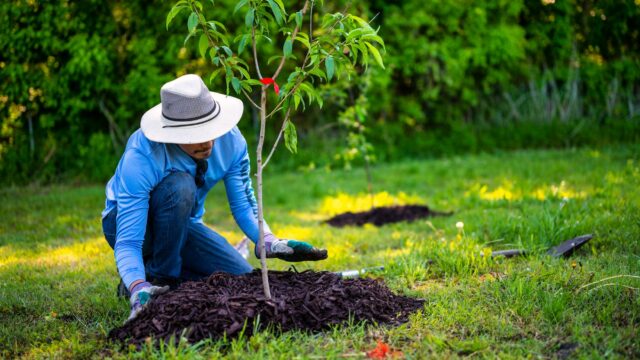
- Keep mulch a few inches from trunks and stems. Clemson suggests 2 to 3 inches from woody stems, and other guides go up to 6 inches.
- Keep it 6 to 12 inches from house walls, as Clemson advises. This also helps with termite inspection.
- Rake old mulch to break up crusted layers before adding more.
- Don’t pile it up. Mulch volcanoes against trunks invite rot and rodents.
Safety notes
Mushrooms sometimes pop up in wood mulch. Don’t eat them, and rake them up if a pet might nibble them. Stinkhorns smell awful but are harmless to plants.
Cocoa bean mulch, while not one of the three here, is worth avoiding if you have a dog. It contains the same compounds that make chocolate toxic to dogs.
Bottom line
Match the mulch to the job: shredded hardwood for beds and slight slopes, pine bark for trees and flat ground, straw for vegetables. Ignore the pH scare stories, keep wood on top of the soil rather than dug in, and leave a gap at trunks and foundations.
FAQ
Can I use hardwood mulch in a vegetable garden?
Around perennial crops or on paths, yes. In annual beds it’s awkward, because you’d dig it in each year and risk tying up nitrogen. Straw or compost is easier.
Is pine bark good for acid-loving plants?
It works fine as mulch for azaleas and blueberries, but don’t rely on it to lower pH. Use a soil test to see what the plants need.
Does mulch need replacing each year?
Straw does. Bark and hardwood usually need only a thin top-up when the layer falls below your target depth.
Can I use grass clippings instead?
Yes, in thin layers. Use only clippings free of weed killers, and let them dry a bit first so they don’t mat.