Why Are My Monstera Leaves Turning Yellow? Causes and Fixes
A monstera sheds its oldest leaves now and then. When several yellow together, the soil, the light and the leaf undersides will tell you why.
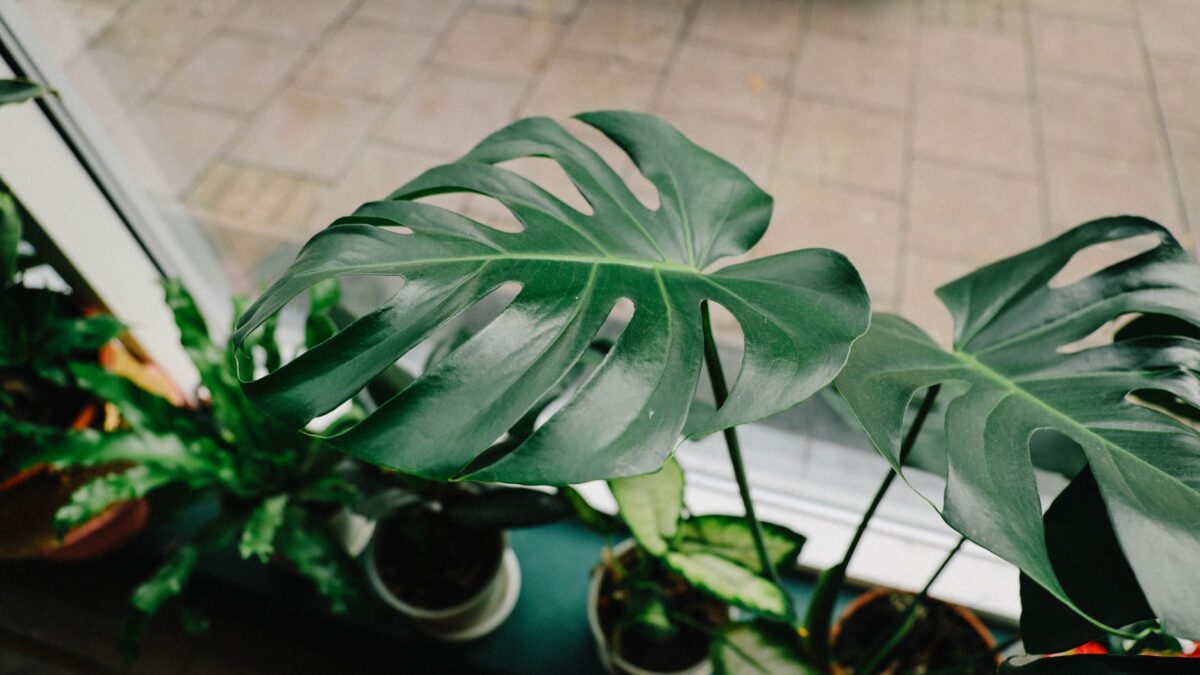
One yellow leaf at the base of a monstera, with healthy new growth above it, is usually just old age. Several yellow leaves at once most often mean too much water, followed by too little light or pests. Check the mix 1 to 2 inches down, then the light, then the undersides of the leaves, and change one thing at a time.
Monsteras grow fast and shed old leaves as they do, so one fading leaf is nothing to worry about. The pattern is what matters. Slow, one-at-a-time loss at the bottom is normal. Many leaves at once, or yellow on new growth, is a sign that something is off.
Find your pattern
| What you see | Likely cause | Fix |
|---|---|---|
| Oldest, lowest leaf slowly fades; everything else healthy | Natural aging | Remove it once it’s fully yellow |
| Several lower leaves yellow; mix wet; droplets on leaf edges | Overwatering | Let the mix dry; check the roots if it doesn’t improve |
| Yellow with brown, crisp edges; mix bone dry | Underwatering, sometimes with dry air | Water thoroughly and raise humidity |
| Pale leaves, new leaves small with no splits, stems leaning | Too little light | Move closer to a bright window |
| Bleached or scorched patches after a move | Sudden strong sun | Move back from the glass and acclimate slowly |
| Fine speckles, webbing under leaves | Spider mites | Isolate, rinse, treat |
| Cottony clumps, sticky film or bumps along stems | Mealybugs or scale | Isolate, wipe off, treat |
| Older leaves fade evenly; not fed in a long time; pot packed with roots | Low nutrients or a root-bound plant | Feed in the growing season; repot in spring |
| Yellowing beside a door or cold window in winter | Cold stress | Move to a warm, draft-free spot |
Watering: the usual culprit
University of Wisconsin-Madison Extension advises watering thoroughly, then letting the growing medium dry slightly between waterings, and watering less in winter. It also names root rot from overwatering as a common problem. A good working rule is to water when the top 1 to 2 inches feel dry.
A handy clue: if leaves sweat, with droplets forming at the edges, Wisconsin says the mix is too wet. Ease off and let it dry.
If the plant keeps declining even after the mix has dried, slide it out and look at the roots. Healthy roots are light-colored and firm. Brown, mushy roots need trimming and fresh mix, as explained in our guide to saving a plant from root rot.
Make sure water can escape. Monsteras are often kept in decorative pots, and a pot with no drainage hole is a common cause of yellow lower leaves. Keep the plant in a nursery pot inside the outer pot, and empty any water that gathers there.
Light: too little or too much at once
Extension advice differs a little here. Wisconsin suggests bright light in summer and direct sun in winter, while NC State’s plant database describes moderate brightness without direct sun. A sensible middle ground is bright, indirect light for most of the year, with gentle winter sun being fine.
Too little light shows as pale color, smaller leaves and no splits. Wisconsin notes that the leaf holes won’t form without enough light. Too much light too quickly leads to sunburn, so move a plant into brighter conditions over a week or two rather than all at once.
Temperature and humidity
Monsteras prefer warm rooms. Wisconsin says plants stop growing below 50°F and that frost will kill them, so keep them well away from cold glass and doors in winter. Low humidity tends to brown the leaf edges rather than yellow the whole leaf. If that’s your main symptom, read about reading yellow leaves in general or try a humidifier nearby.
Pests
Wisconsin lists aphids, mealybugs, scale and spider mites as the main monstera pests. Look along stems and on leaf undersides, especially where the leaf stalk meets the stem. Big leaves are also easy to clean, and a wipe with a damp cloth every few weeks lets you spot problems early.
- Fine speckling and webbing: see our guide to spider mites on houseplants.
- White, cottony clusters: see our guide to mealybugs on houseplants.
Follow the label on any product, test it on one leaf first, and treat the plant away from others.
A quick check, step by step
- Note which leaves are yellow: oldest, newest or scattered.
- Test the mix 1 to 2 inches down.
- Check that the pot can drain and the outer pot is empty.
- Look at the undersides of three or four leaves.
- Think about what changed recently: a move, a new pot, a draft or a shorter day.
- Fix one thing and watch the next new leaf.
Feeding and repotting
Monsteras grow vigorously, so they use up nutrients and pot space. Wisconsin recommends fertilizing regularly from spring through fall and repotting often enough that roots have room. Stop feeding in winter. Repot in late winter or early spring, going up one size. A moss pole or similar support helps a large plant keep its shape, too.
Pet and child safety
Monstera is toxic to pets. The ASPCA lists Monstera deliciosa as toxic to dogs and cats because of insoluble calcium oxalates, which can cause intense burning of the mouth, tongue and lips, drooling, vomiting and difficulty swallowing. Wisconsin also notes that all parts of the plant are poisonous except the ripe fruit. Keep it where pets and young children can’t chew it, and clear away fallen leaves. If a pet chews on it, call your veterinarian or the ASPCA Animal Poison Control Center at 888-426-4435 (a fee may apply).
Bottom line
A lone old leaf turning yellow is normal, so remove it and move on. For more than that, check the soil first, since overwatering is the most likely cause. Then look at light and pests. New leaves that come in green and healthy are the sign you’ve fixed it.
FAQ
Should I cut off yellow monstera leaves?
Yes. Once a leaf is mostly yellow it won’t recover, so cut it at the base of the leaf stalk with clean pruners. Wash your hands afterward, as the sap can irritate.
How often should I water a monstera?
Many plants need water about once a week in the growing season and less in winter, but let the soil decide. Water when the top 1 to 2 inches feel dry.
Why are the new leaves on my monstera yellow?
Pale new growth often points to overwatering, low light, or a soil pH or micronutrient problem. Very new leaves are also lighter green until they harden off, so check again in a week or two.
Is a monstera safe to keep with cats?
It’s listed as toxic to cats and dogs. Keep it out of reach or choose a pet-safe plant if yours likes to chew.